Esthetic Restoration of Anterior Hypoplastic Teeth with Minimally Prep Porcelain Laminate Partial Veneer- a Case Report
Department of Prosthodontics & Implantology, Post Graduate Institute of Dental Sciences, Pt. B.D Sharma University of Health Sciences, Rohtak, Haryana, India
ABSTARCT
Demand for excellence in esthetics is leading to newer trends in dentistry. Historically, the treatment of choice for enamel hypoplasia was full coverage crowns. However, this was invasive, required sacrifice of healthy tooth structure and was associated with increased risk of pulpal injury. With the advent of new materials, it is possible to correct such anomalies with minimally invasive and aesthetically superior treatment modalities. Introduction of porcelain laminates as an effective esthetic alternative has surpassed conventional options and most importantly its conservative approach with respect to tooth preparation makes it a viable option when compared to alternative esthetic procedures. This case report describes a patient of hypoplastic teeth and esthetically rehabilitated with porcelain laminate veneers.
INTRODUCTION
Enamel hypoplasia is the incomplete or defective malformation of organic matrix of teeth that may be of hereditary type and environmental type. In hereditary type of hypoplasia, both primary and permanent teeth are affected and changes are clearly more seen in enamel. On contrary in environmental hypoplasia either of the dentition may be involved and may affect single tooth or multiple no. of teeth and include changes in both enamel and dentin.
Enamel hypoplasia is characterized by white flecks, narrow horizontal band, lines of pits, grooves, and discoloration which vary from yellow to dark. Environmental type has the affinity to affect mostly the central incisor, lateral incisor, cuspid and firs molar.1 Changes in morphology, alteration in tooth structure and discoloration leads to the esthetic and functional challenge in individuals. Restoration of these defects not only leads to restoration of esthetic and function but also improves psychological impact and social well being of the patient.2
To restore the Hypoplastic teeth various esthetic treatments have been advocated like direct and indirect veneer techniques along with treatment of discoloration. Porcelain laminate veneers are the one of the most common treatment option in management of hypoplastic teeth because of the reasons like predictable and long lasting result and minimally invasive technique.2 This case report highlights the management of anterior hypoplastic teeth using minimally prepared porcelain laminate veneers.
CASE REPORT
A 24 years old young female patient with the chief complaint of yellowish discoloration & worn upper and lowers front teeth. On detailed history patient revealed that this defect was present since childhood with progressive in nature. Intraoral examination revealed, pitted yellowish discoloration with respect to upper and lower anterior, thinned incisal edges of upper and lower incisors (Figure-1). Same type of discoloration with respect to maxillary right permanent first molar also. On radiographic examination worn out enamel of upper and lower anterior teeth except both left and right permanent mandibular canine having thin layer enamel at cusp tips only was noted. Based on the clinical and radiographic finding a diagnosis of moderate environmental hypoplasia was made.
A treatment plan was designed to enhance the aesthetic; and discolouration was diminished by bleaching. Minimal teeth preparation was done and subsequent restoration with porcelain laminate partial veneer.
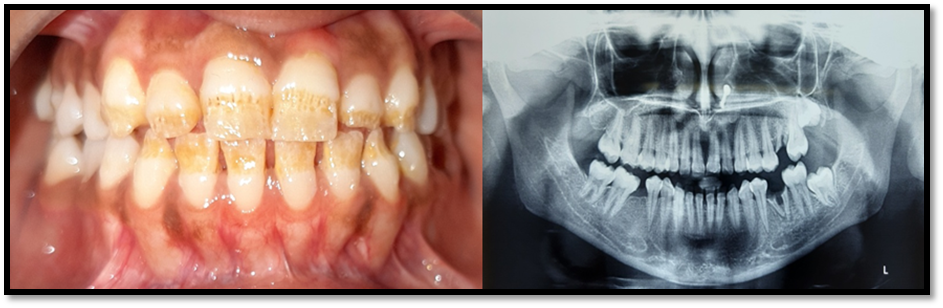
Figure 1: Preoperative intraoral view and radiographic view
CLINICAL PROCEDURES
A wax up was done to assess the necessary proportion, shape and position of teeth. Oral prophylaxis was done and next step was to do in-office bleaching to decrease the discolouration (Figure 2). Prior to bleaching shade of teeth was obtained and in-office bleaching agent using 21% HCL. After bleaching shade was obtained there was a significant decrease in discoloration.

Figure 2: Pre bleaching and post bleaching result
Prior to preparation of teeth, the shade of ceramic veneers was obtained. Tooth preparation was done using 0.5 mm depth cutting bur on labial surface and further reduction was carried out using log tapered and round ended diamond bur. A definite finish line was created gingivally and interproximaly (Figure 3).

Figure 3- Prepared upper and lower anterior teeth
Once the preparation was finished; ultrapack #000 plain knitted retraction cord was placed and putty wash double stage impression of full arch was taken with polyvinyl siloxane impression material (Figure 4). Occlusion registration was done and photographic records were taken with and without shade guides for proper shade matching for porcelain laminate veneers.

Figure 4- Retraction cord in situ and putty wash impression of upper and lower arches
Temporization was done using automatrix temporary material. Temporary material was loaded using putty matrix and left intraorallly for 5 minutes and excess of temporary material was removed using #12 no blade. Temporary prosthesis was finished using composite finishing kit. In the next appointment try in of veneers was done to check the proper fit and exact shade matching. Teeth were isolated and etched using 37% phosphoric acid for 30 seconds and then it was rinsed and air dried. Next application of mono bond bonding agent was done and light cured for 10 seconds per tooth. The etching of inner surface of veneers was carried out using hydro-fluoric acid. Next application of mono bond was on inner surface of veneers (Figure 4). Cementation of etched individual veneers was done using mono bond application and with resin cements (Figure 5). Excess of cement was removed after initial light cure and then final curing was done (Figure 6, 7).

Figure 5- Etching of veneers and mono bond application
DISCUSSION
Color, change in shape and other developmental and environmental disorder are the main listed aesthetic problems. The esthetic treatment of these problems has always presented a challenge in clinical practice. Such esthetic treatment required appropriative restorative planning.4 In this case report restoration of function and esthetic was advocated using concept of minimum preparation of teeth for porcelain laminate partial veneer followed as the teeth were structurally compromised and not strong enough
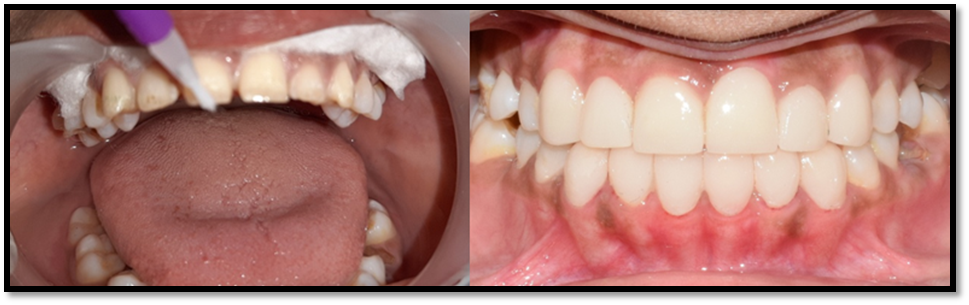
Figure 6- Application of mono bond and final prosthesis in-situ
Discoloured teeth may pose aesthetic problems in final outcome. As bleaching reduces the discoloration hence it can improve the optical property of porcelain laminate veneer. So in this case report bleaching with 21% HCL was advocated. Putty wash double staged technique of impression with retraction cord was used because retraction cord allows flows of impression material beyond margins that aids in obtaining correct profile of restorations.

Figure 7- Preoperative and postoperative intraoral view
CONCLUSION
A well planned treatment blue print with aesthetic and functional objective is a pre-requisite in treatment of hypoplasia that can ultimately enhance the self esteem of individual. Currently, the properties of ceramics indicate that they are materials capable of mimicking human enamel and their mechanical properties are expanding their clinical applications. The clinical success of laminate veneers depends on both the suitable indications of the patient and the correct application of the materials and techniques available for that in accordance with the necessity and goals of the aesthetic treatment.
REFERENCES
- Soarses CJ, Fonseca RB, Martins LR, Giannini M. Esthetic Rehabilitation of Anterior Teeth Affected by Enamel Hypoplasia: A Case Report. fJ Esthet Restor Dent 2002;14(6):340-8.
- Nayak M, Noronha GF, Prasada LK, Pai P. Interdisciplinary approach in conservative management of hypoplastic teeth restoring esthetics and function. J Interdiscip Dentistry 2014; 4:140-3.
- Kamalak H, Tanyol K. Aesthetic Rehabilitation of the Patient with Enamel Hypoplasia and Malformation in Anterior Teeth. J Adv Med Dent Scie Res 2017;5(11):1-2.
- DA Cunha LF, Reis R, Santana L, Romanini JC, Carvalho RM, Furuse AY. Ceramic veneers with minimum preparation. Eur J Dent 2013; 7:492-6.
- Patroi, Dan & Andreescu, Claudia & Ghergic, Doina.E Esthteic Rehabilitation of Anteriror Teeth with Enamel Hypoplasia Using Porcelain laminate veneer. Acta medica .2008; 23(4):72-4.
Disclaimer from Guident
The views and opinions expressed in articles published in Guident are solely those of the authors and do not necessarily reflect the views of the editors, the editorial board or the publisher, Ivory India. Guident does not endorse any product, technique or treatment described. Clinical content is intended for qualified dental and medical professionals and is not a substitute for individual clinical judgement. Guident, its editors and the publisher accept no liability for any consequence arising from the use of information published in the journal.
How to cite this article
Dr. Reena Ravi, Dr. Pooja Garg, Dr. Divya Dahiya. Esthetic Restoration of Anterior Hypoplastic Teeth with Minimally Prep Porcelain Laminate Partial Veneer- a Case Report. Guident. 2020 Dec;14(1). Available from: https://guident.net/articles/prosthodontics/esthetic-restoration-of-anterior-hypoplastic-teeth-with-minimally-prep-porcelain-laminate-partial-veneer-a.html