Oral Submucous Fibrosis in Pediatric Patient- a Case Report with Review of Literature
Department of Pediatric and Preventive Dentistry, Pacific Dental College & Hospital, Udaipur, Rajasthan, India
ABSTRACT
Oral submucous fibrosis (OSMF) is a chronic, insidious, generalized, and debilitating condition of the oral mucosa predominantly affecting South-East Asian population. It is a premalignant condition of the oral cavity with areca nut consumption being the main causative factor. Nowadays, there is increased consumption of areca nut and its derived products among younger generation as it is available in different multi-coloured attractive pouches on each and every corner of the road. In children from low socioeconomic class or rural communities of India, areca nut and its product use is extensive. This paper highlights the case of OSMF in a young girl aged 13-years that describes the increasing prevalence of chewing habit of areca nut and its derivatives among school-going children in India. A relatively high upsurge in the demand of commercial areca nut products, especially among the younger generation, is a cause of serious concern, as satisfactory management is still lacking.
Keywords: Oral submucous fibrosis, children, areca nut, premalignant condition
INTRODUCTION
Oral submucous fibrosis (OSMF) is a chronic disorder characterized by progressive fibrosis of the lining mucosa of the upper digestive tract involving the oral cavity, oropharynx, and frequently the upper third of the oesophagus, resulting in intolerance to spicy foods, a burning sensation in the mouth, xerostomia, and limited mouth opening, tongue mobility, swallowing, or phonation.1 It is a potentially malignant disorder of the oral cavity with the major aetiological factor being the consumption of areca nut. The condition was first reported by Schwartz in 1952 and by Joshi in 1953 in India.2 Other terms used to describe this condition are idiopathic scleroderma of the mouth, juxtaepithelial fibrosis, idiopathic palatal fibrosis, and sclerosing stomatitis.3 Generally OSMF is considered as a disease of adults; however an incidence of 0.2-1.2% in pediatric age group has been reported in India.4
The exact etiology of OSMF is still unknown. However, factors which have drawn attention as risk factors include capsaicin which is a component of chilli products, chewing of areca nut (baked or raw) and/or derivatives (gutkha, pan masala, mawa, betel quid, sweet supari), autoimmunity, hormonal factors, deficiency of nutritional factors like vitamin B12 and iron, and genetic predisposition showing increased frequency of HLA 10, DR3, DR7.5-7 Areca nut has been classified as Group I carcinogen by International Agency for Research on Cancer (IARC).8 It is the fourth most common psychoactive agent in the world after tobacco, alcohol and caffeine. Area nut chewing alone or in combination with flavours, condiments or sweeteners is an accepted socio-cultural practice in part of the western pacific and many South and South‑East Asian counties, including India and neighbouring countries of India.9-11
However, regrettably, unlike other addictions like tobacco and alcohol, areca nut consumption in children has become socially acceptable in at least a few countries. OSMF has become a significant public health problem in many parts of India in recent years. This marked increase in the occurrence of OSMF in the younger generation is mainly due to consumption of areca nut products that are available in the market with different multi-coloured attractive pouches and easily accessible in each and every corner of the road. Other factors involved are levels of awareness, household environment, peer pressure and low cost.
Limited number of pediatric OSMF cases have been reported in the literature. Hereby, a case of OSMF in a 13-year-old girl has been reported highlighting the potential danger of involvement of pediatric age group.
CASE REPORT
A 14-year-old girl reported to the Department of Pedodontics and Preventive Dentistry with the chief complaint of difficulty in opening the mouth and burning sensation while eating spicy food since last 3 months. The medical history of the patient was non-contributory. Patient gave history of chewing flavoured areca nut and scented tobacco, 3-4 packets/day since last 2 years. History of present illness revealed that she got into the habit with other children at school.
On intra-oral examination, oral mucosa was pale with reduced inter-incisal distance (IID = 1.2 cm). Palate was fibrotic with shrunken uvula. Tongue was stiff with restricted movement. On palpation, it was difficult to retract cheeks and lips due to with reduced resiliency. Fibrous bands were appreciated in the buccal mucosa which were thick in the posterior region towards retro-molar area. Oral hygiene of the patient was poor with stains and calculus.
Classification:
According to classification proposed by More et al., (Table1) the patient falls into category of S2M4, where S2: palpable fibrous bands in buccal mucosa and/or oropharynx, with/without stomatitis and M4: inter-incisal mouth opening less than 15 mm.
Table 1: Classification of OSMF (More et al., 2012)12
|
A. Clinical staging |
S1: Stomatitis and/or blanching of oral mucosa S2: Palpable fibrous bands in buccal mucosa and/or oropharynx, with/without stomatitis S3: S2 with palpable fibrous bands in any other parts of oral cavity S4A: S1/S2/S3 with any potentially malignant lesions (Leukoplakia/ Erythroplakia etc.) S4B: Any one of the above stage along with oral carcinoma |
|
B. Functional staging |
M1: Inter-incisal mouth opening up to or >35 mm M2: Inter-incisal mouth opening between 25 mm and 35 mm M3: Inter-incisal mouth opening between 15 mm and 25 mm M4: Inter-incisal mouth opening less than 15 mm |
Investigations:
Routine haematological investigations were within normal range except for haemoglobin which was 9.3%. A biopsy to confirm the histological features of the disease should be performed, but the patient’s parents did not give the consent for it as they considered it to be inauspicious and a taboo.
Differential diagnosis
Based on clinical finding of reduced mouth opening, the diagnosis that can be thought of are oral submucous fibrosis and localised scleroderma. But knowing the history of chewing areca nut and scented tobacco and absence of any clinical signs and symptoms suggesting scleroderma, oral submucous fibrosis was confirmed as final diagnosis.
Management
The treatment modalities available for management of OSMF patients include medical therapy, surgical treatment and oral physiotherapy. Considering that the patient was in the pediatric age group and abiding by her parents’ belief of not doing any surgical intervention, a comprehensive treatment plan was made for conservative management for oral submucous fibrosis. The protocol developed by Jain and Taneja (Figure 5) for management of OSMF in pediatric population was followed.13
The first approach was to motivate the child for cessation of the habit and the parents were also counselled. During the counselling session, the patient and her parents were explained about the harmful effects and carcinogenic potential of areca nut and tobacco so as to emphasise on immediate stoppage of the habit.
Vitamin B complex capsules 500 mg once a day and antioxidant capsules once a day were initially prescribed to boost up the nutritional status of the patient. Along with that, since the patient was anaemic, iron tablets 100 mg/day were prescribed. Diet counselling was done for the patient so that her dietary requirements are met. Intralesional injections of dexamethasone 4mg/ml with 2% lignocaine and hyaluronidase 1500 IU were given at weekly interval for 3 weeks. Patient was advised to do warm saline rinses and mild mouth-opening exercises with ice-cream sticks daily. Oral hygiene instructions were given to the patient that included brushing twice daily using modified bass technique. Patient was recalled after every 1 week for follow-up.
Patient experienced a relief from burning sensation within first 15 days itself. Mouth opening also showed improvement. The IID increased to 2.2 cm after 1 month. The patient was asked to continue vitamin B complex supplements every alternate day for next 1 month along with active physiotherapy with ice-cream sticks and warm saline rinses. The patient is still under regular follow-up.
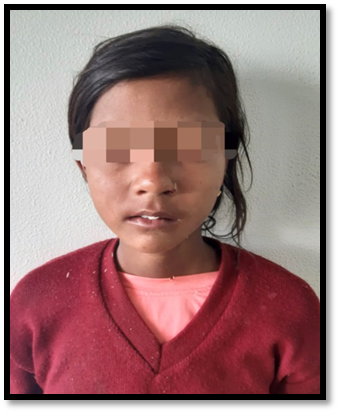
Figure 1: Extra-oral view of the patient
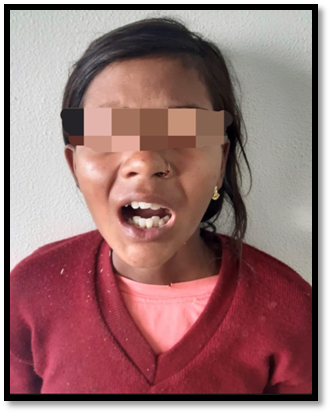
Figure 2: Difficulty in mouth opening (Stage S2M4 OSMF)
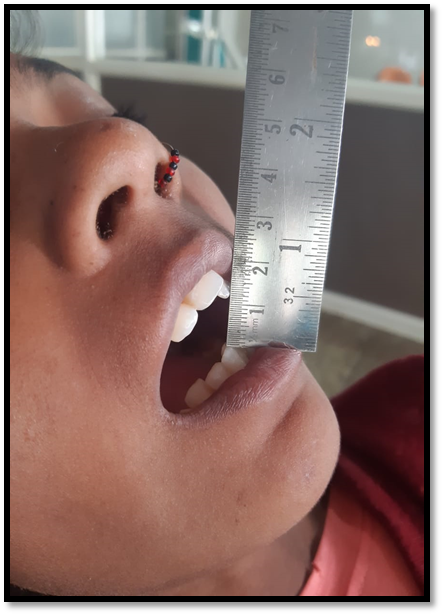
Figure 3: IID= 1.2 cm (first visit)

Figure 4: After 1 month follow-up, IID=2.2 cm

Figure 5: Protocol for management of OSMF in pediatric population13
DISCUSSION
Oral submucous fibrosis is a premalignant condition which is more prevalent in south-east Asian countries and Asians settled in other countries. Although the exact etiology is not known yet, there is quite a lot of evidence to prove areca nut chewing as the most common causative factor of OSMF. The active ingredients present in areca nut are alkaloids, nitrosamines, and tannins. Arecoline, arecaidine, guvacine, and guvacoline are the identified alkaloids in areca nut. Arecoline, which is the main alkaloid, is carcinogenic and has cytotoxic effects.14 The pathogenesis of the disease is not well established, but is believed to be multifactorial. Various mechanisms of action for OSMF have been suggested in literature. These include:
- Clonal selection of fibroblasts to produce excessive quantities of collagen during long-term exposure to betel nut,15
- Stabilization of collagen matrix by catechin and tannins present in betel nut,
- Production of type I collagen y OSMF fibroblasts,
- Increase in collagen cross-linking by up-regulation of lysyl oxidase,
- Deficient collagen phagocytosis, and
- Micronutrient and vitamin deficiencies.16
Harvey et al.,17 conducted a study on human fibroblasts which showed that alkaloids present in areca nut cause OSMF by increasing collagen synthesis by 170%. In the past few years, areca nut consumption among the younger generation has increased in the country as the sales are being commercially aimed at children by making it available near school premises and selling it in attractive pouches at affordable cost. The younger the age for onset of habit, there will be more chances of addiction and harmful consequences.18
OSMF is a potentially malignant condition and its malignant transformation rate is found to be 4.5-7.6%.19 The possible premalignant nature of OSMF was first described by Paymaster.20 The main barrier in providing treatment for OSMF cases is lack of knowledge among parents regarding the ill-effects and malignant potential of areca nut and tobacco. Since the taboos and myths regarding this disease are so deep-rooted, delivering efficient treatment becomes difficult because the desired co-operation from parents is not easily available. Only 5% of children are aware about the malignant potential of areca nut.21 Frequency of areca nut chewing is more common in children of low socioeconomic strata due to lack of awareness and low level of education among their families. The highest risk of a child initiating arecanut usage is between 5 and 12 years.22,23 Children also become habitual of areca nut chewing under peer pressure. It has been found that areca nut consumption is more common among young girls probably because of the sweet taste, attractive pouches and being easily available at a low cost.
By searching the Submucosal Fibrosis keyword in the PubMed database, only 19 studies have been found since 1985 up to now - Submucosal Fibrosis (SMF) in children below 15 years old (Table 2); while 355 articles reported this lesion in adults.
Table 2: Reported cases of OSMF in pediatric population all over the world
|
Sr. no. |
Author (year) |
Age of the patient/Gender |
Country |
No. of reported cases |
|
1 |
Hayes24 (1985) |
04(F) |
India |
1 |
|
2 |
Anil & Beena25 (1993) |
12(F) |
India |
1 |
|
3 |
Mundra et al.26 (1999) |
08(F) |
India |
1 |
|
4 |
Shah et al.27 (2001) |
11(F) |
Bangladesh |
1 |
|
5 |
Yusuf & Young28 (2002) |
12(F) |
Bangladesh |
1 |
|
6 |
Setia et al.29 (2010) |
09(M) |
India |
1 |
|
7 |
Sitheeque et al.30 (2010) |
02(F), 03(M), 03(M), 03(M), 03(F) |
Sri Lanka |
5 |
|
8 |
Shirzaii31 (2011) |
15(M) |
Iran |
1 |
|
9 |
Agrawal et al.32 (2011) |
09(F) |
India |
1 |
|
10 |
Chakraborty et al. (2011) |
10(M), 12(F) |
India |
2 |
|
11 |
Dhariwal et al.33 (2012) |
10(M), 12(F) |
India |
2 |
|
12 |
Deshpande et al.34 (2013) |
14(F) |
India |
1 |
|
13 |
Gupta et al.35 (2013) |
10(M), 11(F) |
India |
2 |
|
14 |
Kumar et al.36 (2014) |
11(M) |
India |
1 |
|
15 |
Duggirala et al.37 (2015) |
09(F), 13(M) |
India |
2 |
|
16 |
Kamat et al.38 (2016) |
12(M) |
India |
1 |
|
17 |
Khandelwal et al.39 (2017) |
14(M) |
India |
1 |
|
18 |
Sameirad et al.40 (2017) |
10(M) |
India |
1 |
|
19 |
Kariya et al.41 (2020) |
05(M) |
India |
1 |
At present, there is no definite cure for pediatric OSMF. Hence, prevention is the best strategy. The first step is to recognise that pediatric OSMF is a serious health problem. The initial treatment starts with motivating the child and the parents for cessation of the habit and counselling them regarding the associated health risks. If this is achieved, initial lesions can have a good prognosis and can be treated with the various conservative treatment modalities available. These include use of micronutrients and minerals, CO2 laser, pentoxifylline, lycopene, interferon gamma, turmeric, placental extracts and injections of steroids, chymotrypsin, hyaluronidase, or alcohol. Alternatively, procedures such as local heat therapy, mouth-opening exercises with ice-cream sticks or ballooning exercises and active physiotherapy have shown variable success rates.42,43 However, if fibrosis cannot be reversed and patient has severe trismus, surgical interventions such as myotomy, coronoidectomy, excision of the fibrotic bands, and use of mucosal or non-vascularised split thickness grafts has been reported in the literature.44,45
Measures should be taken at public health level for awareness regarding the hazardous nature of areca nut and its associated derivatives through educational campaigns, newspapers, mass-media in schools and communities. Parents and teachers play a significant role in early identification; hence training programmes for teachers should be included in the school curriculum. Studies need to give special attention to sociocultural aspects of area nut chewing habit. The government should make age proof mandatory for the purchase of these addictive substances. Policy makers should also come up with strategies like imposing higher taxes on areca nut based industries and not allowing its sale near schools to help children not indulge into the habit.
CONCLUSION
The role of pediatric dentist in prevention of areca nut addiction in children should be emphasized. Early diagnosis can be of great significance in deciding the outcome of the disease and can eventually help in reducing the mortality associated with OSMF. Early commencement of the habit at younger age leads to more chances of addiction and increased tendency for malignant transformation of OSMF. Hence, it is imperative to make prompt efforts towards creating awareness among masses against substance abuse so that the future generations do not suffer from the harmful effects of these substances simply due to ignorance.
REFERENCES
- Rajendran R. Oral submucous fibrosis-etiology, pathogenesis and future research. Bull World Health Organ 1994;72:985-96.
- R. Rajendran, Shafer’s Textbook of Oral Pathology, vol. 97, Elsevier, Noida, India, 6th edition, 2010.
- Pindborg J.J., Sirsat S.M. Oral submucous fibrosis. Oral Surg Oral Med Oral Pathol. 1966;22(6):764–779
- Jayanthi V, Probert C.S.J, Sher K.S, Mayberry J.F. Oral submucous fibrosis: a preventable disease. Gut. 1992;33(1):4–6
- W. Harvey, A. Scutt, S. Meghji, and J. P. Canniff. Stimulation of human buccal mucosa fibroblasts in vitro by betel-nut alkaloids. Arch Oral Biol. 1986;31(1):45–9.
- R. Pillai, P. Balaram, and K. S. Reddiar. Pathogenesis of oral submucous fibrosis. Cancer. 1992;69:2011–7.
- J. P. Canniff, W. Harvey, and M. Harris. Oral submucous fibrosis: its pathogenesis and management. Br Dent J. 1986;160(12):429–34.
- A. B. Kalbande, G. M. Khakse, D. Priya, and P. B. Tamgadge. Epidemiological study of oral submucous fibrosis in Yavatmal District. Int J Rec Trends Sci Technol. 2013;6(1):38–40.
- Shah SM, Merchant AT, Lucy SP, Chotani R A. Addicted school children: Prevalence and characteristics of areca nut chewers among primary school children in Karachi, Pakistan. J Paediatr Child Health 2002;38:507‑10.
- Farrand P, Rowe R M, Johnstion A, Murdoch H. Prevalence, age of onset and demographic relationships of different areca nut habits amongst children in tower Hamlets. London. Br Dent J 2001:190:150‑4.
- Khadim MI. The effects of Paan and its ingredients on oral mucosa. J Pak Med Assoc 1977;27:353‑6.
- C.B. More, S. Das, H. Patel, C. Adalja, V. Kamatchi, R. Venkatesh, Proposed clinical classification for oral submucous fibrosis. Oral Oncol. 2012;48(3):200-2.
- Jain A, Taneja S. Oral submucous fibrosis in pediatric patients: a systematic review and protocol for management. Int J Surg Oncol. 2019;2019:3497136.
- G. A. Lord, C. K. Lim, S. Warnakulasuriya, and T. J. Peters. Chemical and analytical aspects of areca nut. Addict Biol. 2002;7(1):99–102.
- Trivedy CR, Craig G, Warnakulasuriya S. The oral health consequences of chewing areca nut. Addict Biol. 2002;7:115-25.
- Tilakaratne WM, Klinikowski MF, Saku T. Oral submucous fibrosis: Review on aetiology and pathogenesis. Oral Oncol. 2006;42:561.
- W. Harvey, A. Scutt, S. Meghji, and J. P. Canniff. Stimulation of human buccal mucosa fibroblasts in vitro by betel-nut alkaloids. Arch Oral Biol. 1986;31(1):45–9.
- S. Warnakulasuriya, C. Trivedy, and T. J. Peters. Areca nut use: an independent risk factor for oral cancer. Br Med J. 2002;324(7341):799-800.
- Ahmad MS, Ali SA, Ali AS, et al. Epidemiological and etiological study of oral submucous fibrosis among gutkha chewers of Patna, Bihar, India. J Indian Soc Pedod Prev Dent. 2006;24:84–9.
- Paymaster JC. Cancer of the buccal mucosa: a clinical study of 650 cases in Indian patients. Cancer. 1956;9:431–5.
- E. Oakley, L. Demaine, and S. Warnakulasuriya. Areca (betel) nut chewing habit among high-school children in the Commonwealth of the Northern Mariana Islands (Micronesia). Bulletin of theWorld Health Organization. 2005;83(9):656–660.
- P. Farrand, R.M. Rowe, A. Johnston, H. Murdoch. Prevalence, age of onset and demographic relationships of different areca nut habits amongst children in Tower Hamlets, London. Br Dent J. 2001;190(3):150-4.
- V.K. Gupta, S. Malhotra, R. Patil, A. Tripathi, Oral submucous fibrosis at pediatric age, now time to think: series of two cases. Indian J Med Paediatr Oncol. 2013;34(2):107-10
- Hayes P.A. Oral submucous fibrosis in a 4-year-old girl. Oral Surg Oral Med Oral Pathol. 1985;59(5):475–478
- Anil S., Beena V.T. Oral submucous fibrosis in a 12-year-old girl: Case report. Pediatr Dent. 1993;15(2):120–122.
- Mundra R.K., Gupta S.K., Gupta Y. Oral submucous fibrosis in paediatric age group. Indian J Otolaryngol Head Neck Surg. 1999;51(3):60–62.
- Shah B., Lewis M.A., Bedi R. Oral submucous fibrosis in 11-year-old Bangladeshi girl living in the United Kingdom. Br Dent J. 2001;191(3):130–132.
- Yusuf H., Yong S.L. Oral submucous fibrosis in a 12â€Âyearâ€Âold Bangladeshi boy: a Case report and review of literature. Int J Paediatr Dent. 2002;12(4):271–276.
- Setia S., Kapoor C., Manchand A. Oral submucous fibrosis in A young boy. Internet J Trop Med. 2010;7(2):1–4.
- Sitheeque M., Ariyawardana A., Jayasinghe R., Tilakaratne W. Depigmentation of oral mucosa as the earliest possible manifestation of oral submucous fibrosis in Sri Lankan preschool children. J Investig Clin Dent. 2010;1(2):156–159.
- Shirzaii M. Oral submucous fibrosis in a 15-year-old boy: the first case report in Iran. J Dent (Shiraz). 2011;11:51-5
- Agrawal A., Sarkar P.A., Shigli A. Oral submucous fibrosis in a 9-year-old Indian girl. Br Med J Case Rep. 2011:bcr0820114588.
- Dhariwal R., Ray J.G., Pattanayak S.M., Swain N. Oral submucous fibrosis: a report of two pediatric cases and a brief review. J Indian Soc Pedod Prev Dent. 2012;30(1):85–88.
- Deshpande A., Kiran S., Dhillon S., Mallikarjuna R. Oral submucous fibrosis: a premalignant condition in a 14-year-old Indian girl. Br Med J Case Rep. 2013:bcr2013200786.
- Gupta V.K., Malhotra S., Patil R., Tripathi A. Oral submucous fibrosis at pediatric age, now time to think: series of two cases. Indian J Med Paediatr Oncol. 2013;34(2):107.
- Kumar S., Srivastava A., Mohan C., Pagrani M. A 11-year-old boy with oral submucous fibrosis: a rare Case report. Int J Med Publ Health. 2014;4(4):511–513.
- Duggirala T.L., Marthala M., Gannepalli A., Podduturi S.R. Oral submucous fibrosis in children: report of three cases and review. J Indian Acad Oral Med Radiol. 2015;27(1):105.
- Kamat M.S., Puranik R.S., Hallur N.H., Kumar V.V., Kamat S.B. A rare Case of tamarind seed induced oral submucous fibrosis in a 12-year-old Indian boy. J Clin Diagn Res. 2016;10(6):ZD10.
- Khandelwal V., Kambalimath H.V., Reddy N.B., Khandelwal S., Reddy V., Gupta N. Oral submucous fibrosis in a school-going Indian adolescent boy. Int J Adolesc Med Health. 2017;30(5).
- Samieirad S., Tohidi H., Eshghpour M., Hashemipour M.A. An unusual PediatricOral submucous fibrosis Case report with combinative treatment plan. World J Surg Surgical Res. 2018;1:1006.
- Pratik K, Vishal K, Shraddha S, Sweta S. No age predilection for a disease like OSMF. A case report of 5-year-old child. J Oral Biol Craniofac Res. 2020;10(2):153-7.
- Dyavanagoudar SN. Oral Submucous Fibrosis: Review on Etiopathogenesis. J Cancer Sci and Ther. 2009;1:72-7.
- Jiang X, Hu. Drug treatment of oral submucous fibrosis: A review of literature. J Oral Maxillofac Surg. 2009;67:1510-5.
- Marx RE, Stern D. Oral and Maxillofacial Pathology. A rationale for diagnosis and treatment. 1st ed. Quintessence Publishing, Illinois 2003;317-9.
- Fedorowicz Z, Chan Shh-Yen E, Dorri M, Nasser M, Newton T, Shi L. Lack of reliable evidence for oral submucous fibrosis treatments. Evid Based Dent. 2009;10:8.
Disclaimer from Guident
The views and opinions expressed in articles published in Guident are solely those of the authors and do not necessarily reflect the views of the editors, the editorial board or the publisher, Ivory India. Guident does not endorse any product, technique or treatment described. Clinical content is intended for qualified dental and medical professionals and is not a substitute for individual clinical judgement. Guident, its editors and the publisher accept no liability for any consequence arising from the use of information published in the journal.
How to cite this article
Dr. Pooja Katira, Dr. Dinesh Rao, Dr. Sunil Panwar. Oral Submucous Fibrosis in Pediatric Patient- a Case Report with Review of Literature. Guident. 2020 Dec;14(1). Available from: https://guident.net/articles/pedodontics/oral-submucous-fibrosis-in-pediatric-patient-a-case-report-with-review-of-literature.html