Scan Your Way to Digital Dentistry
Mumbai, Gulrez Alam Khan (Associate-IT) Delhi India
ABSTRACT
Digital Dentistry was taking shape a quarter of a century ago until it reached to where we dentists are today "just a click away" in real sense of the word. Digitalization is beneficial not only to a dentist in terms of accuracy, ease and flexibility but also for a patient in terms of comfort and minimalistic waiting. A lot of research has gone into bringing the intra oral scanners to the dental office and by and large its acceptance by dentists is now becoming a reality.
INTRODUCTION
Intra oral scanners are becoming an integral part of the modern dental office. They have evolved over the last two decades and today have actually helped dentist to practice dentistry at the click of the mouse there by advocating * Same day dentistry*
Clinical Indications:- Crown.
- Bridge.
- Inlay/Onlay.
- Veneers.
- Dental Implants.
- Orthodontics.
ADVANTAGES TO THE DENTIST
The open system Intra oral scanners are a boon to a practicing dentist as enrolling it into day today practice for prosthetic or orthodontic or implants thus making the dentists life easier. The introduction of Intra oral scanner helps to avoid a series of discrepancies occurring from impression to the finality of delivering the prosthesis .Dentists are extensively using this technology and advocating * Same day dentistry* thereby reducing the number of visits for the patient.
The scans are ready almost instantly and can be sent directly to a dental lab or to a chair side CAD/CAM system without the need to pour a model. Dedicated digital impression systems eliminate several cumbersome dental office tasks, such as selecting trays, preparing and using materials, disinfecting impressions and sending impressions to the lab.
In places where dental labs are located in close proximity to the clinics, practicing same day dentistry is very much possible now without heavy investments in CAD-CAM machines and staff to manage them.
This technology also improves patient acceptance and understanding of the case. It also helps in better documentations of the cases and better communication with the patient.
Digital scans can be stored on hard disks indefinitely, while conventional models which can break or chip, must be physically stored which requires additional office space. Thus the dentist can save records of patient in a much better way for future use and also for medico legal purpose if required.
And above all with the use of this technology the dentist will be able to stand out from the competition and create a niche for his/her practice amongst others.
ADVANTAGES TO THE PATIENT
Digital impressions tend to reduce repeat visits for the patients and retreatment while increasing treatment effectiveness.
The scans are captured using safe, non-invasive imaging technologies thereby ensuring complete safety for the patient.
Digital impressions enhance patient comfort to a great extent by eliminating messy alginate/PVS impressions.
It also helps the patients for better acceptance and understanding of the case.
ADVANTAGES TO THE LAB
According to me, the dental labs will benefit the most with the use of this technology as for them it will help to delivery better quality of work to their doctors at much reduced time as compared to working in the conventional way. It will also help them to scale their business in locations without having a physical presence there and still provide good service in terms of quality and turn around time.
These high-tech systems are growing in popularity because they simplify the impression process, increase accuracy, decrease procedure time and enable digital integration with dental laboratories. Moreover, lab time is reduced by not having to pour up plaster, place pins and replicas, cut and shape dies or articulate models.
Also the dental labs no longer have to engage additional staff for just collecting work from the clinics thereby reducing their staff cost.
HOW IT WILL BE A GAME CHANGER IN DENTISTRY
With the popularization of digital systems, and the tremendous growth in three areas of dentistry that can potentially benefit from digital impression taking and digital models (prosthodontics, orthodontics and dental implantology) one can confidently predict that in the coming years we will witness a true digital revolution in the dental office. A revolution that will benefit patients in terms of more efficient planning reduced discomfort and treatment efficiency .If you are not already using a digital impression system now is a great time to find one that fits your dental practice so you can increase patient comfort, decrease clinical errors and reduce the time it takes to complete a case. So go ahead and experience the convenience of digital dentistry as the future of dentistry is NOW.
IMPLANT PROSTHETICS- THE DIGITAL WAY
Presenting a case of placing a Zirconia crown post implant placement with tooth no 46 using the digital technology and without taking physical impressions.
Case done with VIZ- Adin’s Intraoral Scanner
No impressions taken, no special trays , no models poured
Screw retained zirconia crown with 46.
4 Intra oral scans required – one with scan body ( for implant angulation ) , without scan body ( for emergence profile) , one antagonist scan and finally the bite.
Case done by Dr. UdayGanatra. Lab support- Mr. Ramanna Reddy – RR Dental Lab (Hyderabad )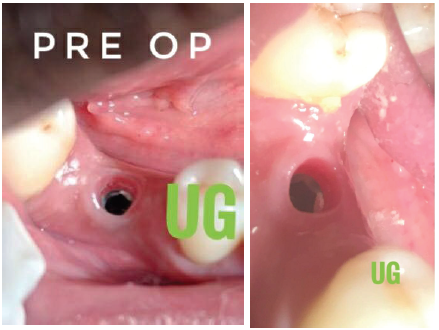
Fig 1 & 2: Pre-op image – Implant placed with 46

Fig 3 Upper (Antagonist) STL file
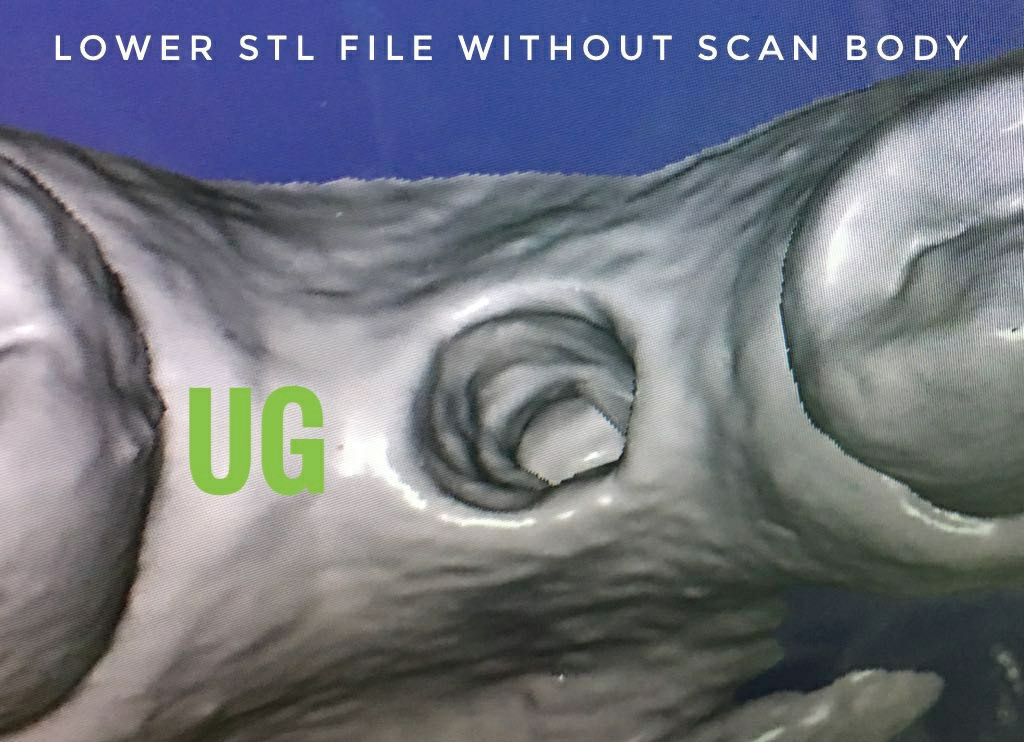
Fig 4 Lower STL file without scan body- to see the emergence profile

Fig 5 Adin scan body –RS 7mm
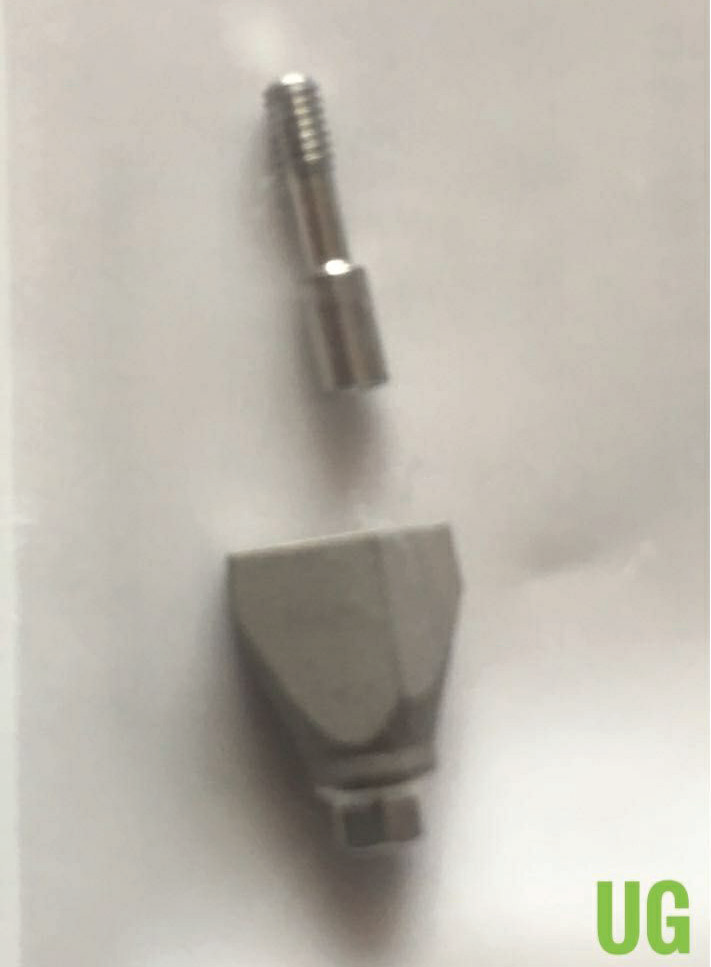
Fig 6 Adin scan body –RS 7mm

Fig 7 Scan body placed in the patient’s mouth with the flat surface facing on the buccal side and the triangular surface facing towards the lingual side

Fig 8 Lower STL with scan body – to see the implant angulation

Fig 9 Bite scan

Fig 10-13 CAD

Fig 14 Adin Ti- Base(Engaged)

Fig 15 Adin Ti- Base(Engaged)

Fig 16-17 Adin Ti- Base(Engaged)

Fig 18 Zirconia crown (with ti-base attached by the lab)

Fig 19 Crown checked in the patients mouth

Fig 20 Final post –op pic with the crown seated

Fig 21 No occlusal adjustments required with the crown and the fitting is perfect
Disclaimer from Guident
The views and opinions expressed in articles published in Guident are solely those of the authors and do not necessarily reflect the views of the editors, the editorial board or the publisher, Ivory India. Guident does not endorse any product, technique or treatment described. Clinical content is intended for qualified dental and medical professionals and is not a substitute for individual clinical judgement. Guident, its editors and the publisher accept no liability for any consequence arising from the use of information published in the journal.
How to cite this article
Dr. Uday Ganatra. Scan Your Way to Digital Dentistry. Guident. 2018 Dec;12(1). Available from: https://guident.net/articles/implantology/scan-your-way-to-digital-dentistry.html