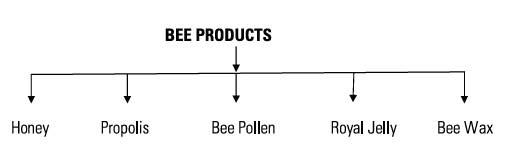
Honey Bee: The Healer !!! Propolis (Propolis Cera)
Department of Conservative and Endodontics Rajiv Gandhi Dental College & Hospital Bangalore, India
ABSTRACT
A trend has been observed in the recent past to incorporate alternate medicine/dentistry as an effective treatment modality. With patients particularly seeking alternatives to conventional treatment therapy, we need to keep ourselves abreast with prospective materials and their applications. As a continuation of the previous part of this article, we discuss another promising agent extracted from honey bee hives, namely Propolis. Propolis is a promising material that can contribute significantly to alternate treatment therapy in dentistry. With various products containing propolis gradually becoming available in the market, further research is required for its clinical applications.
INTRODUCTION
Propolis (also called Bee Glue) is derived from two Greek words: “Pro” meaning “Before” and “Polis” meaning “City” or “Defender”.(1)
Propolis is derived from the salivary secretions of honey bees (Apis mellifera). It is used to constrict hive openings and protect against intruders. It is a glue-like substance mixed with wax and essential oils to seal gaps. Propolis has recently gained attention in medicine and dentistry due to its minimal side effects.(2)
HISTORY OF PROPOLIS
The term “Propolis” is attributed to Aristotle (384–322 B.C.). Egyptians, Greeks, and Romans used it for treating wounds and infections.(1,2)
In Europe and North Africa, it was used to treat dental caries. In Sub-Saharan Africa, it remains part of traditional medicine.(2,3)
COMPOSITION
Propolis composition varies by region and plant source. Over 150 compounds have been identified. It is rich in bioflavonoids and natural antibiotics.(3)
COMPOSITION OF PROPOLIS
- Naphthoquinone epoxide
- Prenylated acids (4-hydroxy-3,5-diprenyl cinnamic acid)
CHINESE PROPOLIS

Composition of Chinese Propolis
- Medicarpin
- Caffeic Acid Phenethyl Ester (CAPE)
- Sinapinic Acid, Isoferulic Acid, Caffeic Acid, Chrysin
- Vitamins A, B Complex, and E
PROPERTIES OF PROPOLIS (3)
- Physical: Sticky above 20°C
- Colour: Yellow to dark brown
- Solubility: Ethanol, ether, glycol, water
GENERAL USES
- Anti-inflammatory(4)
- Anti-tumor(5)
- Cartilage protection(6)
- Antioxidant(7)
- Burn healing(8)
- Anti-diabetic(9)
USES IN DENTISTRY
- Dental caries(10)
- Aphthous ulcers(11)
- Radiation protection(12)
- Dentin sensitivity(13)
- Root canal(12)
- Wound healing(14)
- Pulp capping(15)
- Storage media(16,17)
- Mouth rinse(18)
- Root canal irrigant(19)
- Denture stomatitis(20)
- Periodontal therapy(21)
SOME PREPARATIONS OF PROPOLIS

Propolis Toothpaste
Propolis Throat Spray

Propolis Soap

Propolis Capsules
CURRENT POSITION OF PROPOLIS
Propolis is recognized for antibacterial, antiviral, antifungal, and anti-inflammatory properties.
A WORD OF CAUTION
Avoid use in case of bee allergies. Consult a physician before use in pregnancy or asthma.
REFERENCES
REFERENCES
- Vassya Bankova. Recent trends and important developments in propolis research. eCAM 2005;2(1)29–32.
- Hellner M, Winter D, Georgi R.V, Munsted T.K. Apitherapy: usage and experience in german bee keepers. eCAM 2008;5(4): 475-79.
- Almas K, Dahlan A, Mahmoud A (2001). Propolis as a natural remedy: An update. Saudi Dental J. 13: 45-49.
- Da Silva F B, De Almeida J M, De Sousa S M G. Natural medicaments in endodontics – a comparative study of the anti-inflammatory action. Braz Oral Res 2004;18(2):174-9.
- SchellerS, KrolW, Swiacik J, Owcare kS, Gabrys J and Shani J. Antitumocal property of ethanolic extract of Propolis in mice-bearing ehrlich carcinoma, as compared to bleomycin. Department of Microbiology, Silesian School of Medicine, Zabrze- Rokitnica, Monograph Poland 1989.
- Cardile V, Panico A, Gentile B, Borrelli F, Russo A. Effect of propolis on human cartilage and chondrocytes. Department of Physiological Sciences, University of Catania,v.le A. Doria 6, 95125, Catania, It aly Life Sci. 2003 Jul 11;73(8):1027-35.
- Russo A, Longo R, Vanella A. Antioxidant activity of propolis: role of caffeic acid phenethyl ester and galangin. Department of Biochemistry, Medical Chemistry and Molecular Biology, University of Catania, V.le A. Doria 6, 95125, Catania, Italy. Fitoterapia. 2002 Nov;73 Suppl 1:S21-9.
- Feng LI, Awale S, Tezuka Y, Kadota S. Cytotoxic constituents of propolis from Myanmar and their structure–activity relationship Biol. Pharm. Bull. 2009;32(12):2075—2078.
- Koya-Miyata S, Arai N, Mizote A, Taniguchi Y, Ushio S, Iwaki K, Fukuda S. Propolis Prevents Diet-Induced hyperlipidemia and mitigates weight gain in Diet-Induced obesity in mice. Biol. Pharm. Bull. 2009;32(12):2022—2028. Antioxidant nd anti inflame
- Hayacibara MF, Koo H, Rosalen PL, Duarte S, Franco EM, Bowen WH, Ikegaki M, Cury JA (2005). In vitro and in vivo effects of isolated fractions of Brazilian propolis on caries development. J. Ethnopharmacol., 101:110-115.
- Ozan F, Sümer Z, Polat ZA, Er K, Ozan U, De_er O (2007). Effect of mouth rinse containing propolis on oral microorganisms and human gingival fibroblast. Eur. J. dentistry. 11:195-200
- Kosenco SV and Kosovich Tiu. The treatment of periodontitis with prolonged action Propolis preparations (clinical x-ray research). Stomatologia -MOSk 1990; 69:27-9.
- Mahmoud AS, Almas K, Dahlan AA (1999). The effect of Propolis on dentinal hypersensitivity and level of satisfaction among patients from a university hospital, Riyadh, Saudi Arabia. Indian J. Dental Res., 10: 130-137.
- Magro-Filho O, de Carvalho AC (1994). Topical effect of Propolis in the repair of sulcoplasties by the modified Kazanjian techniques. Cytological and clinical evaluation. J. Nihon Univ. School Dentistry. 36: 102-111.
- Lonita R et al. Experimentation of apiarian preparations for the direct and the indirect capping of the dental pulp. Stomatologie 1990; 37:19-30.
- .Gopikrishna V, Baweja PS, Venkateshbabu N, Thomas T, Kandaswamy D (2008) .Comparison of coconut water, propolis, HBSS, and milk on PDL cell survival. J. Endod., 34(5): 587-589.
- Ozan F, Polat ZA, Er K, Ozan U, Deger O (2007). Effect of propolis on survival of periodontal ligament cells: new storage media for avulsed teeth. J. Endod., 33(5): 570-573.
- Koo H, Cury JA, Rosalen PL, Ambrosano GM, Ikegaki M, Park YK. Effect of a mouthrinse containing selected propolis on 3-day dental plaque accumulation and polysaccharide formation. Caries Res. 2002 Nov-Dec;36(6):445-8. gigivitis
- .Almas K, Mahmoud A, Dahlan A (2001). A comparative study of Propolis and saline application on human dentin: A SEM Study. Indian J. Dental Res. 12: 21-27.
- Seidel V, Peyfoon E, Watson DG, Fearnley J (2008). Comparative study of the antibacterial activity of propolis from different geographical and climatic zones. Phytother. Res., 22: 1256-1263.
- Al-Shaher A, Wallace J, Agarwal S, Bretz W, Baugh D (2004). Effect of propolis on human fibroblasts from the pulp and periodontal ligament. J. Endodontics. 30(5): 359-361.
- .Velazquez C, Navarro M, Acosta A, Angulo A, Dominguez Z, Robles R, Robles-Zepeda R, Lugo E, Goycoolea FM, Velazquez EF, Astiazaran H, Hernandez J (2007). Antibacterial and free-radical scavenging activities of Sonoran propolis. Appl. Microbiol., 103: 1747-1756.
- .Wander P (1995). Taking the sting out of dentistry. Dental Practice. 25:3-4.
Disclaimer from Guident
The views and opinions expressed in articles published in Guident are solely those of the authors and do not necessarily reflect the views of the editors, the editorial board or the publisher, Ivory India. Guident does not endorse any product, technique or treatment described. Clinical content is intended for qualified dental and medical professionals and is not a substitute for individual clinical judgement. Guident, its editors and the publisher accept no liability for any consequence arising from the use of information published in the journal.
How to cite this article
Dr. Puneeta Duggal. Honey Bee: The Healer !!! Propolis (Propolis Cera). Guident. 2013 Mar;6(5). Available from: https://guident.net/articles/general/honey-bee-the-healer-propolis-propolis-cera.html