
An Antiquated Creativeness: A Tooth Supported Overdenture Retained with a Customized Attachment: A Case Report
Department of Prosthodontics, Career Post Graduate Institute of Dental Sciences and Hospital, Lucknow
ABSTRACT
Preservation of what remains is more important than mere replacement of missing teeth. Overdentures and Overlay dentures are one such type of prosthesis which follows the Devan’s principle. Not only they decrease the residual ridge resorption but also enhance stability and retention. Attachment when used in combination with overdentures further increase the retention and longevity of prosthesis. Situations where due to lack of dentin pre-fabricated attachment placement is difficult, customization of attachments are suggested. This case report discusses a case in which customized attachment is used in a tooth supported overdenture.
INTRODUCTION
An overdenture is any removable dental prosthesis that covers and rests on one or more remaining natural teeth, the roots of natural teeth, and/or dental implants; a dental prosthesis that covers and is partially supported by natural teeth, natural tooth roots, and/or dental implants; (GPT-9). It is also called as overlay denture, overlay prosthesis and superimposed prosthesis.1,2 An overdenture is a good treatment choice for older patients with few remaining natural teeth because the roots underneath the denture base retains the alveolar ridge, provide sensory feedback, and increase denture retention, stability, and masticatory effectiveness.
The idea of overdentures is not novel; for more than a century, complete denture therapy has been successfully supported by the use of pre-existing tooth structures or retained roots.3,4 The idea was to established a simple, cost-effective substitute to delay the development of edentulousness with augmented retention of prosthesis with remaining last few teeth finding its basis in De Van's dictum of “Perpetual preservation of what remains is more important than the meticulous replacement”.5 An overdenture is a crucial component of preventive treatment and unquestionably a better option than a removable complete denture prosthesis, which is undoubtedly not without its own disadvantages. Preventive prosthodontics emphasises the significance of any procedure that can prevent or delay the occurrence of future prosthodontic issues.6
Alveolar bone preservation, proprioception, improved stability, and maintenance of the vertical dimension of occlusion are benefits of over-dentures. With time, it is simple to convert to a complete denture. The patient's psychological gain from having his own teeth is the most significant benefit, outweighing all other negatives. Improved support and retention are the results of incorporating retention mechanisms into denture teeth. Conspicuous dental hygiene upkeep to avoid cavities and periodontal disease is a drawback. The over-denture typically encroaches on the inter-occlusal distance and is bulkier and overly shaped. Compared to a traditional removable complete denture, this treatment modality is more expensive and requires periodic patient recall check-ups.7
A tooth supported overdenture prosthesis can utilize numerous abutment designs. According to Prieskel, abutment preparation for overdentures can be done in three ways: The preparation of root surface just above mucosal level (a) bare root face (b) dome-shaped gold coping; the use of attachments, and (c) thimble-shaped gold copings.8 The fabrication of tooth supported overdentures with attachments can improve the retention, stability and longevity of prosthesis but, there are situations where remaining thickness of dentin is less to accommodate post-space preparations required for prefabricated attachments or patients who cannot bear the cost of expensive attachments. So, in such scenario customization of attachment is also possible option for restoring the patient needs. Also, there are countless treatment choices for tooth-supported overdentures that may be selected from for various situations. In the current case report, customization of tooth supported overdentures with custom attachment was done after assessing the number and distance between the abutment teeth present, their intra-arch alignment, and inter-arch space available.
CASE REPORT
A 56-year-old male patient reported to the Department of Prosthodontics, Career Post Graduate Institute of Dental Sciences and Hospital, Lucknow with the chief complaint of difficulty in chewing due to missing teeth. The patient gave a history of loss of teeth for 5 years due to gum diseases. No relevant medical history affecting prosthodontic treatment was observed. Intraoral examination revealed well-formed maxillary and mandibular ridges in class I ridge relationship. (Fig 1) Only 33 and 43 were present in the mandibular arch and 23 and root stump of 13 in maxillary arch. Radiographic examination revealed adequate bone support in the mandibular arch for the teeth to be used as an abutment but poor bone support in maxillary arch. (Fig 2) The patient had three distinct treatment options: extraction of the remaining teeth, followed by a conventional complete denture, an overdenture supported by implants, or an overdenture supported by teeth. The requirement for extra surgery, the lengthier treatment phase, and associated costs led the patient to reject the option of an implant retained prosthesis. After thorough evaluation, clinical and radiographic, it was decided to retain all the remaining natural teeth and construct a maxillary overlay denture to preserve the residual ridge height and offer proprioception and a mandibular overdenture with customized extracoronal attachment.
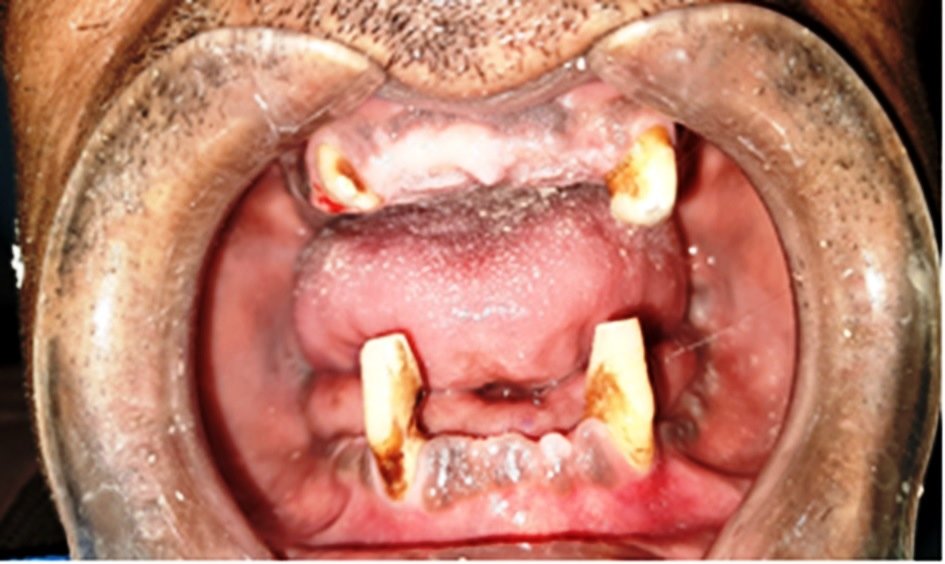
Fig 1: Intraoral Preoperative view
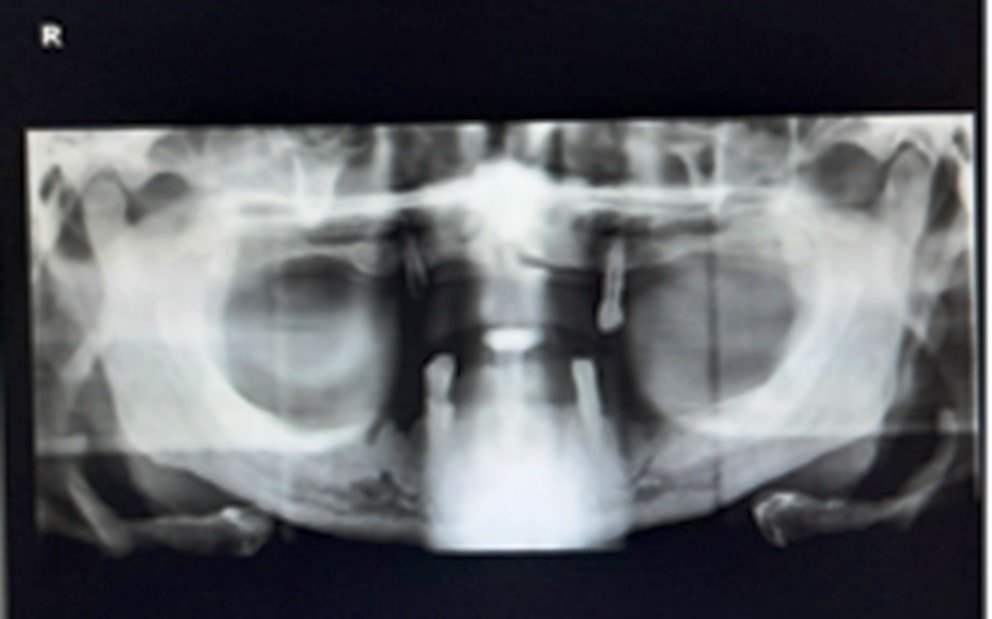
Fig 2: Preoperative OPG
Diagnostic impressions were made using alginate for partially edentulous maxillary and mandibular arches and cast poured in dental plaster. (Fig 3) Tentative jaw relation was done to assess the available inter-arch space and was found to be adequate. (Fig 4)
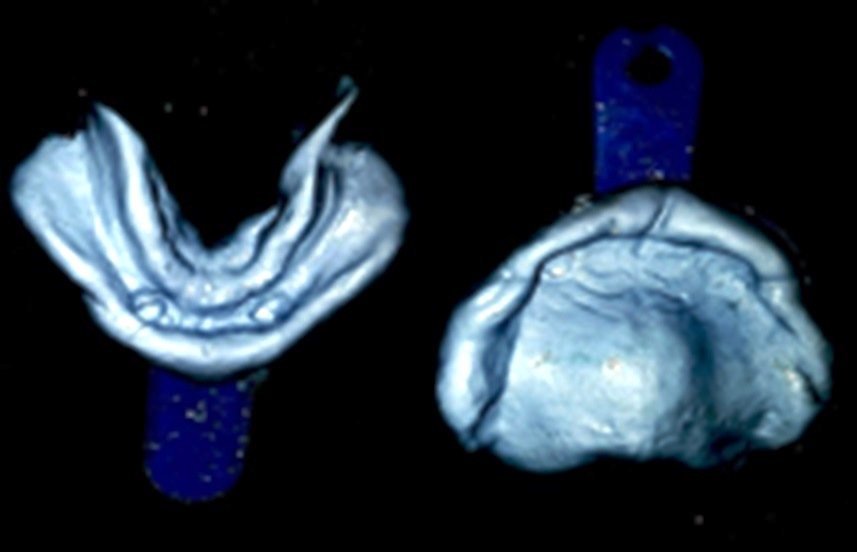
Fig 3: Diagnostic Impressions

Fig 4: Diagnostic mounting
Preparation of proposed abutment teeth was done on diagnostic cast, and the ability to accommodate abutment copings and custom ball attachments on mandibular canines was assessed. Following which, it was decided to fabricate a mandibular overdenture with custom ball attachments (male component) with use of housing (female component to be placed in denture) for attachment. The treatment plan was presented to the patient and his consent was obtained. Intentional RCT was carried out in all the remaining teeth. 13 and 23 was reduced to the gingival height to make an overlay denture. A dome-shaped contour with approximately 3–4 mm projecting just above the gingiva and post space with 2- 3 mm of radicular extensions with an anti- rotational groove were prepared in 33 and 43. Final impressions for coping fabrication were made using soft putty and light body elastomers on a sectional tray and poured in die stone. (Fig 5 & 6)
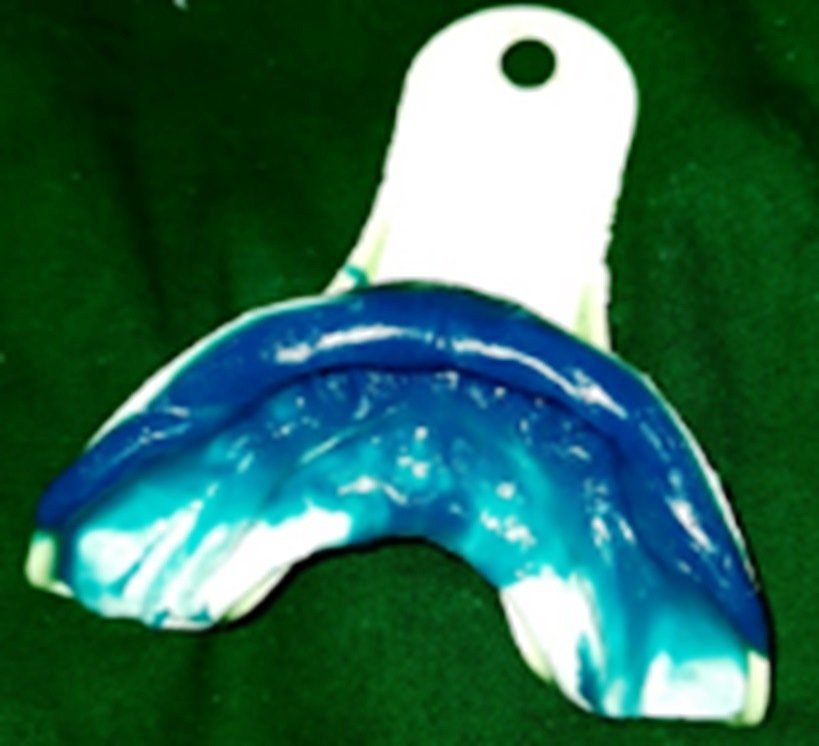
Fig 5: Final impression of prepared abutment

Fig 6
Putty material was used to take impression of male component of attachment. (Fig 7) Two positive replicas free of any voids or nodules of the male component of attachment were obtained using blue inlay wax which were attached to the coping wax patterns in a manner that both have a common path of insertion. The parallelism was verified with the help of surveyor. (Fig 8)
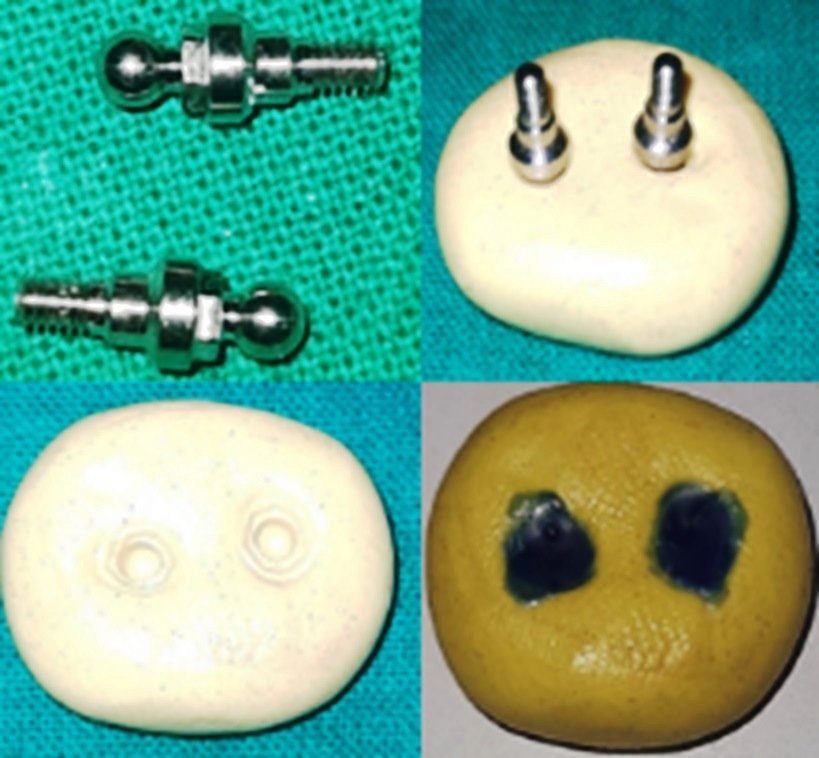
Fig 7

Fig 8: Wax pattern and surveying
The wax pattern was then casted in conventional manner with Co-Cr alloy on phosphate bonded investment material. The casting was retrieved, finished polished and checked for the fit on the cast. (Fig 9) The copings with attachments were finished and polished and tried in the patient’s mouth following which, they were luted to the abutment teeth using GIC cement. (Fig 10) Custom tray was made on the diagnostic cast with auto polymerizing resin and border moulding was done in conventional manner with green stick compound and final wash impression was made using light viscosity rubber impression material and casts were poured in dental stone. (Fig 11) Record bases and rims were made over this final cast and jaw relation was carried out. Face bow record was done in patient and was transferred in a semi adjustable articulator and maxillary mandibular casts were mounted. (Fig 12) Teeth arrangement was done and try-in was accomplished. After a satisfactory try-in, the waxed-up denture was processed using heat cure acrylic. Mesh was incorporated in maxillary denture, the acrylised denture was recovered after flasking, space were created in the mandibular denture for the attachments and the female component was picked up in the denture with auto polymerizing resin in the space while maintaining upper and lower dentures in occlusion. (Fig 13) The extra self-curing acrylic that protruded from the vent holes was removed. The final denture was given to the patient after the vent hole region had been repolished. The patient was given instructions on how to put the denture in and take it out, eat, and speak, as well as how to take care of it. Follow-up was done periodically. (Fig 14)

Fig 9: Casting of wax pattern

Fig 10: Cementation of coping

Fig 11: Final impressions and Master casts

Fig 12: Face bow transfer and Teeth arrangement
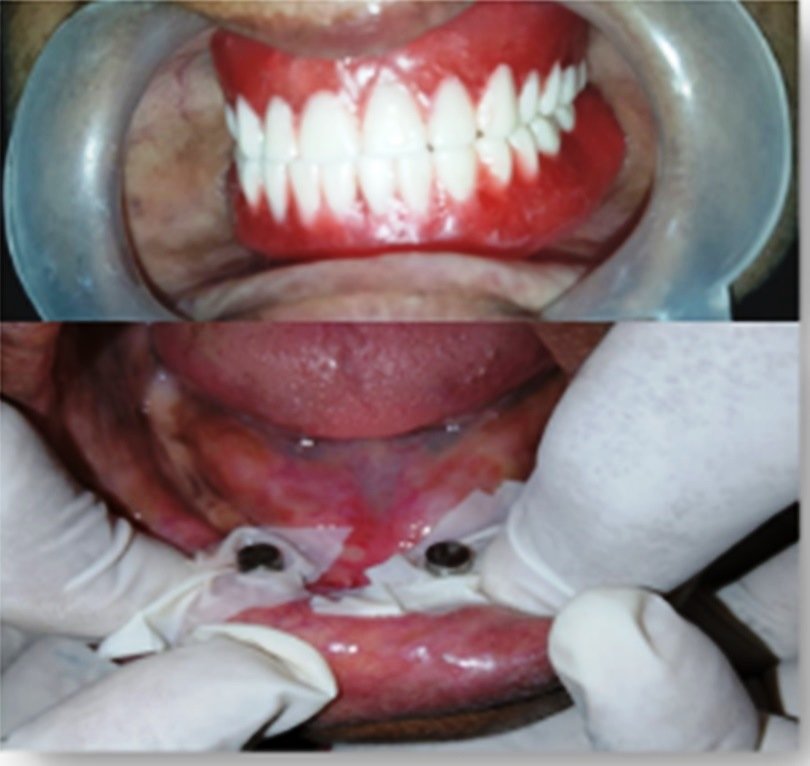
Fig: 13

Fig: 14
DISCUSSION
Overdenture is a favored treatment modality for elderly patients with few remaining teeth. Tooth supported attachment overdentures may not be used by many dentists for reasons such as cost and lack of interest in understanding indications and applications of various designs of prefabricated attachments, fear of failure and frequent repairs, replacements or adjustments.9,10,11 Due to the evolution of implants, the concept of tooth supported overdentures has eclipsed. In overdenture treatment, the teeth are included as part of the residual ridge which provides proprioception and psychological comfort to the patient.
With removable partial/complete denture prosthesis, segmented fixed prosthesis, and implant supported prosthesis, a variety of attachments are available and frequently employed. The right attachment must be chosen for each specific circumstance because no one attachment is ideal in every circumstance. The doctor can make a number of crucial decisions by examining study models and radiographs, each of which will affect the choice of attachment in the end. For patients who have some retained teeth but are not willing to undertake the surgical procedure required for implants, this is a good alternative.12
In this patient treatment, custom made ball attachments (male component) and metal housing (female component) were used as simple and extremely cost-effective alternative to the use of prefabricated attachments. Attachment retained overdentures increase masticatory efficiency and provide added retention and support to the denture. Once it is decided that a patient is to be planned for overdentures teeth to be retained as abutments should be selected. Careful selection of strategic attachment is important for the success of treatment.
Techniques for customising the prefabricated attachments were outlined in the case report, or customised copings were chosen. The diameter of attachment was approximately 1.25mm in diameter and an old metal housing of an implant attachment was used as a female component.
Customizing of attachments in tooth-supported overdentures is difficult to carry out and requires absolute accuracy from the dentist and technician, but the benefits are worth the effort if planned properly.5 The buccolingual, mesiodistal, and inter-arch spaces, bone support, the material and type of the opposing dentition, clinical competence and experience, a patient's preferences, maintenance requirements, and cost are all deciding factors.13 The patient's attitude and level of interest in the treatment should also be evaluated because the choice of patient is essential to success. For those who are aware of the drawbacks and advantages of overdentures, attachment retained overdentures should be carefully chosen.
CONCLUSION
To improve the retention, stability, and functionality of tooth-supported overdentures, customization of attachments may be a quick and affordable alternative to using or modifying precision attachments. Overdentures that are supported by teeth run the risk of developing cavities, developing periodontitis around the abutments, and fracture. However, longevity and success of the attachment overdenture prosthesis can be achieved with careful patient selection, thorough treatment planning, and alterations in the denture such as using amalgam stops, cross-linked teeth, metallic mesh, and radicular extensions.
REFERENCES
- Ferro KJ, Morgano SM, Driscoll CF, Freilich MA, Guckes AD, Knoernschild KL, McGarry TJ, Twain M. the Glossary of Prosthodontic Terms, Edition Nine, J Prosthet Dent; May 2017 Volume 117 Issue 5S;
- Dhir RC. Clinical assessment of overdenture therapy. J Indian Prosthodont Soc 2005;5: 187-92.
- Fenton AH. The decade of overdentures: 1970–1980. J Prosthet Dent. 1998; 79:31–36. doi: 10.1016/S0022-3913(98)70190-8
- Morrow RM, Powell JM, Jameson WS, Jewson CG, Rudd KD. Tooth supported complete dentures: an approach to preventive prosthodontics. J Prosthet Dent. 1969; 21:513–522. doi: 10.1016/0022-3913(69)90073-0
- Samra RK, Bhide SV, Goyal C, Kaur T. Tooth supported overdenture: A concept overshadowed but not yet forgotten! J Oral Res Rev 2015; 7:16-21.
- Renner RP, Gomes BC, Shakun ML, Baer PN, Davis RK, Camp P. Four-year longitudinal study of the periodontal health status of overdenture patients. J Prosthet Dent 1984; 51:593-8.
- Singh M, Chaudhary A, Aggarwal A, Dixit K. Tooth Supported Overdenture with an Attachment: A Case Report. International Journal of Science & Healthcare Research. 2020;5(1):242-6.
- Preiskel HW. Overdentures Made Easy: A Guide to Implant and Root Supported Prostheses. London, UK: Quintessence Publishing Co.; 1996.
- Burns DR, Ward JE. Review of attachments for removable partial denture design: 1. Classification and selection. Int J Prosthodont 1990;3:98-102.
- Burns DR, Ward JE. A review of attachments for removable partial denture design: Part 2. Treatment planning and attachment selection. Int J Prosthodont 1990;3:169-74.
- Burns DR. Mandibular implant overdenture treatment: Consensus and controversy. J Prosthodont 2000;9:37-46.
- Bansal S, Aras MA, Chitre V. Tooth Supported Overdenture Retained with Custom Attachments: A Case Report. J Indian Prosthodont Soc. 2014 Dec;14(Suppl 1):283-6. doi: 10.1007/s13191-013-0340-0. Epub 2013 Dec 12. PMID: 26199532; PMCID: PMC4502008.
- Toolson LB, Smith DE. A five-year longitudinal study of patients treated with overdentures. J Prosthet Dent 1983;49:749-56.
Disclaimer from Guident
The views and opinions expressed in articles published in Guident are solely those of the authors and do not necessarily reflect the views of the editors, the editorial board or the publisher, Ivory India. Guident does not endorse any product, technique or treatment described. Clinical content is intended for qualified dental and medical professionals and is not a substitute for individual clinical judgement. Guident, its editors and the publisher accept no liability for any consequence arising from the use of information published in the journal.
How to cite this article
Dr. Bhupendra Rizal, Dr. Neeranshi Swaroop, Dr. Pratibha Katiyar. An Antiquated Creativeness: A Tooth Supported Overdenture Retained with a Customized Attachment: A Case Report. Guident. 2023 Mar;16(4). Available from: https://guident.net/articles/prosthodontics/an-antiquated-creativeness-a-tooth-supported-overdenture-retained-with-a-customized-attachment-a-case-report.html


