
Reactive Oxygen Species, Oxidative Stress and Periodontal Diseases-a Review
Department of Periodontology, K.D.Dental College and Hospital, Mathura, Uttar Pradesh, India
ABSTRACT
Chronic periodontitis is an infectious disease associated with specific bacteria and characterized by inflammation of supporting tissues of teeth and the progressive destruction of alveolar bone and connective tissue. The destructive disease's progression seems to depend on an abnormal host response to sub-gingival plaque biofilm. Over the past few years, strong evidence has emerged to implicate oxidative stress in the pathogenesis of periodontitis. Free radicals and reactive oxygen species (ROS) are essential to many normal biologic processes. At low concentrations, these free radicals stimulate the growth of fibroblasts and epithelial cells in culture, but at higher concentrations, it may result in tissue injury.
INTRODUCTION
Dental plaque harbors a number of bacterial pathogens which stimulate host cells to release various interleukins and TNF-α. These pro-inflammatory cytokines attract polymorphonucleocytes (PMNs) to the site of infection. PMNs encounter this bacterial challenge by producing proteolytic enzymes and O2 by oxidative burst. The human body has developed an anti-oxidant defense system comprising endogenous anti-oxidants such as Vitamin A, C, E, and B, carotene, and enzymatic oxidants such as superoxide dismutase, catalase, and myeloperoxidase. This antioxidant system functions to detoxify ROS and modify them to form less reactive species.
An antioxidant is any substance that significantly delays or prevents the oxidation of an oxidizable substrate. Antioxidants are classified by five methods: mode of function, location of the action, solubility, structural dependence, and origin and source.1,2
This review aims to highlight the role of ROS and antioxidant defense systems in the pathobiology of periodontitis and search for possible therapeutic modalities for future host-modulating therapies.
REACTIVE OXYGEN SPECIES
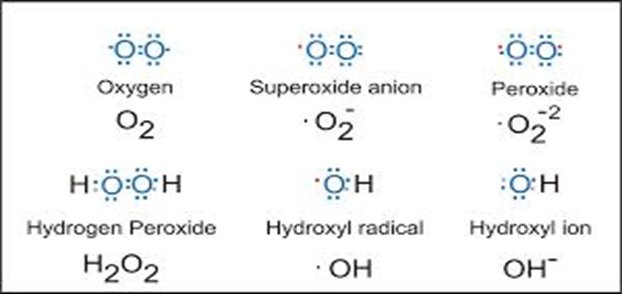
Free radicals have been defined as any species capable of independent existence that contains one or more unpaired electrons. It is well known that free radicals and ROS are essential for many biologic processes. They are produced as superoxide ions by neutrophils at the site of infection. They are, by nature, highly reactive and diverse species, capable of extracting electrons and thereby oxidizing a variety of biomolecules vital to cell and tissue functions, which not only include oxygen-free radicals, but also nitrogen and chlorine species. ROS is a term that has become more popular because it encompasses other reactive species which are not true radicals but are nevertheless capable of radical formation in the intra- and extra-cellular environments.3,4,5
Reactive oxygen species (ROS) are products of normal oxygen metabolism and have beneficial biological effects, in low levels and under normal conditions. Instead, higher concentrations present harmful effects to the body. External environment (heat, UV light, X and gamma radiations, therapeutic drugs), behavioral activities (smoking, chronic exercise) and inflammatory cells (such as activated macrophages and neutrophils release various ROS (H2O2, NO, O2−, HO, and HOCl). Even though ROS have extremely short half-lives, they can cause substantial damage to tissues and cellular components.
Body cells are exposed to oxidants originating from a large variety of endogenous and exogenous sources. Exogenous sources include heat, trauma, ultrasound, ultraviolet light, ozone, smoking, exhaust fumes, radiation, infection, excessive exercise, and therapeutic drugs. Endogenous sources are primarily: (a) By-products of metabolic pathways, electron leakage from mitochondrial electron transport systems forming superoxide; (b) Functional generation by host defense cells (phagocytes) and cells of the connective tissues. These oxidants whether they are free radicals or ROS play an important role in periodontal tissue destruction.6,7,8
OXIDATIVE STRESS AND PERIODONTAL DISEASE
The physiologic and pathologic changes in the human body depend on free radical (FR) and reactive oxygen species (ROS) interactions and to maintain normal cellular activities.3 In aerobic organisms, the imbalance between ROS generation and antioxidant levels leads to increased oxidative stress and cellular degeneration . Antioxidants can counter the formation of free radicals and prevent free radical damage by donating electrons.
Periodontitis affects the teeth's supportive tissues (gingiva, cementum, periodontal ligament, and alveolar bone). Periodontitis is caused by disequilibrium between periodontal tissue destruction and repair involving the host response to bacterial challenge. Polymorphonuclear leukocytes (PMNs) are the primary host defense against periodontal pathogens. Individuals with periodontal disease have an imbalance between oxidants and antioxidants. Following bacterial antigen stimulation, ROS or free radical molecular species are generated by PMNs, as a result of the inflammatory tissue response mechanisms. These mechanisms have been implicated in ROS involvement in periodontal disease, including the possible interactions of PMNs with respect to the level of oxidation products and transition metal ions, neutrophil dysfunction, and antioxidant levels.

Even though ROS have extremely short half-lives, they can cause substantial damage to tissues and cellular components. Recently, systemic OS was also associated with the suppression of bacterial-specific IgG levels. At the cellular level, ROS progression starts with membrane lipid peroxidation followed by cytosolic proteins modification and ending with DNA oxidation . Lipid peroxidation is initiated by the hydroxyl radical, while its major final products are MDA and 4-hydroxyl-2-nonenal (HNE). Therefore, MDA is one of the most used biomarkers to evaluate oxidative damage in both local and systemic disorders.
Several amino acids (such as tyrosine) can also react with ROS, generating a wide range of products, from modified and less active enzymes to denatured, non-functioning proteins. Furthermore, mitochondrial DNA are also affected by the ROS attack. HO can react with all components of DNA molecules, damaging both purine and pyrimidine.
There are many enzymatic antioxidant defense mechanisms in order to protect against ROS effects in vivo: SOD, GPx, CAT. Saliva has its own fighting mechanisms: uric acid, ascorbate, reduced glutathione and alpha tocopherol. Urate, the most important salivary antioxidant, acts as a scavenger for hydroxyl radical, singlet oxygen, or peroxynitrite, especially in presence of ascorbic acid or thiols.
Tissue destruction in periodontal diseases is considered to be the result of an altered inflammatory/immune response to microbial plaque and involves massive release of neutrophils, ROS and enzymes . Gingival epithelial cells form the first line of defence in the gingival crevice. So, they have the key role as the protection mechanism of host oral structures from bacterial invasion. Thus, gingival epithelial cells produce an adaptive immune responses and release the chemotaxis factor for neutrophils antimicrobial peptides and pro-inflammatory cytokines, such as interleukin-8 (IL-8). Unfortunately, on the other hand, over-expression of these pro-inflammatory cytokines causes collateral tissue damage. ROS produced by activated neutrophils in response to periodontopathogenic bacteria cause serious periodontal tissue lesions, in the context of periodontal disease .
Therefore, the balance between antioxidant mechanisms and ROS is of utter importance in periodontal pathogenesis. Increased ROS and inhibited antioxidant mechanisms and/or decreased antioxidant capacity might lead to problems of the periodontium. Several authors reported a positive correlation between periodontal tissue damage and high levels of ROS. Hypoxia and inflammation induced higher expression of ROS in primary periodontal ligament fibroblasts . Besides, the exposure of periodontal ligament cells to hydrogen peroxide decreased their viability by promoting apoptosis.

Researchers have also started to consider a possible relationship between periodontitis and systemic diseases. Diabetes mellitus metabolic syndrome and periodontal disease are all of related by a common factor known as OS. There was a major alteration of the local antioxidant defence mechanism in the gum and/or bone tissues of type 2 diabetes mellitus patients, which presented lower glutathione levels. Interestingly, another clinical study concluded that adults affected by both periodontitis and diabetes mellitus exhibited higher serum values of SOD . The authors considered that this might have been an adaptive mechanism against ROS that were developing in the tissues.9
A particularly important aspect of oxidative stress is the systemic oxidative stress that is involved in many diseases, such as diabetes mellitus, heart failure, atherosclerosis, myocardial infarction, and respiratory disease. An association has been observed that people who have periodontal disease often show increased glucose levels. Patients with well-controlled diabetes (measured by blood glycated hemoglobin levels) have less severe periodontal disease than those who have poorly controlled diabetes. In cardiovascular disease (CVD), the same bacteria that causes periodontal infection can enter the bloodstream and contribute to the chemistry that forms arterial plaques and clogs arteries.30-31 Consequently, these inflammatory products may cause atherosclerosis, which reduces blood supply to the tissues and organs. People who have periodontal disease are at high risk for coronary heart disease and carotid intima-medial thickening. The moderate elevation of C-reactive protein (CRP) is a predictor of increased risk for CVD. Periodontal infections also can lead to a higher risk for respiratory disease. People who normally smoke and those with poor immune response are more susceptible to respiratory diseases, including pneumonia, bronchitis, emphysema, and chronic obstructive pulmonary disease.10,11
CONCLUSION
Oxidative stress lays at the heart of the periodontal tissue damage that results from host–microbial interactions, either as a direct result of excess ROS activity/antioxidant deficiency or indirectly as a result of the activation of redox-sensitive transcription factors and the creation of a pro-inflammatory state.
ROS compromises the body's ability to fight infection and repair tissue in periodontal disease, as well as in many systemic conditions. Based on a new classification system of periodontal disease,70 further studies can help establish the link between periodontal disease and other elevated markers of inflammation in systemic diseases, such as diabetes, heart failure, atherosclerosis, myocardial infarction, and respiratory disease.
Dental products as well as dietary and environmental compounds are among the many sources of ROS. In particular, tobacco smoking promotes ROS release, resulting in heightened oxidative damage to periodontal tissues. Tobacco plays a significant role in many diseases, because it affects almost every organ and reduces general and oral health of both smokers and nonsmokers. Antioxidant treatment can block the production of ROS or obstruct its effects and may be therapeutically valuable in reducing the risk for many dental diseases.
REFERENCES
- Halliwell B. Reactive oxygen species in living systems: Source, biochemistry and role in human disease Am J Med. 1991;91:14S–22.
- Canakçi CF, Ciçek Y, Canakçi V. Reactive oxygen species and human inflammatory periodontal diseases Biochemistry (Mosc). 2005;70:619–28.
- Demple B, Harrison L. Repair of oxidative damage to DNA: Enzymology and biology Annu Rev Biochem. 1994;63:915–48.
- Halliwell B, Gutteridge JM, Cross CE. Free radicals, antioxidants and human disease: Where are we now? J Lab Clin Med. 1992;119:598–617.
- Halliwell B. How to characterize an antioxidant: An update Biochem Soc Symp. 1995;61:73–101.
- Halliwell B, Whiteman M. Measuring reactive species and oxidative damage in vivo and in cell culture: How should you do it and what do the results mean? Br J Pharmacol. 2004;142:231–55.
- Uchida K. 4-Hydroxy-2-nonenal: A product and mediator of oxidative stress Prog Lipid Res. 2003;42:318–43.
- Roberts LJ II, Morrow JD. Products of the isoprostane pathway: Unique bioactive compounds and markers of lipid peroxidation Cell Mol Life Sci. 2002;59:808–20
- Levine RL. Carbonyl modified proteins in cellular regulation, aging and disease Free Radic Biol Med. 2002;32:790–6.
- Halliwell B, Gutteridge JM. The antioxidants of human extracellular fluids Arch Biochem Biophys. 1990;280:1–8.
- Chapple IL. Role of free radicals and antioxidants in the pathogenesis of the inflammatory periodontal diseases Clin Mol Pathol. 1996;49:M247–55.
Disclaimer from Guident
The views and opinions expressed in articles published in Guident are solely those of the authors and do not necessarily reflect the views of the editors, the editorial board or the publisher, Ivory India. Guident does not endorse any product, technique or treatment described. Clinical content is intended for qualified dental and medical professionals and is not a substitute for individual clinical judgement. Guident, its editors and the publisher accept no liability for any consequence arising from the use of information published in the journal.
How to cite this article
Dr. Satendra Sharma, Dr. Shailendra S. Chauhan, Dr. Ankita Garg. Reactive Oxygen Species, Oxidative Stress and Periodontal Diseases-a Review. Guident. 2023 Apr;16(5). Available from: https://guident.net/articles/periodontics/reactive-oxygen-species-oxidative-stress-and-periodontal-diseases-a-review.html


