Paediatric Asthma: Manifesting & Managing It, S Effects on Oral Cavity
Department of Pedodontics and Preventive Dentistry, K. D. Dental College, Mathura, U.P. India
Asthma is a common chronic inflammatory disorder of the airway characterized by recurring symptoms such as wheezing cough, chest tightness and dyspnea. It is prevalent in all the races worldwide. Although genetic factors are important in diagnosing a disease but the epigenetic factors are thought to be of considerable importance in the induction of disease.
Asthma is predominantly seen in boys as compared to girls with the ratio of 2:1 until puberty, however, this ratio becomes 1:1 in females until puberty, but after puberty the disease is thought to be more prevalent in females.
Death due to asthma is although uncommon, but has increased in over last few years. There are more than 100,000 deaths that are estimated worldwide which approximate counts to around 4–7% people globally. However, paediatric asthma may vary country to country. The prevalence of childhood asthma ranges from 4–32%. According to International Study of Asthma and Allergies in Childhood (ISAAC), the prevalence of the same is found to be relatively low in India.
ORAL MANIFESTATIONS
By definition, asthma is a chronic inflammatory disease of airway that could be of allergic or infective origin. The asthmatic child is invariably on medications for a long time giving him undesirable effects on its dentition and overall oral cavity. It has been observed that these children generally suffer from increased prevalence of dental caries, gingivitis, periodontitis, orofacial abnormalities and multiple oral infections.
Mucosal changes
The treatment of asthma is basically done by inhaled corticosteroids and bronchodilator that predisposes patient to oropharyngeal candida infections. The other changes include coating of the tongue, alteration in taste and taste buds. Ulceration, thinning of mucosal lining is also reported in these cases. Detachment of mucosal layer contributes to epithelial ulceration. Cases of erythema multiforme have also been reported. Burning mouth syndrome was also frequently reported in the cases.
Oral infections
Gingivitis and periodontitis have been linked strongly with bronchial asthma. However, this could be due to mouth breathing pattern in asthmatic children causing to dehydration and desiccation of oral mucosa. This consequently leads to gingivitis and periodontitis. Effect of medications can also be considered as a contributing factor toward periodontitis. It is also suggested that asthmatic children have a greater tendency to develop calculus as compared to healthy ones, this could be attributed to increased levels of calcium and phosphorus found in the salivary glands of children.
Caries
The association of caries development has been established by many studies in asthmatic children. Higher prevalence rate of dental caries in asthmatic children than non asthmatics has been reported. The most probable cause could be the prolonged used of b agonist that diminishes the salivary secretion, ultimately resulting in xerostomia. Another cause of high caries could be the use of antiasthmatic medication containing fermentable carbohydrates and sugar (cough syrup).
Xerostomia
This reduced salivary flow is also accompanied by increased colonization of lactobacilli and Streptococcus mutans that are responsible for the demineralization of hard tissue. The overall xerostomic effect occurs due to lack of salivary flow that also exhibits the generalized erythema of the oral cavity. The marked reduction of pH below 5.5 makes the entire environment of the oral cavity to be acidic predisposing to enamel demineralization.
Erosion
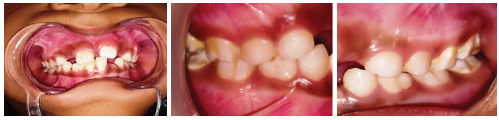
Other hard tissue changes include erosion of the cervical or the palatal portion of the teeth; this cloud be due to development of GERD in asthmatics who have been on long-term b agonists therapy.(Fig 1)

Figure 1: showing crater formation due to erosion of teeth
Orofacial abnormalities
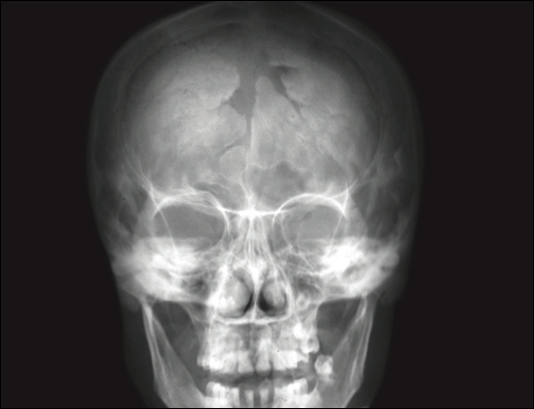
The association of asthma and orofacial abnormality has been assessed and discussed for years, reason being the impaired naso-respiratory function in these patients leading to dentofacial abnormalities. These patients have reported to have long face, increased vertical height, constricted airways, enlarged adenoids, high palatal arch, V-shape dentition, greater overjet, posterior cross-bite, incompetent lips and mouth breathing possibly. This appearance is typically known as adenoid facies. (Fig 2-4)
DENTAL MANAGEMENT
Pulmonary status of an asthmatic is of paramount importance while considering a dental treatment for one. The frequency, duration, precipitating factors and the type of pharmacotherapy should be taken into account while identifying the risk of an attack in the dental chair. A good clinical history would be very instrumental in ruling out various factors.
As a golden rule, dental procedures should never be considered for symptomatic and uncontrolled cases where symptoms such as cough, wheezing and discomfort will make it difficult for the patient to sit through the treatment.
Most of the trigger factors of inducing asthmatic attacks are allergens, dust, things with strong smell, chemical agents and most importantly stress. Avoidance of all these agents is very important while treating asthmatic patients.
Oral health providers should be aware of potential hazards materials such as pit and fissure sealants, fluoride trays, cotton rolls, interim restorations containing methyl methacrylate and dentifrices. One should also be cautious enough to elicit the history of any previous episode of exacerbations during the dental visit.
Patients on long-term corticosteroids may additionally suffer from adrenal crisis and will not be in a capacity to deal with stress, these patients additionally may need prophylactic administration of antibiotics to prevent infection.
Review of medicines, patient history of last attack and physician’s approval will help in identifying the severity and frequency of attacks and determining the allergens.
Many studies have indicated the significant reduction in pulmonary function during a dental procedure. The reason behind this could be the reclined or semi reclined position, make sure that the patient is comfortable with his chair position and oxygen therapy is handy during the procedure.
Most of the exacerbations are likely to occur during dental treatment, i.e. immediately or during administration of local anesthesia, pulp extirpation, extraction, minor surgery, induction of general anesthesia and anxiety of the patient. All these factors are thought to be contributing to the precipitating factors. In order to avoid such a situation, it should be made sure that patient has taken most recent scheduled dose of medication prior to the treatment.

Figure 2: Showing clinical picture of an asthmatic child exhibiting typical adenoid facies and mouth breathing habit
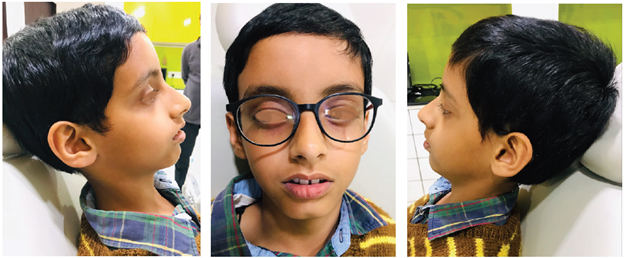
Figure 3: Showing another clinical picture of an asthmatic child exhibiting typical adenoid facies and mouth breathing habit
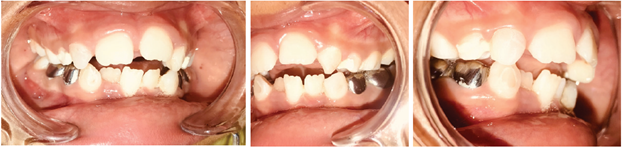
Figure 4: Showing an intraoral clinical picture of an asthmatic child exhibiting dental changes such as open bite, narrowing of arch, retained infantile swallow and developing malocclusion
Stress management techniques should be used to handle these children along with premedication and glucocorticoids. According to Malamed, patients with mild to moderate asthma, NO2 can be used as an anxiolytic treatment and can prevent acute symptoms; however, use of NO2 is contraindicated in severe asthma due to potential airway irritation. Narcotic and barbiturates are contraindicated during the use of inhalation sedation due to histamine release that can precipitate bronchospasm. Extreme caution should be taken while using intravenous route as there is limited control over.
It has been suggested that patients having more than mild asthma should be treated under vigilance and monitoring of vital signs and intubations equipment. Pulse oximeter is very hardy tool in determining the body vitals. Oxygen saturation should be maintained between 97% and 100%.
Patient on long-term steroid therapy should undergo a replacement therapy before a dental treatment. Aspirin and NSAIDs are strongly related with asthma due to inhibition of enzyme cyclooxygenase.
Rubber dam should be used judiciously as it can accentuate the asthmatic attack.
Carious lesion, bacteria loaded aerosols, ultrasonically triggered water, aeroallergens such as enamel dust, acrylate are potent precipitants.
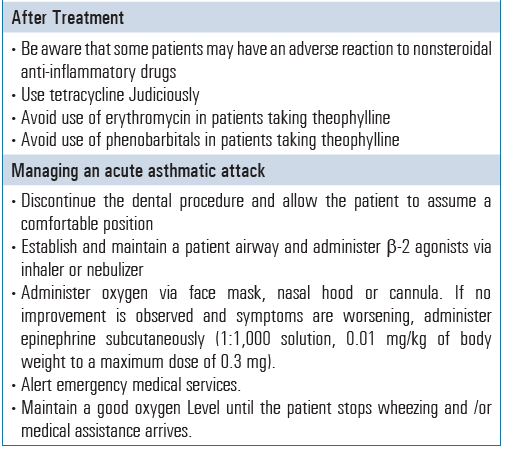
In an event of acute asthmatic attack during dental treatment, stop the treatment immediately, remove all intraoral instruments, cotton rolls, rubber dam and check for any remnants. Initiate the emergency protocol (Table 1).


CONCLUSION
Bronchospasm and allergies being the main etiological factors for exacerbation of the condition in a dental operatory, care should be taken regarding the optimal hygiene, aerosol, drugs and local anaesthesia administration. Anxiety is also a well-known asthma trigger, and the dental environment is a common site for an acute asthmatic attack. Therefore, it should be ascertained that the patient has taken his or her most recent scheduled dose of antiasthma medication before treatment.
Disclaimer from Guident
The views and opinions expressed in articles published in Guident are solely those of the authors and do not necessarily reflect the views of the editors, the editorial board or the publisher, Ivory India. Guident does not endorse any product, technique or treatment described. Clinical content is intended for qualified dental and medical professionals and is not a substitute for individual clinical judgement. Guident, its editors and the publisher accept no liability for any consequence arising from the use of information published in the journal.
How to cite this article
Dr. Priya Verma. Paediatric Asthma: Manifesting & Managing It, S Effects on Oral Cavity. Guident. 2019 Mar;12(4). Available from: https://guident.net/articles/pedodontics/paediatric-asthma-manifesting-managing-it-s-effects-on-oral-cavity.html