Ozone Therapy in Pediatric Dentistry- a Review
Tathgur Hospital, Nanaksar Road, Opp. Nanaksar Gurudwara Sahib Barnala, Punjab
ABSTRACT
Ozone a triatomic molecule, blue colored gas is not at all new but it has become a new treatment modality in dentistry over the conventional therapeutic modalities. Ozone therapy has successfully being used in the medical field for treatment of various diseases for more than 100 years. Use of ozone is based on its antimicrobial, antihypoxic and immunostimulating properties. Ozone is used in the form of ozone gas, ozonated water and oil. Its applications include caries prevention as a disinfectant, irrigant, antimicrobial agent and adjunct to periodontal therapy and in osteoradionecrosis of jaw. Ozone therapy is completely painless, noninvasive and has advantages of lack of side effects or adverse reactions, increased patient's acceptability and compliance thus making it an ideal treatment option for pediatric patients where patient compliance is of prime importance. The primary objective of this article is to provide a general review about the applications of ozone in pediatric dentistry.
KEYWORDS: Ozone, Antimicrobial, Dental Caries, Root Canal Treatment.
INTRODUCTION
Ozone is a blue gas naturally present in stratosphere with a concentration of 16–20 mg/m. It is made up of three oxygen atoms that give unstable oxygen gas which has highest oxidation potential.1,2 It is one of the most important gases in the stratosphere due its ability to filter UV rays which is critical for the maintenance of biological balance in the biosphere.3 The word ozone originates from the Greek word “ozein”, which means “odor” or “to smell” named after its characteristic odor usually detected by human nose at 0.02 or 0.05 ppm.1,4 Ozone is heavier than air and hence it falls downward to earth from such high altitudes.5 It cleanses the air and combines with any pollutant that it comes in contact. This is earth’s natural way of self-cleansing.6 Since more than 100 years medical grade ozone has been used as one of the non-medication methods of treatment.7 Ozone is one of the most powerful antimicrobial agents available for use in medicine and dentistry.8 The objective of this article was to update the recent applications of ozone in clinical dentistry.
CHEMISTRY
Ozone is a blue-colored gas with three atoms of oxygen arranged in a cyclic structure.9 Ozone which is used for the medical purpose is a mixture of oxygen (95%–99.95%) and pure ozone (0.05%–5%) (Figure 1). Ozone is an unstable gas, as it gives up nascent oxygen molecule to form oxygen gas.5 Therefore, it is impossible to store ozone for a more extended period, as only half of the mixture remains ozone within an hour after the preparation. Ozone acts as an oxidant, which led to its use in the medical and dental fields. Ozone has unique properties because of which it has a wide range of applications. These properties include antimicrobial, immune stimulator, antihypoxic, vasodilator, detoxicating, and biosynthetic. In addition, ozone is a potent reparative agent for pulp tissue and is completely biocompatible.10
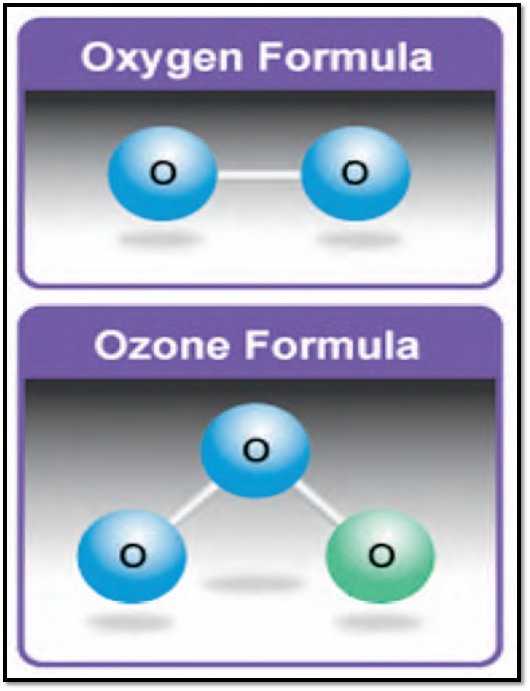
Figure 1. Oxygen and ozone formulas
PROPERTIES
Ozone exists as colorless gas, with a pungent odor at room temperature, detectable even at concentrations as low as 0.02–0.05 ppm.11 Its half life varies with temperature variation. At 20 0C it has a half-life of 40 min at 0 0C about 140 min.12
HISTORY
Christian Friedrich Schonbein, the German chemist, ‘the father of ozone therapy’, first discovered ozone in 1840.2 Ozone was first of all used by E.A. Fisch in 1930’s to treat dental problems.13 However, at that time ozone resistant materials like dacron and teflon were not available which led to difficulty in use of ozone at that time. Manufacturing of ozone resistant material began in 1950, which boosted the use of ozone in dentistry. In 1957, Joachim Hänsler, a German physicist and Hans Wolff, a German physician developed ozone generator for medical use.14
OZONE IS PRODUCTION STYSTEMS 3
Natural Methods:
- From electrical discharges following thunderstorms. Ozone is created when an oxygen molecule receives an electrical discharge breaking it into two oxygen atoms. The individual atoms combine with another oxygen molecule to form an O3 molecule (Figure 2).
- From ultraviolet rays emitted from the sun which plays the role of electrical discharge over oxygen present in the stratosphere, thus, creating the ozone layer which absorbs most of the ultraviolet radiation emitted by the sun. Medical grade ozone is made from pure medical oxygen because oxygen concentration in the atmospheric air is variable. Atmospheric air is made up of nitrogen (71%), oxygen (28%), and other gasses (1%) including ozone which is altered by processes related to altitude, temperature, and air pollution.

Figure 2. Production of ozone
There are three different systems for generating ozone gas: 3,15
- UV system: In this system, a UV Lamp at 185 nm creates ozone from oxygen by disrupting the oxygen molecule and splitting it into two oxygen atoms. These two oxygen atoms attempt to attach to each other to form an oxygen molecule. This attachment of third oxygen molecule leads to formation of ozone. This method produces low concentrations of ozone. It is used in esthetics, saunas, and for air purification.
- Cold plasma system: Cold plasma is a gas which is partially ionized and created at room temperature or lower. Ionization of pure oxygen takes place between two electrodes, which are separated by a dielectric barrier. When the plasma is formed oxygen molecules split into single oxygen atom which then recombines with oxygen and forms ozone. This method produces high concentrations of ozone. It is the most common system used in the medical/ dental field. It is easy to handle and it has a controlled ozone production rate.
- Corona discharge system: In this method air is channeled into corona discharge tube in which plasma is created by applying a strong electric field. This plasma then dissociates into single oxygen atoms, which then are free to recombine with oxygen molecule to form ozone. The handling of this design is easy and the ozone production rate can be controlled, hence most commonly used in the medical and dental fields. This method used in air and water purification.
VARIOUS FORMS OF OZONE
- Gaseous form: Ozone in gaseous form is used to treat various dental problems. Gaseous ozone is administered either topically or by sealed suction system. It can be used for the treatment of dental caries and as dental disinfectant. Main problem with system is toxicity, when inhaled.16 It is a non-invasive therapy for treatment of dental caries and may be used as a disinfectant before the placement of a direct restoration.14
- Ozonated water: Ozonated aqueous form can be used as a disinfectant, sterilizing agent, irrigation solution, and hemostatic agent.15 Hutch et al. evaluated the biocompatibility of aqueous form of ozone and reported that ozone is potent antiseptic agent.17 It is less cytotoxic than gaseous form. It is effective against both gram positive and negative microorganisms. Ozone water accelerates healing of mucosa when applied daily.18
- Ozonized oil: It is also as effective as gaseous and aqueous form. It is effective against Streptococci, Enterococci, Staphylococci, Pseudomonas, Escherichia coli and especially mycobacteria.19 Commercially, it is available as Oleozone and Bioperoxoil.14
MECHANISM OF ACTION 2,20,21
a. Antimicrobial action:
- Ozone leads to destruction of bacteria, fungi, and viruses
- The mechanism of action includes firstly the damage to the cytoplasmic membrane of cells as a consequence to ozonolysis of dual bonds and secondly modification of intracellular contents because of secondary oxidant effect that leads to oxidation of protein loss of organelle function
- Due to the antioxidative ability the human body cells are not damaged and the action remains non?specific and selective to microbial cells
- All vital functions of bacteria (incapable of developing any self?immunity) are stopped as a result of few?seconds?application of ozone
- Gram?positive bacteria are more sensitive to the action of ozone than Gram?negative bacteria.
b. Immunostimulating effect:
- The immunocompetent cell proliferation and immunoglobulin synthesis is stimulated as an influence of ozone to cellular and humoral immune system
- The function of macrophages is activated due to which sensitivity of microorganisms to phagocytosis is increased
- This further leads to production of cytokines as a consequence other immune cells are activated.
- Biologically active substances such as interleukins, prostaglandins, and leukotrienes, which help in reduction of inflammation and wound healing are synthesized by ozone.
- High or low concentration of ozone causes immunodepressive or immunostimulating effect, respectively.
c. Anti-hypoxic effect:
- Ozone results in change of cellular metabolism by raising partial pressure of oxygen in tissues and improving the transportation of oxygen in blood
- Certain enzymes such as dehydrogenase, superoxide dismutases, glutathione peroxidases and catalases are activated by repetitive low doses of ozone.
- Ozone increases oxygenation and reduces local inflammatory processes, thus improving the metabolism of inflamed tissues.
d. Biosynthetic effect:
Ozone causes activation of protein synthesis mechanism with increased amount of mitochondria and ribosomes in cells that leads to elevation of functional activity and regeneration potential of tissues and organs.
e. Remineralising effect:
Ozone intensifies remineralization potential when acting on the organic substance of mineralized tooth tissues.
f. Vasodilators (nitric oxide) that are responsible for dilatation of arterioles and venules are secreted by ozone.
g. Also enables the diffusion of calcium and phosphorus ions to the deeper layers of carious cavities by opening of the dentinal tubules.
APPLICATION OF OZONE IN DENTISTRTY
- Ozone and oral pathogens
- Ozone in treatment of dental caries
- Management of pit and fissure caries
- Management of root caries
- Restorative dentistry
- Endodontics
- Hypersensitive teeth
- Ozone in periodontics
- Oral medicine
- Prosthodontics
- Oral surgery
- Pedodontics
- Orthodontics
Various bacteria have been studied in relation to ozone treatment. It has been reported that an exposure of about 60 s exhibited 99.9% killing efficiency against cariogenic bacteria such as Actinomyces naeslundii, Streptococcus mutans and Lactobacillus casei. However, exposure for such a long period showed degradation of salivary proteins and hence 10 s–30 s of exposure was proven to be effective in killing a significant number of bacteria.
Estrela et al.22 demonstrated the effectiveness of ozone addition to an ultrasonic cleaning system against Staphylococcus aureus in infections of the oral cavity. Numerous studies have observed the effect of ozone on a wide variety of microorganisms involved in the formation of biofilm : A. naeslundii, Veillonella dispar, Fusobacterium nucleatum, Streptococcus sobrinus, Streptococcus oralis and Candida albicans, S. mutans and Lactobacillus acidophilus , Streptococcus sanguis, Streptococcus salivarius, Porphyromonas gingivalis, Porphyromonas endodontalis and Aggregatibacter actinomycetemcomitans.23,24,25 Some investigators reported a reduced number of bacteria and fungi after in vivo treatment using ozonized water.24,25 Kshitish et al.26 evaluated the effectiveness of ozone and chlorhexidine against certain bacteria, viruses and fungi. They recorded a 25% reduction in A. actinomycetemcomitans and no antimicrobial effects in relation to P. gingivalis or Tannerella forsythensis after application of ozone or chlorhexidine. The antifungal effect of ozone has been found to exceed that of chlorhexidine.
Dental caries is caused by an ecological niche of caries producing organisms. Much has been reported in the literature regarding the effectiveness of ozone in the elimination of carious lesions. This is attributed not only to the marked anti microbial properties of ozone but also to the fact that ozone oxidizes the pyruvic acid produced by the cariogenic bacteria to acetate and carbon dioxide.27
Deep pits and fissures are difficult to clean and hence are highly likely to cause food lodgment resulting in bacterial growth. Ozone application in such cases has been found to be highly effective. Cleansing the fissures prior to ozone treatment is recommended. This permits the ozone to readily access the caries. After the ozone treatment, application of remineralizing agent and sealing of the clean fissures is encouraged.28 Huth et al.29 concluded that ozone application significantly improved non-cavitated initial fissure caries in patients at high caries risk over a 3-month period.
Marked reversal and arrest of shallow non-cavitated root caries lesions have been reported following the use of ozone as part of a full preventive care regimen.30 The clinical results are enhanced when this process is applied in conjunction to the reduced frequency of consumption of fermentable carbohydrates, increased use of fluoride- containing products and improved oral hygiene. Arrest in the progression of non-cavitated root caries, without the need for its removal has been reported following regular application of ozone for 40 s, and the use of remineralizing products.31
Ozone is the most effective in cases of shallow lesions since it shows enhanced ability to penetrate lesions which are about 1mm deep at the maximum. The ozone unit must also be used
correctly; the ozone cap must be held directly against the caries lesion allowing the ozone to penetrate the decay and biofilm. Where there is a cavitated 4mm deep root caries lesion adjacent
to the gingival margin, simply using ozone treatment would probably not suffice. To manage this kind of a situation the outer caries must first be removed, leaving about 1 mm of caries over the cavity floor. Then the ozone treatment followed by routine restoration is indicated. Ozone should be considered an adjunct to existing treatment and preventive methods rather than an isolated treatment modality.
Evidence gathered from studies testing the efficacy of ozone on dental materials justifies the use of ozone prior to the placement of etchant and sealant. There was no alteration observed on the physical properties of enamel, dentin including knoop surface microhardness or contact angle and adhesive restorative materials.32 When applied for prolonged duration; ozone gas has a strong bactericidal effect on microorganisms within the dentinal tubules of deep cavities, consequently improving the clinical success of restorations.33 Crown discoloration of non-vital teeth is treated after placing bleaching paste in the pulp chamber followed by ozone exposure for 3–4 min by the virtue of its oxidation property.27
Ozone has immense potential to be used as an antimicrobial in endodontics.34 Ozone is effective when it is prescribed in adequate concentration, time and delivered correctly into root canals after the traditional cleaning, shaping and irrigation has been completed. The potential use of ozone gas, ozonated water and ozonized oil in endodontic therapy has been repeatedly reported in the literature.35,36 Intra canal gas circulation of ozone at a flow rate of 0.5–1 l/min with net volume of 5gm/ml for 2–3 min showed encouraging results against pathogenic microbes in the root canal. Ozonated water can be used as an intracanal irrigant and in infected necrotic canals, ozonized oils can be used as an intra-canal dressing reducing the marked anaerobic odor emanating from infected teeth. When used as an irrigant, ozone encourages tissue regeneration and bone healing. Also when a root canal was disinfected by ozone water with sonification, the antimicrobial efficacy was comparable to 2.5% NaOCl.28
Ozone application has been found to effectively reduce sensitivity of not only exposed enamel and dentin but also in cases of root sensitivity. 40–60 s application of ozone is found to instantly reduce pain in these sensitive teeth. Ozone initiates removal of the smear layer, opens the dentinal tubules and widens them. On applying remineralizing agent; calcium & fluoride ions enters the dentinal tubules easily, readily and completely, preventing the fluid exchange from these tubules. Hence, termination of sensitivity occurs following ozone application within seconds and also lasts longer than those by conventional methods.5
In a study by Nagayoshi et al.37 dental plaque samples were treated with 4 mL of ozonated water for 10 s. They observed that ozonated water was effective in killing gram-positive and gram negative oral microorganisms and oral C. albicans. This reflects its potential to control infectious microorganisms in dental plaque. Nagayoshi et al.38 also tested the efficacy of three different concentrations of ozone water (0.5, 2, and 4 mg/ml in distilled water) on the time-dependent inactivation of cariogenic, periodontopathogenic and endodontopathogenic microbes (Streptococcus, P. gingivalis and Endodontalis, Actinomyces actinomycetemcomitans, C. albicans) in culture and in biofilms. They confirmed that ozonated water was highly effective in killing both gram positive and gram negative microorganisms. Gram negative being more sensitive as compared to gram positive bacteria.
Ramzy et al.39 used 150 ml of ozonized water to irrigate the periodontal pockets for a duration of 5–10 min once weekly for four weeks in patients suffering from aggressive periodontitis. He achieved highly significant improvement regarding pocket depth, plaque index, gingival index and bacterial count. Ozone has also been successfully used as a pretreatment rinse to irrigate periodontal pockets prior to performing scaling and root planning. Also ozonated oils have showed improvement in patients with acute necrotizing ulcerative gingivitis.
Several mucosal lesions such as Herpes, Aphthous ulcers, Candidiasis, Denture stomatitis have been reported to be effectively treated using ozone therapy.40 This applicability is attributed to the accelerated healing properties of the ozone. In patients suffering from carinomatous lesions, chemotherapy and radiotherapy are routinely administered and it invariably causes mucositis. Ozone therapy applied in both aqueous and gaseous forms in cases of mucositis has shown positive results, enabling the patient to eat normally, and improves the quality of life during oncological therapeutic interventions.41 Huth et al.17 evaluated the biocompatibility of gaseous and aqueous forms of ozone in relation to the established antimicrobials. They reported that ozone is a potential antiseptic agent and the aqueous form showed less cytotoxicity than gaseous ozone or established antimicrobials (chlorhexidine digluconate 2%, 0.2%; sodium hypochlorite- 5.25%, 2.25%; hydrogen peroxide 3%) under most conditions. It was found that ozonized water applied on the daily basis can accelerate the healing rate in oral mucosa was observed by Filippi.18 This effect is more pronounced in the first two postoperative days.
Dentures are commonly inhabited by several micro-organisms especially C. albicans. Denture stomatitis is routinely encountered in clinical practice which is a manifestation of plaque accumulation on the surface of the denture. One successful method to do so is the use of ozone as denture cleaner.42,43 It has also been reported that ozone can be applied for cleaning the surface of removable partial denture alloys without compromising the physical properties of the alloy such as reflectance, surface roughness, and weight.44 Patients suffering from periimplantitis were investigated by Karapetian et al.45 They compared the effectiveness of conventional, surgical and ozone therapy methods to cure periimplantitis. They reported that the main challenge seems to be the decontamination of the implant surface, its surrounding tissue and the prevention of recolonization with periodontal pathogenic bacteria. And the most effective bacterial reduction was recorded in the ozone-treated patient group.45
Ozone therapy has a vast range of applications in oral surgery; be it a simple extraction procedure or a severe jaw infection or osteotomy procedures. Ozone enhances wound healing,
improves several properties of erythrocytes and facilitates oxygen release in the tissues. This causes vasodilatation and hence improves the blood supply to the ischemic zones. Therefore, it
can be successfully used in cases of wound healing impairments following surgical interventions like tooth extractions or implant dentistry.46 Kazancioglu et al.47 evaluated the effect of ozone therapy on pain, swelling and trismus following third molar surgery and concluded that ozone application effectively reduced postoperative pain; however it had no effect on swelling and trismus. Also after performing osteotomies against infections ozonated water has shown better clinical outcomes when used for prophylactic applications. Hammuda et al,48 have documented successful use of ozone in cases of temporomandibular joint arthrocentesis and concluded that it is an effective conservative procedure in the treatment of internal derangement.
The basic actions of ozone in almost all branches of dentistry have been discussed so far. The applications of ozone therapy in a pediatric practice rely mainly on the fact that ozone application is a very quick, effective, easy, and especially a painless procedure to perform. This aspect of the treatment not only enhances the operator efficiency but also effectively improves the patient compliance and tolerance to the treatment procedure. Attaining a positive rapport with a child patient is the key to a successful pediatric treatment which can be very effectively accompanied by using ozone therapy.
Dahnhardt et al.49 treated open carious lesions with ozone in anxious children. There was near total reduction (93%) of dental anxiety. Ozonated water is indicated in replantation of avulsed tooth without any harmful effect on periodontal cells. Ebensberger et al.50 evaluated the effect of irrigation with ozonated water on the proliferation of cells in the periodontal ligament adhering to the root surfaces of avulsed teeth. They concluded that avulsed teeth when irrigated with ozonized water for 2 min showed effective mechanical cleansing and root surface decontamination with no adverse effects on the periodontal cells on the tooth surface.50
Teeth bonded with bonding material are reported to have been affected by some form of enamel opacity after orthodontic treatment; diffuse opacity being the most common type identified. Also visible white spot lesions have been seen to develop within 4 weeks of orthodontic treatment. Although enamel bracket interface is the most susceptible area for white spot lesion formation, microleakage can invade beneath the bracket area. Thus, enamel prophylaxis is of great importance in orthodontics.
Ghobashy et al.51 evaluate the effects of ozonized olive oil gel in reducing enamel demineralization around orthodontic bracket during orthodontic treatment. The use of ozonized olive oil gel in addition to the standard oral hygiene regimen was found to show significantly less decalcification of teeth among orthodontic patients.
On the other hand, due to its strong oxidizing effect, ozone might have negative effects on resin tooth adhesion related to the oxygen inhibition of polymerization. In a recent study, Cehreli SV et al.52 studied the effects of prophylactic ozone pretreatment of enamel on shear bond strength of orthodontic brackets bonded with total or self-etch adhesive systems. They concluded that enamel pretreatment with ozone did not affect the shear bond strength of adhesive systems used for bracket bonding. Moreover, shear bond strength values of the ozone pretreated specimens were somewhat higher.52
Advantages
Simple, noninvasive, less time consumption eliminates dental phobia.
Disadvantages include
Ozone toxicity if the level increases at 0.0007% per application, not readily available, instability.
Contraindications of Ozone Therapy 53
The following are contraindications for use of ozone therapy:
- Pregnancy
- Glucose-6-phosphate-dehydrogenase deficiency (favism)
- Hyperthyroidism
- Severe anemia
- Severe myasthenia
- Active hemorrhage
Limitations54
Today, most of the therapists either have a misconception or do not know how ozone acts on blood and biological fluids.
Hence, to use ozone in dental practice, one must avoid toxicity that can only be controlled if operate cautiously, and the following points should be taken into consideration before using ozone:
- Use of a precise ozone generator equipped with a well-standardized photometer
- By use of precise gas volume with a defined ozone concentration
- To know and use the optimal dose for achieving a therapeutic effect
- Use of appropriate facial masks.
OZONE TOXICITY
It should not be forgotten that ozone is a toxic gas if it is inhaled. Eyes and lungs are very susceptible to ozone.55 When administered of 0.05 ppm for 8 h ozone is not toxic.
A maximum concentration of ozone in oral cavity amounts to 0.01 ppm, during ozone therapy.56 Therapeutic administration of Ozone did not cause any deleterious effects. But the consistent use of Ozone was reported to cause certain side effects like epiphora, upper respiratory tract irritation, rhinitis, cough, headache, occasional nausea, vomiting, shortness of breath, blood vessel swelling, poor circulation, heart problems and at times stroke.15 Because of its extreme oxidant capacity, good ozone hygiene is required. Correctly scavenging the excess ozone gas and preventing it from escaping into the office environment is essential. Because of ozone's high oxidative power, all materials that come in contact with the gas must be ozone resistant such as glass, silicon and Teflon.2
OZONE INTOXICATION 15
- Patient must be placed in supine position
- Vitamin E
- Ascorbic acid
- Inhale humid oxygen
- N-Acetylcysteine
DISCUSSION
Since its introduction in 1840, ozone therapy is proving to be a new therapeutic modality with great benefits for patients. Current research has been focused on determining guidelines for ozone use. The principle line of study has evolved using the HealOzone device to determine its effect on several kinds of caries (pit and fissure, noncavity, and primary root caries).57-62
Ozone is clinically easier, less expensive and faster when compared with other antimicrobial and oxidant caries treatments. Ozone should not be compared to conventional drilling and filling approaches. Since ozone is the most powerful antimicrobial and oxidant that can be used in dentistry thus fairly obvious that ozone should be used in combating the microorganisms associated with dental caries. Since aqueous ozone exhibits the highest level of biocompatibility compared to commonly used antiseptics, it should be considered for extensive use in the dentistry.17 Ozone should be considered an adjunct to existing treatment and preventive methods rather than an isolated treatment modality. The vast majority of the dentists that are using ozone therapy treatments today use the treatment in conjunction with plaque and diet control, chemotherapeutic approaches such as fluoride or chlorhexidine, sealants, and stepwise excavation.24
Ozone gas at a concentration of 2,200 ppm can eliminate 99 per cent of the microflora, and so halt the decay process. The solubility of ozone in water (50 ml ozone in 100 ml water at 0°C) is ten times greater than that of oxygen. The half-life of ozone ranges from 1 hour at 22°C28 to approx. 3 hours at 4°C, when double-distilled water is used as a solvent. The oxidative impact on this microbiota has been recognized in several studies, however, there is a divergence of opinion regarding the amount of time that ozone gas should be applied.58-61,63 One study suggests application of ozone gas for a period of ten to 20 seconds resulted in 99% of the microorganisms being destroyed.58 Another report states 40 seconds of application was insufficient to decontaminate the area and failed to act on underlying infected dentin.61 Interesting data shows ozone does not affect the sealing ability of the bonding-system.64 In endodontics the ozone showed effectiveness over most of the bacteria found in cases of pulp necrosis, but not when the bacteria are organized in biofilm in in vitro studies.65-69 Such divergency of study outcomes may be related to methodological differences linked to the lack of in vitro and in vivo long-term, randomized, controlled trials and double blind studies.63
CONCLUSION
Ozone therapy has a wide range of applications in almost every field of dentistry. Its unique properties include immunostimulant, analgesic, antihypnotic, detoxicating, antimicrobial, bioenergetic and biosynthetic actions. Its atraumatic, painless, non invasive nature and relative absence of discomfort increase patient’s acceptability and compliance thus making it an ideal treatment choice specially for pediatric patients.
REFERENCES
- Gupta S, Deepa D. Applications of ozone therapy in dentistry. J Oral Res Rev 2016;8:86-91.
- Seidler V, Linetskiy I, Hubalkova H, Stankova H, Smucler R, Mazanek J. Ozone and its usage in general medicine and dentistry. Prague Med Rep. 2008;109(1):5–13.
- Carlos Ozone Therapy in Medicine and DentistryThe Journal of Contemporary Dental Practice, Volume 9, No. 4, May 1, 2008
- Srinivasan SR, Amaechi BT. Ozone: A paradigm shift in dental therapy. J global oral health 2019;2(1):68-77.
- Garg R, Tandon S. Ozone: a new face of dentistry. Int J Dent Sci 2009;7:2.
- Kagan J. Are You Ready For This – Ozone Therapy. Ozone Information for Clinicians [online], 2003 [cited 2010 January 13].
- Tiwari S, Avinash A, Katiyar S, Iyer AA, Jain S. Dental applications of ozone therapy: A review of Literature. The Saudi Journal for Dental Research (2017) 8, 105–111.
- Manish K, Abhishek H, Ravi G, Deepak M. Ozone therapy in dentistry- a review. GCC Journal of Science and Technology 2015;1(5):181-185
- Abhishek GM. Ozone: An emerging prospect in dentistry. Indian J Dent Sci 2012;4:47-50.
- Alpan L, Olcay BA. Ozone in Dentistry. 10.5772/intechopen. 75829; 2018.
- Iliadis D, Brian J, Millar. Ozone and its use in periodontal treatment. Open J. Stomatology 2013;3(2):197–202.
- Mandhare et al. Miracle of ozone therapy as an alternative medicine. Int J Pharm Chem Biol Sci 2012;2(1):63–71.
- Bayson A, Lynch E. Antimicrobial effects of ozone on caries. In: Lynch E, editor. Ozone: the revolution in dentistry. London Quintessence Publishing Co.; 2004. p. 165–72.
- Kumar V, Chandni Ozone in Dentistry: A Review. International Healthcare Research Journal 2021;5(3):RV1-RV5. 2021
- Nogales CG, Ferrari PH, Kantorovich EO, Lage Marques JL. Ozone therapy in medicine and dentistry. J Contemp Dent Pract. 2008;9:75-84.
- Gupta S, Deepa D. Application of ozone therapy in dentistry. J Oral Res. 2016;8:86-91.
- Huth KC, Jakob FM, Saugel B, Cappello C, Paschos E, Hollweck R, et al. Effect of ozone on oral cells compared with established antimicrobials. Eur J Oral Sci. 2006;114:435-40.
- Filippi A. The influence of ozonised water on the epithelial wound healing process in the oral cavity. Clinic of Oral Surgery, Radiology and Oral Medicine, University of Basel, Switzerland. 2011.
- Sechi LA, Lezcano I, Nunez N, Espim M, Duprè I, Pinna A, et al. Antibacterial activity of ozonized sunflower oil (Oleozon). J Appl Microbiol. 2001;90:279-84.
- Teresa B, Wolanska E, Cieszko?Buk M, Orlowski M, Chalas R.Practical use of ozone in dentistry – Comments. Ann Univ Mariae Curie Sklodowska Lubin Polonia 2008;63:28.
- Lynch E. Leczeniepróchnicy z wykorzystaniem system HealOzon. E Dentico 2004;134:3.
- Estrela C, Estrela CR, Decurcio Dde A, Silva JA, Bammann LL. Antimicrobial potential of ozone in an ultrasonic cleaning system against Staphylococcus aureus. Braz Dent J 2006;17:134–8.
- Muller P, Guggenheim B, Schmidlin PR. Efficacy of gasiform ozone and photodynamic therapy on a multispecies oral biofilm in vitro. Eur J Oral Sci 2007;115:77–80.
- Nagayoshi M, Fukuizumi T, Kitamura C, Yano J, Terashita M, Nishihara T. Efficacy of ozone on survival and permeability of oral microorganisms. Oral Microbiol Immunol 2004;19:240–6.
- Knight GM, McIntyre JM, Craig GG, Mulyani, Zilm PS. The inability of Streptococcus mutans and Lactobacillus acidophilus to form a bioflm in vitro on dentine pretreated with ozone. Aust Dent J 2008;53:349–53.
- Kshitish D, Laxman VK. The use of ozonated water and 0.2% chlorhexidine in the treatment of periodontitis patients. A clinical and microbiologic study. Indian J Dent Res 2010;21:341–8.
- Kumar A, Bhagwati S, Tyagi P, Kumar P. Current interpretation and rationale of the ozone usage in dentistry: a systemic review of literature. Eur J Gen Dent 2014;3(3):175–80.
- Reddy SA, Reddy N, Dinapadu S, Reddy M, Pasari S. Role of ozone therapy in minimal intervention dentistry and endodontics – a review. J Int Oral Health 2013 Jun;5(3):102–8.
- Huth KC, Paschos E, Brand K, Hickel R. Effect of ozone on noncavitated fissure carious lesions in permanent molars -a controlled prospective clinical study. Am J Dent 2005;18:223–8.
- Lynch E. Ozone Caries Management. [online], 2008. Available from: URL: <http://www.oralhealthgroup.com/news/ozone-caries-management/1000223303>.
- Holmes J. Clinical reversal of root caries using ozone, double blind, randomized control 18 month trial. UKSmiles Dental Practice. Gerodontology 2003;20:106–14.
- Schmidlin PR, Zimmermann J, Bindl A. Effect of ozone on enamel and dentin bond strength. J Adhes Dent 2005;7(1):29–32.
- Polydorou O, Pelz K, Hahn P. Antibacterial effect of an ozone device and its comparison with two dentin-bonding systems. Eur J Oral Sci 2006;114(4):349–53.
- Virtej A, MacKenzie CR, Raab WH, Pfeffer K, Barthel CR. Determination of the performance of various root canal disinfection methods after in situ carriage. J Endod 2007;33:926–9.
- Siqueira Jr JF, Rocas IN, Cardoso CC, Macedo SB, Lopes HP. Antibacterial effects of a new medicament- the ozonized oil compared to calcium hydroxide pastes. Rev Bras Odontol 2000;57:252–6.
- Silveira AM, Lopes HP, Siqueira Jr JF, Macedo SB, Consolaro A. Periradicular repair after two-visit endodontic treatment using two different intracanal medications compared to single-visit endodontic treatment. Braz Dent J 2007;18:299–304.
- Nagayoshi M, Fukuizumi T, Kitamura C. Efficacy of ozone on survival and permeability of oral microorganisms. Oral Microbiol Immunol 2004;19:240.
- Nagayoshi M, Kitamura C, Fukuizumi T. Antimicrobial effect of ozonated water on bacteria invading dentinal tubules. J Endod 004;30:778–81.
- Ramzy MI, Gomaa HE, Mostafa MI. Management of aggressive periodontitis using ozonized water. Egypt Med J N R C 2005;6 (1):229–45.
- Nagarakanti S, Athuluru D. Ozone: a new revolution in dentistry. Webmed Cent Dent 2011;2(12), WMC002685.
- Shenberg JE. Gaseous and aqueous ozone therapy for treatment of mucositis secondary to chemotherapy/radiotherapy: a case report. Pain Pract 2011;21(3):69–73.
- Arita M, Nagayoshi M, Fukuizumi T, Okinaga T, Masumi S, Morikawa M, et al. Microbicidal efficacy of ozonated water against Candida albicans adhering to acrylic denture plates. Oral Microbiol Immunol 2005;20:206.
- Murakami H, Mizuguchi M, Hattori M, Ito Y, Kawai T, Hasegawa J. Effect of denture cleaner using ozone against methicillinresistant Staphylococcus aureus and E. coli T1 phage. Dent Mater 2002;21:53–60.
- Suzuki T, Oizumi M, Furuya J, Okamoto Y, Rosenstiel SF. Influence of ozone on oxidation of dental alloys. Int J Prosthodont 1999;12:179–83.
- Karapetian VE, Lowden E, Zo¨ ller JE. Die Verwendung von Ozon in der Periimplantitistherapie - Klinische Studie. ZWR (The Use of Ozone in Periimplantitis-Treatment). Das Deutsche Zahna¨rzteblatt 2007;116:214–8.
- Das S. Application of ozone therapy in dentistry. Indian J Dent Adv 2011;3(2):538–42.
- Kazancioglu HO, Kurklu E, Ezirganli S. Effects of ozone therapy on pain, swelling, and trismus following third molar surgery. Int J Oral Maxillofac Surg 2014;43(5):644.
- Hammuda A, Hamid MS, Elsharrawy EA, Elsholkamy MA, Iskandar A. Use of ozone in temporomandibular joint arthrocentesis, clinical study. J Am Sci 2013;9(7).
- Dahnhardt JE, Jaeggi T, Lussi A. Treating open carious lesions in anxious children with ozone. A prospective controlled clinical study. Am J Dent 2006;19:267–70.
- Ebensberger U, Pohl Y, Filippi A. PCNA-expression of cementoblasts and fibroblasts on the root surface after extraoral rinsing for decontamination. Dent Traumatol 2002;18:262.
- Ghobashy Safaa Ali, El-Tokhey Heba Mohamed. In vivo study of the effectiveness of ozonized olive oil gel on inhibiting enamel demineralization during orthodontic treatment. J Am Sci 2012;8 (10):657–66.
- Cehreli Sevi Burcak, Guzey Asli, Arhun Neslihan, Cetinsahin Bahtiyar, Unver Bahtiyar. The effects of prophylactic ozone pretreatment of enamel on shear bond strength of orthodontic brackets bonded with total or self-etch adhesive systems. Eur J Dent 2010;4:367–73.
- Nogales CG. [Ozonetherapy: Medical and Dentistry application] [Dissertation]. São Paulo (Brazil): University of São Paulo; 2006.
- Lynch E. Ozone: The Revolution in Dentistry. Quintessence Publishing Co Ltd., Quitessence House; 2004. p. 288.
- Bocci V. Is it true that ozone is always toxic? The end of a dogma. Toxicology and Applied Pharmacology. 2006;216(3):493-504.
- Matsumura K, Hyon SH, Nakajima N, Iwata H, Watazu A,Tsutsumi S. Surface modification of poly (ethylene?co?vinyl alcohol): Hydroxyapatite immobilization and control of periodontal ligament cells differentiation. Biomaterials 2004;25:4817?24.
- Brazzelli M, McKenzie L, Fielding S, Fraser C, Clarkson J, Kilonzo M, Waugh N. Systematic review of the effectiveness and cost-effectiveness of HealOzone for the treatment of occlusal pit/fissure caries and root caries. Health Technology Assessment 2006; 10(16): iii-iv, ix-80.
- Baysan A, Whiley R, Lynch E. Anti microbial effects of a novel ozone generating device on microorganisms associated with primary root carious lesion in vitro. Caries Res. 2000; 34:498-501.
- Baysan A, Lynch E. The use of ozone in dentistry and medicine. Primary Dental Care 2005; 12(2):47–52.
- Baysan A, Lynch E. The use of ozone in dentistry and medicine. Part 2. Primary Dental Care 2006; 13(1):37-41.
- Polydorou O, Pelz K, Hahn P. Antibacterial effect of an ozone device and its comparison with two dentin-bonding systems. Eur J Oral Sci. 2006; 114:349-353.
- Baysan A, Beighton D. Assessment of the ozone-mediated killing of bacteria in infected dentine associated with non-cavitated occlusal carious lesions. Caries Res. 2007; 41:337-341.
- Rickard GD, Richardson R, Johnson T, McColl D, Hooper L. Ozone therapy for the treatment of dental caries. Cochrane Database Systemic Review 2004; 3:CD004153.
- Celiberti P, Pazera P, Lussi A. The impact of ozone treatment on enamel physical properties. Am J Dent. 2006; 19(1):67-72.
- Velano HE, Nascimento LC, Barros LM, Panzeri H. [In vitro evaluation of the antibacterial activity of ozonized water against Staphylococcus aureus] Pesquisa Odontológica Brasileira 2001; 15(1):18-22.
- Pereira AMVS. [Comparison of the effects of HPG paste (calcium hydroxide, camphorated paramonochlorophenol and glycerine) or ozonized oil used as intracanal medicaments in the treatment of pulpless teeth associated with periradicular lesions: a radiographic, histopathological and histobacteriological study in dogs.] [PhD thesis] Rio de Janeiro, Brazil: Faculdade de Odontologia da Universidade Federal do Rio de Janeiro; 2002.
- Cardoso MG [Study of the ozonized water efficiency as irrigating solution to eliminate Candida albicans, Enterococcus faecalis and endotoxin from root canal]. (PhD thesis). São José dos Campos: Faculdade de Odontologia de São José dos Campos, Brazil: Universidade Estadual Paulista; 2006.
- Estrela C, Estrela CRA, Decurcio DA, Hollanda ACB, Silva JA. Antimicrobial efficacy of ozonated water, gaseous ozone, sodium hypochlorite and chlorhexidine in infected human root canals. Int Endod J. 2007; 40:85-93.
- Hems RS, Gulabivala K, Ng YL, Ready D, Spratt DA. An in vitro evaluation of the ability of ozone to kill a strain of Enterococcus faecalis. Int Endod J. 2005; 38:22–9.
Disclaimer from Guident
The views and opinions expressed in articles published in Guident are solely those of the authors and do not necessarily reflect the views of the editors, the editorial board or the publisher, Ivory India. Guident does not endorse any product, technique or treatment described. Clinical content is intended for qualified dental and medical professionals and is not a substitute for individual clinical judgement. Guident, its editors and the publisher accept no liability for any consequence arising from the use of information published in the journal.
How to cite this article
Dr. Aparna Chaurasiya. Ozone Therapy in Pediatric Dentistry- a Review. Guident. 2025 Mar;18(4). Available from: https://guident.net/articles/pedodontics/ozone-therapy-in-pediatric-dentistry-a-review.html