Management of Early Childhood Caries Under General Anaesthesia: A Case Report
Department of Pediatric and Preventive Dentistry, Mahatma Gandhi Dental College and Hospital, Sitapura, Jaipur, India
ABSTRACT
Aim/Background
Early Childhood Caries (ECC) is a highly prevalent and rapidly progressive dental disease affecting infants and young children worldwide. It is commonly associated with prolonged bottle-feeding, frequent consumption of fermentable carbohydrates, and inadequate oral hygiene practices. ECC can result in pain, infection, impaired nutrition, speech difficulties, and reduced quality of life, thereby imposing significant physical, psychological, and financial burdens on affected children and their families. This case report describes the comprehensive dental rehabilitation of a 20-month-old child with severe ECC managed under general anaesthesia.
Case Report
A 20-month-old male child presented with severe ECC and associated facial swelling. Considering the child's age and limited ability to cooperate, comprehensive dental treatment was performed under general anaesthesia. The treatment included pulpectomies, restorative procedures, extraction of a non-restorable tooth, and topical fluoride application. The patient demonstrated satisfactory postoperative recovery and favourable outcomes during follow-up visits.
Conclusion
Comprehensive dental rehabilitation under general anaesthesia is an effective and safe treatment modality for young, uncooperative children with extensive dental treatment needs. Early diagnosis, timely intervention, preventive strategies, and regular follow-up are essential for maintaining long-term oral health and preventing disease recurrence.
Clinical Significance
Early identification and appropriate management of ECC can prevent serious complications, including malnutrition, impaired speech development, pain, infection, and deterioration in the child's overall quality of life.
Keywords: Early Childhood Caries, General Anaesthesia, Pulpectomy, Pediatric Dentistry, Dental Rehabilitation.
INTRODUCTION
Dental caries is one of the most prevalent chronic diseases affecting children worldwide and continues to represent a major public health concern. The term caries originates from the Latin word meaning “rot” or “decay” and is related to the Greek word Ker, meaning death. Shafer (1993) defined dental caries as an irreversible microbial disease of the calcified tissues of the teeth characterized by demineralization of the inorganic components and destruction of the organic matrix, ultimately resulting in cavitation.1
Current scientific evidence recognizes dental caries as an infectious and communicable disease resulting from the interaction of multiple etiological factors. The initiation and progression of the disease require a susceptible host, cariogenic microorganisms, fermentable dietary substrates, and sufficient time for these factors to interact.2
The term rampant caries was first introduced by Massler and Zwemer in 1951 to describe a rapidly progressing and widespread form of dental decay that results in early pulpal involvement and affects teeth generally considered resistant to ordinary caries.3 Subsequently, terms such as nursing caries and nursing bottle syndrome were introduced to describe specific forms of rampant caries affecting infants, toddlers, and preschool children. These conditions are primarily associated with inappropriate feeding practices, including prolonged bottle-feeding, breastfeeding during sleep, and frequent exposure to sugary liquids. Characteristically, the mandibular incisors are often spared because of the protective effects of saliva and tongue positioning during feeding.4
The term Early Childhood Caries (ECC) was introduced during the 1990s to provide a broader understanding of caries development in young children. Unlike earlier concepts that primarily attributed the disease to feeding habits, ECC recognizes the multifactorial nature of the condition and highlights the significant contributions of socioeconomic, behavioural, environmental, and psychosocial determinants. The rapid and aggressive progression of ECC reflects a disruption of the oral ecological balance, resulting in extensive demineralization and destruction of primary teeth.
According to the American Academy of Pediatric Dentistry (AAPD), ECC is defined as the presence of one or more decayed (non-cavitated or cavitated), missing (due to caries), or filled tooth surfaces in any primary tooth of a child aged 71 months or younger.5 Clinically, ECC often begins as white spot lesions along the cervical margins of the maxillary anterior teeth. These early lesions may remain unnoticed by caregivers and gradually progress into cavitated lesions involving the cervical region of the tooth. In advanced stages, extensive crown destruction may occur, leaving only residual root stumps. The characteristic distribution and severity of ECC are influenced by the chronology of primary tooth eruption, the duration of deleterious feeding habits, and the muscular patterns associated with infant sucking.
The progression of ECC is particularly rapid in primary dentition because of the relatively thin enamel and dentin layers, as well as the cariogenic activity of microorganisms such as Streptococcus mutans. Premature loss of primary teeth due to ECC can adversely affect mastication, nutrition, speech development, aesthetics, and the eruption pattern of permanent teeth. If left untreated, ECC may lead to pain, infection, abscess formation, premature tooth loss, malocclusion, and a substantial decline in the child's overall quality of life.6
Management of ECC under general anaesthesia enables comprehensive oral rehabilitation in a single clinical session, particularly for very young or uncooperative children with extensive treatment requirements. Treatment typically includes clinical and radiographic assessment, caries removal, pulp therapy, restorative procedures, extraction of non-restorable teeth, and preventive interventions such as topical fluoride application. Caregiver education regarding oral hygiene practices and dietary modifications is an essential component of treatment. Appropriate perioperative management by the anaesthesiology team ensures airway protection, haemodynamic stability, and adequate pain control. Regular postoperative follow-up is equally important for maintaining oral health and preventing disease recurrence.
CASE REPORT
A 20-month-old male child accompanied by his parents reported to the Department of Pediatric and Preventive Dentistry, Mahatma Gandhi Dental College and Hospital, Jaipur, with a chief complaint of pain and swelling in the upper left anterior region for the preceding 15 days. This was the child's first dental visit. No history of hospitalization, systemic illness, or drug allergy was reported.
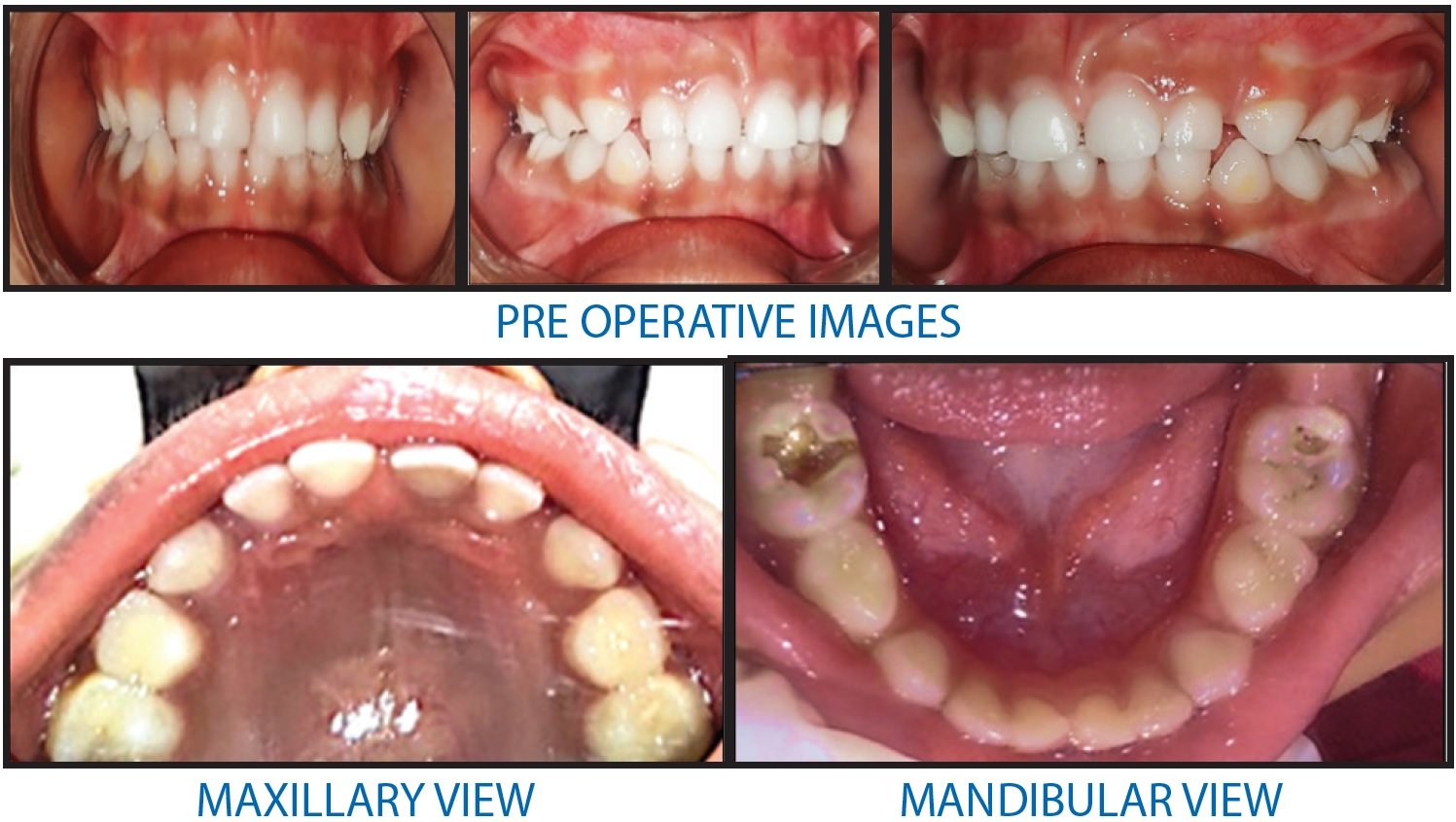
Extraoral examination revealed a unilateral swelling extending from the ala of the nose to the philtrum on the left side of the face. The swelling was oval-shaped, afebrile, non-tender, fluctuant, and soft in consistency. No intraoral draining sinus was observed. Intraoral examination was performed with the child seated in the mother's lap. Multiple carious lesions were noted in relation to teeth 54, 52, 51, 61, and 62 (Figures 1 and 3). Grade II mobility was observed in relation to tooth 61.
Based on the clinical findings, the treatment plan included pulpectomy of teeth 52, 51, and 62, restoration of tooth 54, and extraction of tooth 61. Owing to the child's age, extensive treatment requirements, and inability to cooperate adequately during dental procedures, comprehensive treatment under general anaesthesia was planned. The treatment plan, associated risks, benefits, and alternatives were thoroughly explained to the parents, and informed consent was obtained.
Preoperative investigations included complete blood count (CBC), serum electrolytes, prothrombin time/international normalized ratio (PT-INR), liver and renal function tests, HIV screening, HBsAg, anti-HCV testing, chest radiography, and pre-anaesthetic evaluation. Medical clearance and consent were obtained from the Departments of Pediatrics and Anaesthesiology.
The child was admitted 24 hours prior to the procedure, and intravenous amoxicillin (25 mg/kg) was initiated. The child was kept nil by mouth for 6 hours before the administration of general anaesthesia. On the day of treatment for general anaesthesia was induced using intravenous ketamine (0.3 mg/kg), followed by oral endotracheal intubation. Pulpectomies were performed in teeth 52, 51, and 62 (Figure 2). Tooth 54 was restored using Glass Ionomer Cement (Gold Label 2 GIC, GC) (Figure 4), and tooth 61 was extracted under local anaesthesia. Topical fluoride varnish (Clinpro White Varnish, 3M ESPE) was subsequently applied to all remaining teeth.
Following completion of the procedure, the child was transferred to the recovery room and later shifted to the pediatric ward. Parents were advised to not give any food item upto 6 hours. Postoperative medications included intravenous amoxicillin (25 mg/kg) and ibuprofen (10 mg/kg). The patient remained under observation for 24 hours and was discharged without complications. Follow-up evaluations at 7 days, 1 month and 3 month demonstrated satisfactory healing of the extraction site and intact restorations with no evidence of postoperative complications.

DISCUSSION
Early Childhood Caries remains one of the most prevalent chronic diseases affecting children worldwide and continues to pose a significant public health challenge. Epidemiological studies indicate that approximately half of preschool-aged children globally are affected by ECC.7 Despite being largely preventable, the burden of ECC continues to increase, particularly in developing countries.
Although ECC is rarely life-threatening, its consequences extend far beyond oral health. Untreated ECC can negatively influence nutritional status, physical growth, sleep quality, speech development, and psychosocial well-being. Chronic pain and infection may impair a child's daily activities, social interactions, and overall quality of life. In India, ECC has emerged as an important public health concern, with a reported national prevalence of approximately 49.6%.8
The present case highlights the importance of early diagnosis, comprehensive treatment planning, and timely intervention in the management of severe ECC. In very young children, especially those under two years of age who exhibit limited cooperation during dental procedures, treatment under general anaesthesia represents a valuable therapeutic option. The American Dental Association and the American Academy of Pediatric Dentistry recognize general anaesthesia as a safe and effective approach for delivering comprehensive dental care when conventional behaviour management techniques are inadequate and appropriate clinical indications exist.9
General anaesthesia offers several advantages in the management of severe ECC. It enables complete oral rehabilitation in a single visit, minimizes psychological trauma, facilitates delivery of high-quality treatment, and ensures patient safety under controlled conditions. In the present case, comprehensive treatment involving pulpectomies, restorative procedures, extraction, and preventive fluoride therapy was successfully completed during a single session, thereby eliminating infection and restoring oral function.
Failure to treat extensive carious lesions in young children can compromise mastication and nutritional intake, increasing the risk of malnutrition and impaired growth. Furthermore, premature loss of primary teeth may adversely affect speech development, aesthetics, and psychosocial well-being. Therefore, early and appropriate intervention is essential not only for preserving oral health but also for supporting the overall growth and development of the child.
Follow-up examinations demonstrated satisfactory healing and improved oral hygiene status, reflecting the positive impact of parental education and preventive counselling. Consistent use of fluoridated toothpaste, improved oral hygiene practices, and dietary modifications contributed significantly to reducing the risk of future caries development. These findings reinforce the fundamental goal of pediatric dentistry: to provide comprehensive, child-centred care while promoting long-term oral health through preventive strategies and active caregiver involvement.
CONCLUSION
Comprehensive dental rehabilitation under general anaesthesia is a safe, effective, and predictable treatment modality for very young or uncooperative children presenting with severe Early Childhood Caries. Early diagnosis, prompt intervention, parental education, and preventive guidance are essential for achieving favourable long-term oral health outcomes. Regular follow-up and reinforcement of preventive measures remain critical for preventing disease recurrence and ensuring sustained oral health in pediatric patients.
REFERENCES
- Marwah N. Pediatric Dentistry: Principles and Practice. 5th ed. New Delhi: Jaypee Brothers Medical Publishers; 2019.
- McDonald RE, Avery DR, Dean JA. Dentistry for the Child and Adolescent. 10th ed. St. Louis: Mosby; 2016.
- Massler M, Zwemer JD. Rampant caries: Its clinical management. Ill Dent J. 1951;20:407–412.
- Kagihara LE, Niederhauser VP, Stark M. Assessment, Management, And Prevention Of Early Childhood Caries. Journal Of The American Association Of Nurse Practitioners. 2009 Jan 1;21(1):1-0
- Mathew MG, Jeevanandan G, Maganur PC, Tamah AA, Ayyashi YA, Tawhari AI, Vishwanathaiah S. Evaluation Of Risk Factors Associated With Caries Development After Full-Mouth Rehabilitation For Early Childhood Caries Under General Anesthesia. J Contemp Dent Pract. 2024 Jan 1;25(1):85-91
- Kumarihamy, S.L., Subasinghe, L.D., Jayasekara, P. et al. The prevalence of Early Childhood Caries in 1-2 yrs olds in a semi-urban area of Sri Lanka. BMC Res Notes 4, 336 (2011).
- Meyer F, Enax J. Early childhood caries: epidemiology, aetiology, and prevention. Int J Dent. 2018;2018:1415873. doi: 10.1155/2018/1415873.
- Elkhadem A, Nagi P. Assessment Of Children’s Oral Health-Related Quality Of Life Following Full Mouth Rehabilitation Under General Anaesthesia In A Group Of Egyptian Children. Egypt Dent J. 2019;65(4):3045–51.
- Clinical Affairs Committee - Behavior Management Subcommittee. American Academy of Pediatric Dentistry. Guideline on behavior guidance for the pediatric dental patient. Pediatr Dent. 2015;37:57–70
Disclaimer from Guident
The views and opinions expressed in articles published in Guident are solely those of the authors and do not necessarily reflect the views of the editors, the editorial board or the publisher, Ivory India. Guident does not endorse any product, technique or treatment described. Clinical content is intended for qualified dental and medical professionals and is not a substitute for individual clinical judgement. Guident, its editors and the publisher accept no liability for any consequence arising from the use of information published in the journal.
How to cite this article
Dr. Muskan Rathore, Dr. Shantanu Jain, Dr. Nikhil Ghawate. Management of Early Childhood Caries Under General Anaesthesia: A Case Report. Guident. 2026 Jul;19(8). Available from: https://guident.net/articles/pedodontics/management-of-early-childhood-caries-under-general-anaesthesia-a-case-report.html