Concentration of Chlorhexidine Gluconate from Perio-Chip in Gingival Fluid and Evaluation of Clinical Therapeutic Efficacy During Gingival Inflammation in Patients with Chronic Periodontal Disease
Faculty of Medical Sciences, State University of Tetovo, Republic of N. Macedonia, Skopje, Republic of N. Macedonia
ABSTRACT
Purpose. To determine the concentration of chlorhexidine gluconate (CHX) from the Perio-chip in cervical gingival fluid (FCG) at different time intervals on patients with a clinical manifestation of the second stage of periodontal diseas and evaluation of clinical efficacy therapeutic efficacy during gingival inflammation in patients with chronic periodontal disease.
Material and method. A total of 22 patients of both sexes aged 40-65 years of age, who were diagnosed with periodontal disease of the second clinical stage were followed up. The researchers who were part of the research had registered the periodontal pocket depth of 5 mm. Perio-chip was applied to them, where the concentration of chlorhexidine gluconate was measured at certain time intervals (after 1, 24, 48, 96, 168 hours after the application). The determination of chlorhexidine was carried out through two procedures: the extraction of gingival fluid and the quantitative determination of chlorhexidine gluconate in it. The subjects were divided into three groups for gingival inflamation in the first group, there were used only conventional methods, the second group was treated with CM-S gel and the third group with CM-S PerioChip Chlorhexidine gluconate. In all three groups included in this study, gingival inflammation with the Sillness Loo index was determined in four time points: first, during the initial treatment, then after the 15th day, after 30th day and in the end after 90 days of the first treatment. The Gel and PerioChip Chlorhexidine gluconate in patients was initially administered during the first examination. Numerical statistics were analyzed by descriptive statistical methods (Mean Standard Standard Deviation, ± 95% CI, Min., Max.), While the interactive effects between the two examined methods after the first treatment, on the 15th, 30th and the 90th day, the effects were analyzed with repeated measures of Anova (F) / Bonferroni Post-hoc test (p).
Extraction of gingival fluid. For this purpose was used Whatmann filter paper no. 5 with dimensions of 2x6 mm with which the part determined for measurement is inserted into the periodontal pocket 1 mm, where the liquid is drawn through the Whatmann filter paper through the absorption forces against the capillaries through diffusion. The strips taken for determining the concentration of chlorhexidine gluconate in the gingival fluid with the HPLC method, the analyzes at different time intervals for the concentration of chlorhexidine gluconate were carried out at the Institute for Chemical Application and Pharmaceutical Analysis at the Faculty of Pharmacy in Skopje.
Results. The highest concentration was reached in the 1st hour after the application of the Perio-chip, while the concentration within 7 days moved from the values of 1148.70-624.37 µg mL-1where it is contained after the application of the medicinal asset.
After 2-4 days certain concentration reaches the value up to 1300 µg mL-1, while after this time interval the concentration gradually decreases but remains at values above 125 µg mL-1 The results show the reduction of gingival inflammation in all three groups after 15, 30 and 90 days after the treatment compared to the first examination. Comparison of the gingival inflammation index on the 15th, 30th and 90th day between the three groups, shows significantly better therapeutic efficacy in the CM-S-treated groups, which was supported by the use of Gel and PerioChip Chlorhexidine gluconate.
The conclusion. According to this formulation we can calculate that this formulation has an effective controlled continuous release system of chlorhexidine gluconate. Subjects treated with CM-S, compared to those treated with CM, had significantly improved their clinical effect, while having significant efficacy against gingival inflammation whereas the gel application method has more significant application efficacy
Key words: Chronic periodontopathy, conventional therapy, gingival fluid,gingigval inflammation, chlorhexidine gluconate-Perio-chip.
INTRODUCTION
Periodontal disease is defined as "inflammatory disease" to the supporting tissues of the tooth caused by specific microorganisms accompanied by progressive destruction of the periodontal ligament and alveolar bone, where the final effect is the loss of teeth.
Bacterial accumulation on hard oral surfaces is the main cause of the appearance of gingivitis and periodontopathy1,2, for this reason regular and correct removal of dental plaque from all hard oral surfaces is the main way to prevent periodontal disease.3 Controlling dental plaque through regular oral hygiene, removal of supra and subgingival layers is one of the main ways of maintaining the results achieved towards therapeutic success.4
Other than the removal of microbial plaques by mechanical ways in clinical practice, local antimicrobial hemotherapy or systemic therapy is also used. Here it should be mentioned the CIST-protocol where in dentistry it is used as a pre-surgical disinfectant where it is later used as an anti-plaque preparation1 used as an auxiliary or complementary preparation has found application during non-surgical treatment during chronic periodontal disease, known in the USA and Europe.5
In recent years, recommendations lead to the use of local antimicrobial preparations as a supplement in the conservative treatment of periodontal disease. As the most popular preparations are the use of chlorhexidine gluconate assets or chips (the second generation of local antimicrobial preparations) where applied to the periodontal pocket, it significantly improves clinical parameters against periodontal disease.6
Cosyn and Wynn7 argue that the use of chlorhexidine acetate preparations improves the clinical effects of periodontal disease, while Archana 8 appraises the efficacy of the controlled bioresorption release of chlorhexidine chip (Periocol CG) when used as an adjunctive preparation during the therapeutic procedure is an efficient helper in solving the affected symptoms of periodontal disease.
Taking the data of the contemporary literature and the fact that the use of antiseptics in solution form has a very short effect, the goal of this research is set: to determine the concentration of chlorhexidine gluconate in the cervical gingival fluid at different time intervals through the bioresorption of Perio- chip-it in the periodontal pocket in patients with periodontopathy.
MATERIAL AND METHOD
In order to achieve the set goal, a total of 22 patients of both sexes aged 40-65 years of age who were clinically and radiologically diagnosed with periodontal disease of the second clinical stage were followed up. The researchers who were part of the research had registered periodontal pocket depth of 5 mm. Perio-chip was applied to them, where the concentration of chlorhexidine gluconate was measured at certain time intervals (after 1, 24, 48, 96, 168 hours after the application).
The determination of chlorhexidine was carried out through two procedures: the extraction of gingival fluid and the quantitative determination of chlorhexidine gluconate in it. The subjects were divided into three groups for gingival inflammation. In the first group, there were used only conventional methods, the second group was treated with CM-S gel and the third group with CM-S PerioChip Chlorhexidine gluconate. In all three groups included in this study, gingival inflammation with the Sillness Loo index was determined in four time points: first, during the initial treatment, then after the 15th day, after 30th day and in the end after 90 days of the first treatment. The Gel and PerioChip Chlorhexidine gluconate in patients was initially administered during the first examination. Numerical statistics were analyzed by descriptive statistical methods (Mean Standard Standard Deviation, ± 95% CI, Min., Max.), While the interactive effects between the two examined methods after the first treatment, on the 15th, 30th and the 90th day, were analyzed with repeated measures of Anova (F) / Bonferroni Post-hoc test (p).
Extraction of gingival fluid. For this purpose was used Whatmann filter paper no. 5 with dimensions of 2x6 mm with which the part determined for measurement is inserted into the periodontal pocket 1 mm, where the liquid is drawn through the Whatmann filter paper through the absorption forces against the capillaries through diffusion.
The strips taken for the determination of the concentration of chlorhexidine gluconate in the gingival fluid with the HPLC method, the analyzes at different time intervals for the concentration of chlorhexidine gluconate were carried out at the Institute for Chemical Application and Pharmaceutical Analysis at the Faculty of Pharmacy in Skopje.
RESULTS
Perio-chip represents a controlled release system of chlorhexidine digluconate in periodontal pockets and represents the most productive antiseptic in the prevention of periodontal disease.9,10
After realizing the optimization and validity of the HPLC method for the determination of CHX in swab from the gingival fluid, the same was applied as a routine analysis in order to determine the concentration of chlorhexidine that reaches the gingival fluid after the application of the Perio-chip in patients with suffering from periodontal disease. The determined concentrations of chlorhexidine in the gingival fluid are shown in table 1. The highest concentration is reached in the 1st hour after the application of the Perio-chip, while the concentration range of 1148.70-624.37 µg mL-1 is contained until the 7th day.
After applying the asset.
After 2-4 days, the determined concentrations reach the value up to 1300 µg mL-1, while after that time interval the concentration gradually decreases but remains above 125 µg mL-1. This concentration is the minimum inhibitory concentration (MIC) where more than 99% of the subgingival microorganisms that are isolated from the periodontal pocket are destroyed by the therapeutic effect. The results are presented as the average value from the determination of the concentration (n=3) ± standard error and the graphical presentation presented in Graph1.

Fig 1
After the application of chlorhexidine 0.12% solution, designated concentrations were at the detection limit. This is due to the low concentration of chlorhexidine in its solution form (mouthwash solution) which cannot contain biological concentrations of the drug for a long period of time for therapeutic efficacy against periodontal disease.
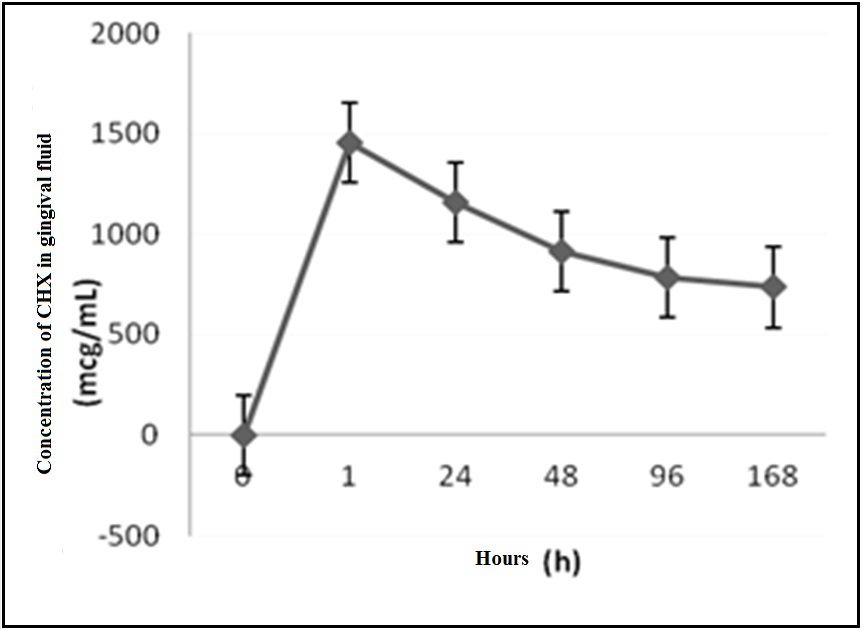
Graph 1. Graphic display of the average value of the designated concentration of CHX in the gingival fluid during the study period in time intervals.
According to the obtained results, we prove that the Perio-chip releases significant clinical concentrations of chlorhexidine in the gingival fluid, which is contained during the 7-day study.
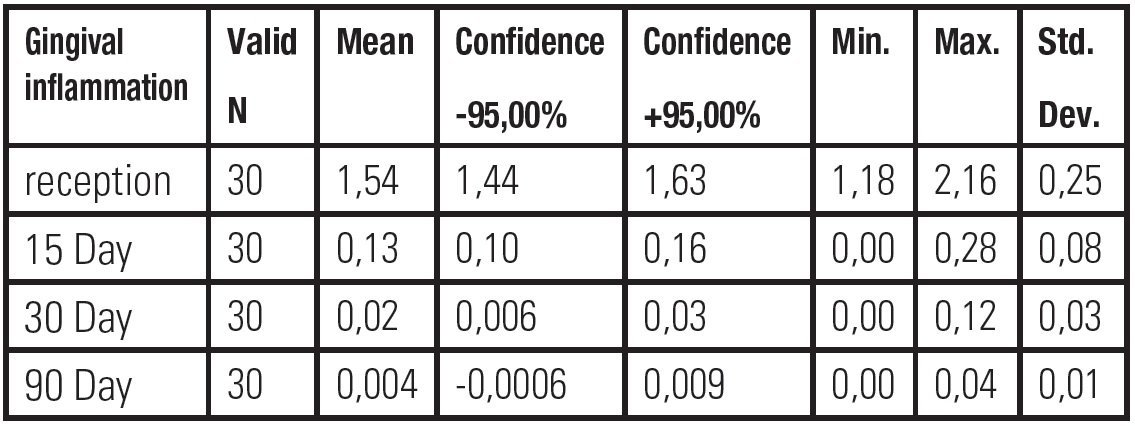
Table 1 presents gingival inflammation (during the first examination, after 15, 30, and 90 days), on patients with MS and MS-P. The results given by this research are presented in Table 1)
For F = 88.23 and p <0.001 (p = 0.000) there were significant changes in the given distribution (table 1 and graph 1)
Patients treated with MS-P after the 15th day of control for p <0.001 (p = 0.000) had significantly lower gingival inflammation (0.28), compared to the first data (1.54). We found identical results after the 30th control day, for p <0.001 (p = 0.000) with gingival inflammation (0.12) compared to the first data (1.54). Significant gingival inflammation p <0.001 (p = 0.000) was observed (0.04) after the 90th day of treatment.
Table 1. Descriptive statistics of gingival inflammation values in the first review, after day 15.30 and 90 of combined therapy performed, supplemented with PerioChip chlorhexidine gluconate.
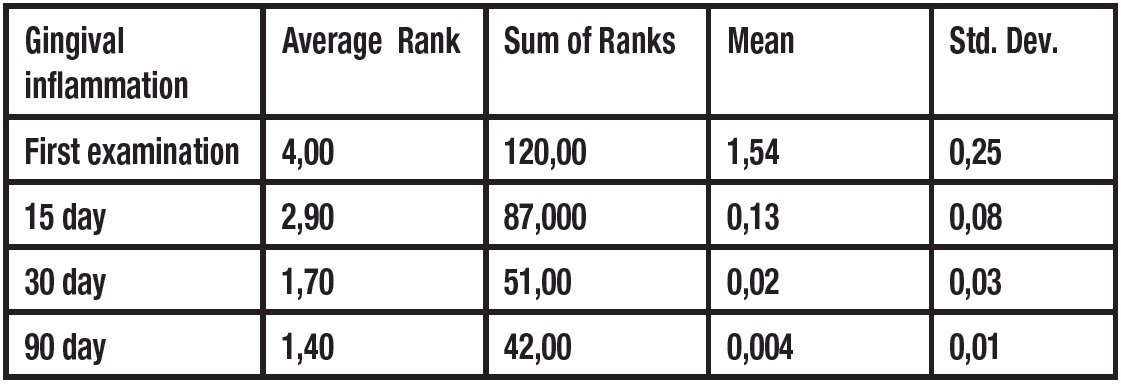
The differences between gingival inflammation values in the first-line relationship after 15, 30, and 90 days of the combined therapy (Perio-Chip chlorohexidine gluconate) are shown in Table 1.
For ANOVA Chi Sqr. = 85.20 and p <0.001 (p = 0.000) there is a significant difference between the values of gingival inflammation in the analyzed ratio.
After 15 days of therapy, the mean value of gingival inflammation is lower in relation to admission and varies in the range of 0.13 ± 0.08.
After 30 days of therapy, the mean value of gingival inflammation is lower in relation to admission and varies in the range of 0.02 ± 0.03.
After 90 days of therapy, the mean value of gingival inflammation is lower than the rate of admission and varies in the range 0.004. 0.01.
Table.1 Shows the differences between gingival inflammation values in the first-line relationship after 15, 30, and 90 days after therapy.1 Therapeutic efficacy of using different therapeutic modalities in both groups in different time periods
The mean value of gingivitis (Mean = 0.004) after 90 days of therapy with the combined method (chlorohexidine gluconate Perio-Chip) for Z = 4.78 and p <0.001 (p = 0.000) is significantly lower than the mean value of gingival inflammation Mean = 1.54) in the first revision
Table. 1.1 Differences between dental plaque values at the first examination and after 90 days of combination therapy, supplemented with PerioChip chlorohexidine gluconate
|
Gingival inflammation |
|
First examination and 90 day |
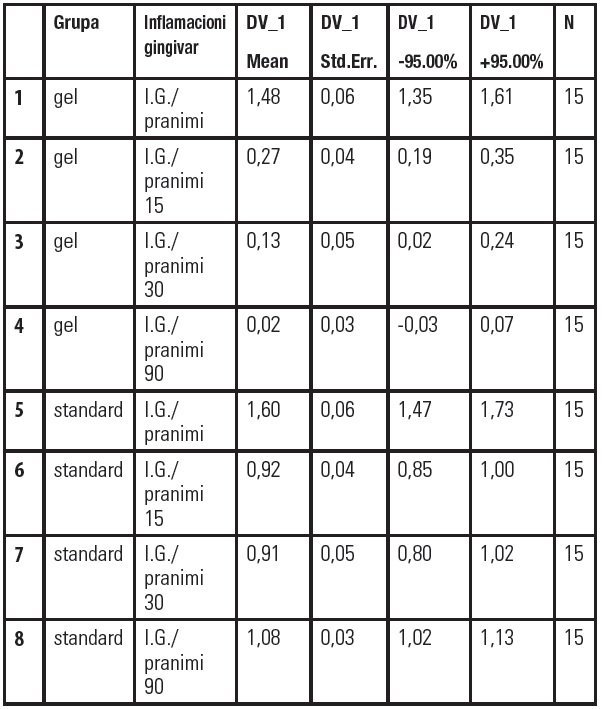
Table 2. Descriptive statistics of gingival inflammation values in the first review, after day 15.30 and 90 of combined therapy performed, supplemented with chlorhexidine gluconate gel.

The results show reduction of gingival inflammation after using the standard method supplemented with Chlorhexidine gluconate gel.
Table 2. Post-hoc Test / Bonferroni test / Group - Gingival inflammation

DISCUSSION
Chlorhexidine is a molecule with a wide spectrum of antibacterial and antiviral action. The presence of two chlorophenyl guanidine groups, located symmetrically, connected by a lipophilic hexamethylene chain, allow the rapid absorption of this molecule through the bacterial wall, causing irreversible damage to the bacterial membrane, cell cytoplasm, as well as enzyme inhibition.11
For these specific reasons, it is used as an active therapeutic substance in a variety of formulations for the treatment of skin diseases and finds special application in dentistry.
Antibiotics, antiseptics and some anti-inflammatory medications can be applied locally in the treatment of periodontal disease, which represent an effective adjunct to conventional, mechanical therapy. However, the concentration achieved by these drugs at the site of application as a function of time is an open question for the rationale of their use. Modern trends in the treatment of periodontal disease have enabled the development of new formulations for local application in periodontal pockets. These formulations allow the gradual release of the therapeutic agent into the periodontal pocket, as well as the maintenance of therapeutic drug levels at the site of action that are 10-100 times higher than those that would be achieved if the drug were applied per OS . Perio-chip has an effective system for the controlled release of chlorhexidine digluconate in periodontal pockets and is the most effective antiseptic in preventing the formation of dental plaque.
One hour after inserting the Perio-chip, a concentration of 1649.62 µg mL-1 was reached. Two to four days later, the determined concentrations reach values up to 1300 µg mL-1 and after 10 days they gradually decrease, but remain above 125 µg µ mL-1. This concentration is the minimum inhibitory concentration (MIC) for more than 99% of subgingival microorganisms isolated from periodontal pockets.9
The results obtained from this study coincide with the results of the study12, in which the subgingival application of the Perio-chip and its bioresorption and concentration chronologically followed the following dynamics: the initial concentration in the first 2 hours was 2007 µ mL-1. After the second day to the fourth day, the determined concentrations were 1300-1900 µg mL-1, but after the tenth day it decreased to 57 µg mL-1. Similar findings were obtained from the researches of.13-15
The large variation in CHX concentrations among patients may be due to some biological variation among patients, such as variations in gingival fluid flow, large variability in gingival fluid flow between patients with different degrees of inflammation, as well as reduction of gingival fluid volume reducing periodontal pocket inflammation during treatment9,11 The gingival inflammation, as a result of periodontitis, of increased accumulation of dental plaque and other inflammatory factors increase the level of osteoresorption factor leading to the advancement of chronic periodontal disease.
Results for gingivitis after application of both methods; the Conventional method (standard) and the combined method (modified) have shown that there is no significant difference in the results between the two groups for gingivitis in the admission of patients and there is a significant difference between the two groups for the inflammatory index of gingivitis after control of patients after the 15th, 30th, and 90th day.
Differences between gingival inflammation values in the first-line relationship, after 15, 30 and 90 (conventional) therapy days with the use of chlorhexidine glucone selectivity for ANOVA Chi Sqr. = 83.38 and p <0.001 (p = 0.000), there is a significant difference between the values of gingival inflammation in the analyzed ratio.
After 15 days of therapy, the mean value of gingival inflammation is lower compared to the first examination and varies in the range 0.61. 0.22.
After 30 days of therapy, the mean value of gingival inflammation is lower compared to the first examination and varies in the range 0.65 ± 0.21.
After 90 days of therapy, the mean value of gingival inflammation is lower than the rate of admission and varies in the range 0.72 ± 0.19.
The mean value of gingival inflammation (mean = 0.72) after 90 days of treatment with chlorhexidine gluconate conventionally applied for Z = 4.78 and p <0.001 (p = 0.000) is significantly lower than the mean value of gingival inflammation (Mean = 1.55) upon receipt
Differences between gingival inflammation values in the first-line relationship after 15, 30, and 90 days of the combined therapy (Perio-Chip chlorohexidine gluconate) are shown in Table 1.
For ANOVA Chi Sqr. = 85.20 and p <0.001 (p = 0.000) there is a significant difference between the values of gingival inflammation in the analyzed ratio.
After 15 days of therapy, the mean value of gingival inflammation is lower in relation to admission and varies in the range of 0.13 ± 0.08.
After 30 days of therapy, the mean value of gingival inflammation is lower in relation to admission and varies in the range of 0.02 ± 0.03.
After 90 days of therapy, the mean value of gingival inflammation is lower than the rate of admission and varies in the range 0.004. 0.01.
Patients treated with the standard method during follow-up after day 15 (0.92), day 30 (0.91) and day 90 (1.08), have a significantly lower index of gingival inflammation compared to day of acceptance (1.60); whereas patients treated with the method combined with gel during control on day 15 (0.27), day 30 (0.13) and day 90 (0.02), a much more important index to gingival inflammation was recorded compared to the standard method.
The mean value of gingival inflammation (Mean = 0.004) after 90 days of therapy with the combined method (chlorohexidine gluconate Perio-Chip) for Z = 4.78 and p <0.001 (p = 0.000) is significantly lower than the mean value of gingival inflammation Mean = 1.54) in the first revision. The results obtained coincided with the study of Lt Col AK Jha (22), which examined the therapeutic efficacy of PerioChip locally as an antimicrobial agent in the conventional non-surgical treatment of chronic periodontitis, it becomes clear that the use of chlorhexidine chip can be used regularly in most cases, with particular emphasis on compromised medical patients who are not fit for surgery.
CONCLUSION
According to the results obtained, it can be concluded that the Perio-chip releases clinically relevant concentrations of chlorhexidine in the gingival fluid, which are prolonged for 7 or more days. Thanks to their gradual bioresorption, a constant concentration that is present for a long time in the gingival fluid, this formulation can be considered an effective system for the controlled release of chlorhexidine that finds its application as an additional therapy in the treatment of periodontal disease. Also based on the results we can conclude that patients treated with MS-P, as opposed to those treated with MS alone had much better clinical results at all stages of this research. Due to the easy application, light degradable power, non-toxic, we can definitely recommend it as an adjunct to conventional treatment during periodontal disease and the most favorable practical way for manual and instrumental maneuvering during clinical application recommend the use of the gel.
LITERATURE
- Sbordone L, Bortolaia C. Oral Microbial Biofilms and Plaque-Related Diseases. Clin Oral Research 2003;7: 181-188.
- Lindhe J. Clinical Paradontology and Implant Dentistry, Nakladni zavod Globus. Zagreb, 2004;476:110-128.
- Galgut P. Periodontal diseases. NHS Lanarkshire, Hamilton ML3 0TA Great Britean 2009: 26-28.
- Newman MG, Socransky SS. Predominant Cultivable Microbiota in Periodontitis. J periodontal Res 1977;12:120-127.
- Noyan U, Yilmaz S, Kuru B, Kadir T, Acar O, Buget E. A clinical and microbiological evaluation of systemic and local metronidazole delivery in adult periodontitis patients. J Clin Periodontol 1997;24: 158-.165.
- Killoy WJ. Assessing the effectiveness of locally delivered chlorhexidine in the treatment of periodontitis. JADA 1999;130: 56 -570.
- Bronberg LE, Boxton DK, Friden PM. Novel periodontal drug delivery system for treatment of periodontitis. Release. Periodontix, Inc. Watertown, USA, 2001;71(3):251-.
- Archana B, Kumar BS, Singh BV. To assess the effectivenessmof single subgingival application of chlorhexidine chip in the treatment of chronic periodontitis: Aclinical study. Hospital Gulabgarh. Derabassi Distt. SAS nagar, Mohali (Punjab, India 2012;20.
- Lukovic N, Zelic O, Cakic S, The use of subgingival chlorhexidine chip in the treatment of periodontal disease, Serbian Dental J 2006; 53: 181-188.
- Loeshe WJ. The antimicrobial treatment of periodontal disease: changing treatment paradigm, Crit Rev Oral Biol Med1999;10: 245-275.
- Musteata MC. & Pawlyszin J. Assay of stability and total concentration of chlorhexidine in saliva by solid phase microextraction, J Pharm. Biomed. Anal 2005; 37: 1015-1024.
- Soskolne WA, Chajek T, Flashner M, Landau I, Stabholtz A, Kolatch B, Lerner EI. An in vivo Study of the chlorhexidine release profile of the PerioChip in the gingival crevicular fluid, plasma and urine. Department ot Periodontology, Hebrew,University- Hadassah Faculty of Dental, Medicine Jerusalem, Israel; Department of,Internal Medicine. Hadassah Medical Center, Jerusalem, Israel; Perio Products Ltd.., Jerusalem, Israel; Department ot Community, Dentistry, Hebrew University-Hadassah, Faculty of Dental Medicine, Jerusalem, Israel. 1998; 25: 1017-1021.
- Kothari S, Gnanaranjan G, Kothiyal P. Periodontal chip an adjunt to convencional surgical treatment. Department of Pharmaceutics, Shri Guru Ram Rai Institute of Pharmacy. Int J Drug Res Tech 2012;2(6):411-421.
- Levin L, Baev V, Lev R, Stabholz A, Ashkenazi M, Aggressive periodontitis among young Israeli army personnel. J Periodontol. 2006;77(8):1392-6
- Avinash JL1, Shama Rao HN, Sucheta A,Venkataraghavan K. Comparative evaluation of efficacy of controlled release local drug delivery system and local irrigation of chlorhexidine gluconate following scaling and root planing- Clinical study . Journal of Contemporary Dentistry 2011;2(6): 136-147
- Wang J, Chen W, Jiang Y, Liang J. Imaging of extraradicular biofilm using combined scanning electron microscopy and stereomicroscopy.Microsc Res Tech. 2013;76(9):979-83.
- Mancl KA, Kirsner RS, Ajdic D. Wound biofilms: lessons learned from oral biofilms.Wound Repair Regen. 2013;21(3):352-62.
Disclaimer from Guident
The views and opinions expressed in articles published in Guident are solely those of the authors and do not necessarily reflect the views of the editors, the editorial board or the publisher, Ivory India. Guident does not endorse any product, technique or treatment described. Clinical content is intended for qualified dental and medical professionals and is not a substitute for individual clinical judgement. Guident, its editors and the publisher accept no liability for any consequence arising from the use of information published in the journal.
How to cite this article
Dr. Sahmedin Sali, Dr. Jasmin Fidoski, Dr. Jasmin. Concentration of Chlorhexidine Gluconate from Perio-Chip in Gingival Fluid and Evaluation of Clinical Therapeutic Efficacy During Gingival Inflammation in Patients with Chronic Periodontal Disease. Guident. 2024 Feb;17(3). Available from: https://guident.net/articles/general/concentration-of-chlorhexidine-gluconate-from-perio-chip-in-gingival-fluid-and-evaluation-of-clinical.html