Vital Tooth Bleaching: A Case Series
Department of Conservative Dentistry and Endodontics, Seema Dental College And Hospital, Rishikesh
ABSTRACT
The purpose of this case report is to analyze the result of in office vital bleaching. Materials and method included In office vital tooth bleaching done using Pola office.
Keywords: Office Bleaching; Pola-Office; Pre-Bleaching; Post-Bleaching
INTRODUCTION
A dazzling smile is often considered a sign of good health and confidence. However, over time, various factors such as age, dietary habits, and lifestyle choices can contribute to tooth discolouration. Vital bleaching, a popular cosmetic dentistry procedure, aims to lighten the colour of teeth and enhance the overall aesthetic appeal of one's smile.4
Teeth discolouration is because of extrinsic and intrinsic stains. The non-invasive and conservative remedy for stains is teeth bleaching. Presently, the most popular systems for in-office bleaching use hydrogen peroxides and are regularly referred to as “one hour bleaching.”3
For the in-workplace, mild better structures, normally the mild can most effective be used for bleaching. One light machine is primarily based on a plasma arc excessive-depth photopolymerization device that may be used for in-office whitening and for resin photopolymerization. These hydrogen peroxides varies from 25% to 35%. The case reports provided in this article indicates approach for in office vital enamel bleaching using Pola office.1
CASE REPORT 1
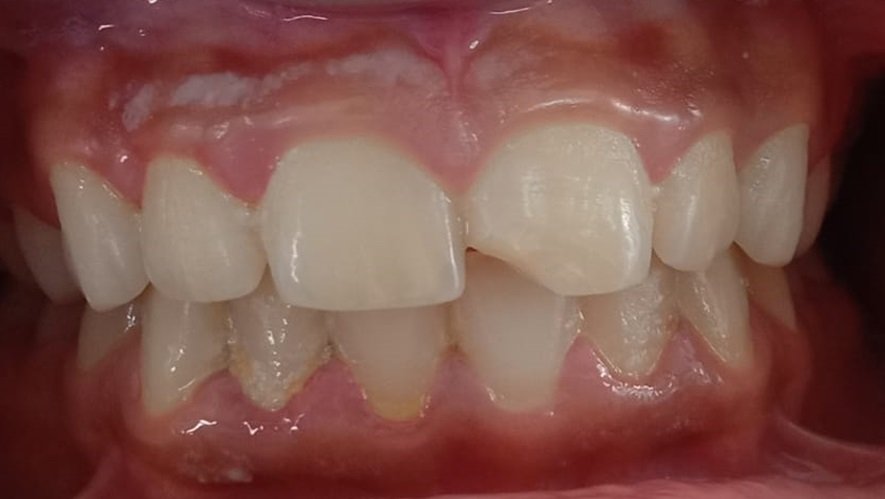
A 35-year-old male patient came with a chief complaint of yellowish discolouration teeth reported to the department of Conservative Dentistry and Endodontics and to get the teeth treated for esthetic purpose. On clinical examination yellowish discolouration of upper and lower teeth was seen. Tooth vitality was carried by using electronic pulp vitality tester and all teeth were found to be vital. Clinical photographs were taken before initiating the procedure. The teeth were cleaned and dried followed by Liquid Dam i.e., Gingival barrier application and cured in order to isolate and protect gingiva.

Preoperative Image
Pola office was chosen as bleaching agent. Bleaching gel and powder was taken equally and mixed until thick homogeneous mixture was obtained and applied over teeth using applicator tip.
Photo curing of bleaching agent was done using light unit for 8 min. Bleaching agent was removed using air water syringe followed by final polishing.

Postoperative Image
Postoperative clinical photographs were recorded and postoperative instructions were given. Patient was recalled after 1 week for evaluation. There was marked improvement in tooth colour and patient was satisfied with final result.
CASE REPORT 2
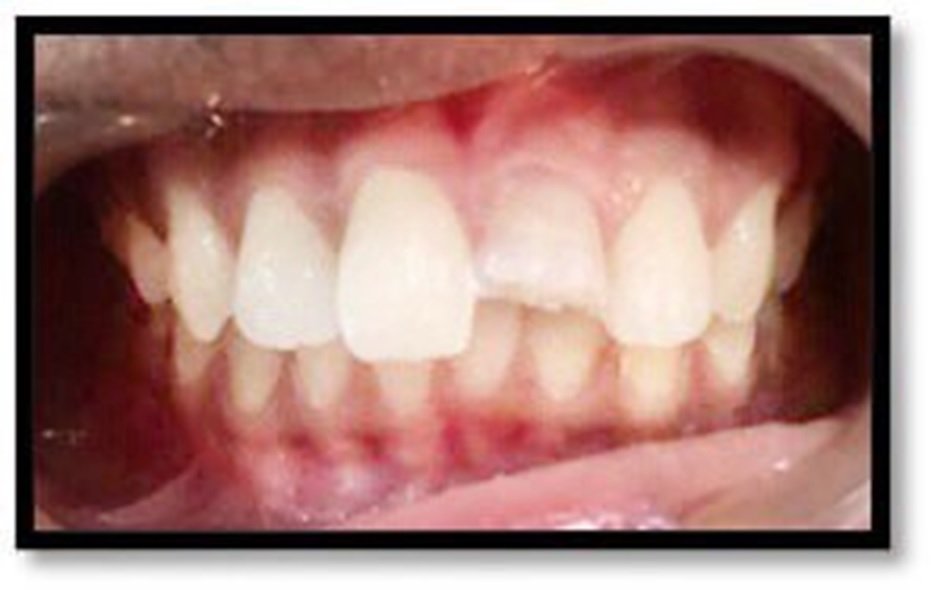
A 28-year-old female patient came to the department with the chief complaint of yellowish discolouration since 7 months. No history of sensitivity or pain. Non relevant medical history. On clinical examination generalised yellowish discolouration was seen. Diagnosis made was generalised discolouration and the treatment plan made was vital tooth bleaching. Preoperative image was taken. Optragate was placed to retract cheek and lips.
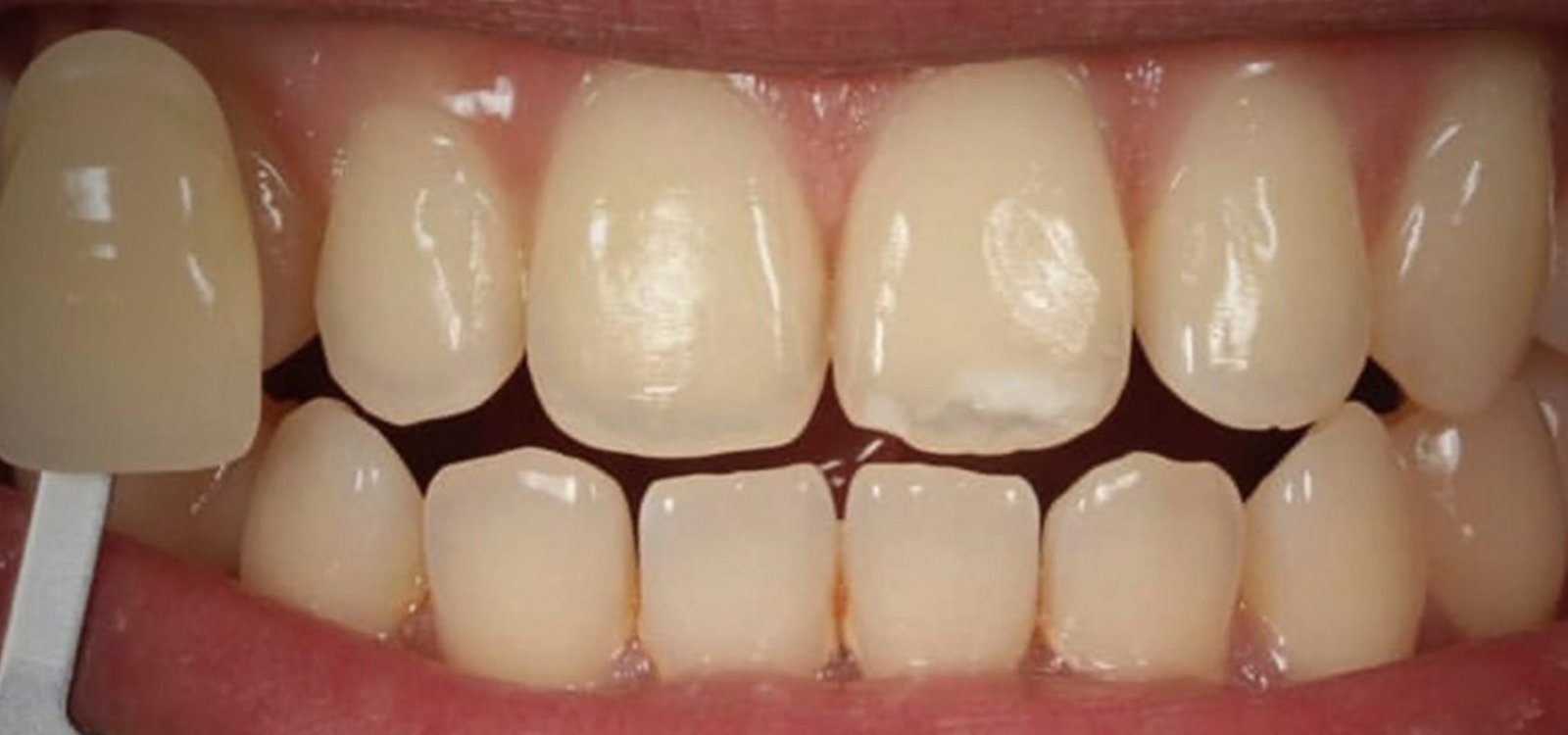
Preoperative Image
Oral prophylaxis was carried out with prophylaxis paste. Gingival barrier was placed and cured for 15 seconds. Pola office bleach with 37% hydrogen peroxide was placed and light cured for 10 minutes. The gel was then suctioned back following which the teeth were thoroughly rinsed. Patient was reevaluated in 10 days for results.

Postoperative Image
DISCUSSION
Bleaching is the lightening of the tooth colour by the application of a bleaching agent to oxidize the organic pigmentation in the tooth. The goal of bleaching procedure is to restore of normal tooth colour by decolourizing the stain.5
With in-office bleaching, adequate isolation and protection of mucosal tissues is necessary. Dentists may prescribe NSAIDs pre bleaching due to unpredictable post-treatment sensitivity. This technique of teeth whitening, employs 35-40% hydrogen peroxide and a light source. The exposure time of the patient to the application of the peroxide is 15 to 20 minutes per session to obtain a desirable change of colour. It is not recommended to exceed this time .
According to some reports, pulpal temperature can increase with bleaching light use, depending on the light source and exposure time. It suggests that use of light may result in light radiation exposure levels approaching or exceeding safety limits. Pulp irritation and tooth sensitivity can be higher with use of bleaching lights or heat application, and caution has been advised with their use.6
The mechanism of action is based on the release of active form of oxygen, due to interaction of hydrogen peroxide with tooth. Hydrogen peroxide an oxidizing agent is capable of producing free radicals, releases oxygen, reduces the complex carbonic chain of the pigment (absorbs blue spectrum of light), into smaller molecules with free hydroxyls (do not absorb blue light) and so reflect the blue light along with the green and red spectra; this colour mixture gives the whitening effect.2
RESULT
Pola office was capable of bleaching teeth with colour changes noticeable by the patients. It’s cost is reasonable with easy application. Tooth sensitivity was a temporary side effect.
CONCLUSION
In office tooth bleaching is a powerful and short treatment modality that may notably change the arrival of tooth. For the mild enamel discolourations, in office bleaching is a good and safe desire for dentists when utilized in proper concentration of agent.
REFERENCES
- Féliz-Matos L, Hernández LM, Abreu N. Dental Bleaching Techniques; Hydrogen-carbamide Peroxides and Light Sources for Activation, an Update. Mini Review Article. Open Dent J. 2015 Jan
- Sadashiv Gopinath Daokar., et al. “In-Office Vital Bleaching Using Pola Office - A Case report” (2020).
- Alqahtani MQ. Tooth-bleaching procedures and their controversial effects: A literature review. Saudi Dent J. 2014 Apr;
- Tin-Oo MM, Saddki N, Hassan N. Factors influencing patient satisfaction with dental appearance and treatments they desire to improve aesthetics. BMC Oral Health. 2011 Feb
- Grossman’s Endodontic Practice, B. Suresh Chandra, V. Gopikrishna 13th edition.
- Joshi SB. An overview of vital teeth bleaching. J Interdiscip Dentistry. 2016;6:3-13.
Disclaimer from Guident
The views and opinions expressed in articles published in Guident are solely those of the authors and do not necessarily reflect the views of the editors, the editorial board or the publisher, Ivory India. Guident does not endorse any product, technique or treatment described. Clinical content is intended for qualified dental and medical professionals and is not a substitute for individual clinical judgement. Guident, its editors and the publisher accept no liability for any consequence arising from the use of information published in the journal.
How to cite this article
Dr. Rohit Babu, Dr. Anil Dhingra. Vital Tooth Bleaching: A Case Series. Guident. 2023 Dec;17(1). Available from: https://guident.net/articles/endodontics/vital-tooth-bleaching-a-case-series.html