Minim Al Intervention Indirect Bridge
Victoria, Australia
MINIMAL INTERVENTION INDIRECT BRIDGE
The disintegrating mouths of aging “baby boomers” present ongoing challenges to the dental profession. As failing teeth require extraction and the surrounding dentition is often compromised by restorations with an uncertain prognosis.
Every clinical situation presents with a unique set of circumstances however there are often situations where a careful analysis of the dentition provides an opportunity to create sufficient retention for an indirect bridge with minimal further preparation of the teeth.
CASE STUDY
The following case shows a patient who was referred for implants to replace two upper bicuspids but was not prepared to undergo the necessary sinus lift required for their placement.
Examination of her surrounding dentition showed a large proximal amalgam restoration extending over the mesial and distal of the first molar and composite restorations on the mesial and distal surfaces of the canine.
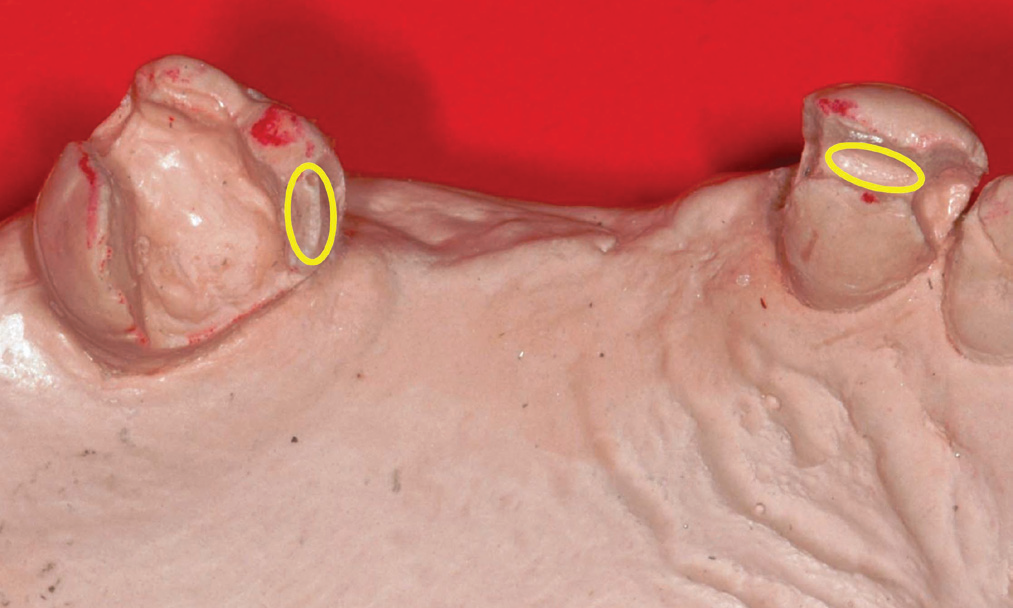
Fig 1: After removal of existing restorations extent of further cavity preparations are outlined in yellow
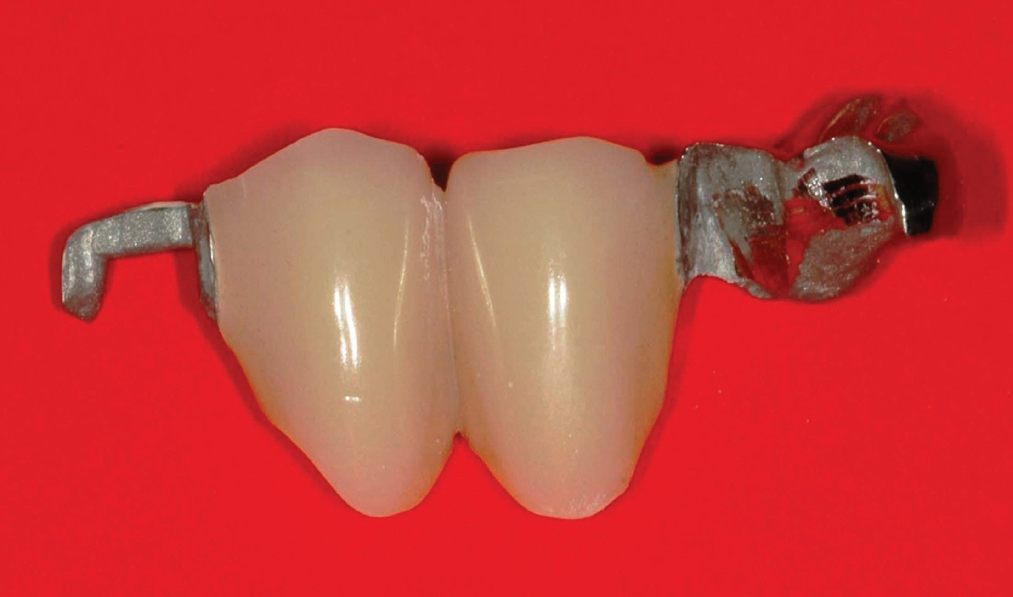
Fig 2: Canine abutment has good retention form and resistance to lateral and rotational forces
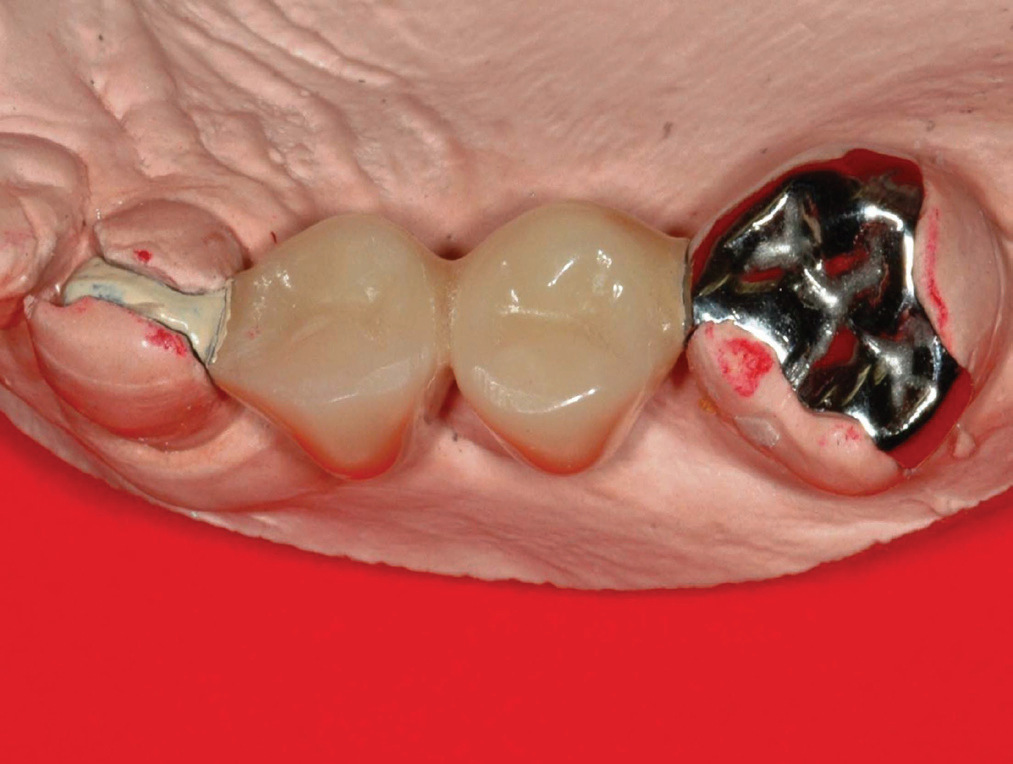
Fig 3: Preparation extensions onto mesial, distal and lingual surfaces of molar provide tripod retention form

Fig 4: Clinical view of preparations prior to cementation

Fig 5: Inserted prosthesis, note composite resin overlay extending over the lingual and incisal surfaces of the canine
It was apparent that removing the restorations in the canine and preparing a slot between the two cavities would provide a mesial abutment for the bridge. Fig 1 (section of tooth removed outlined in yellow)
Furthermore removing the existing amalgam restoration and preparing slight occlusal extensions as well as extending the mesial cavity slightly to the buccal provided sufficient retention for the distal abutment of the bridge. Fig 1 (section of tooth removed outlined in yellow)
The laboratory was provided with upper and lower impressions, wax bite and shade selection to fabricate the bridge. Temporary dressings (Riva Protect, SDI: Fuji VII, GC Corp) were placed to avoid sensitivity and stabilize the occlusion until the insertion of the bridge. The glass ionomer cement also infuses fluoride ions into the surrounding tooth structure improving resistance to future caries under the abutments. The red color of these restorations facilitates the removal of the temporary restorations at the insertion visit.
Inspection of the bridge prior to insertion showed the “U” shape profile of the canine abutment showed good retention form and resistance to lateral and rotational movements. The onlay restoration on the molar that extended onto the mesial, distal and lingual surfaces also provided good retention form and lateral and rotational resistance. (Fig 2 & 3)
At the insertion visit the temporary glass ionomer cement dressings were removed. The preparations were etched for 5 seconds with 35 per cent phosphoric acid washed and cleaned with oil free air. (Fig 4)
The bridge was inserted into the preparation prior to cementation to confirm there was good adaption to the cavity preparation. A Resin Modified Glass Ionomer Cement (Fuji II LC, GC Corp: Riva LC, SDI: Vitremer, 3MESPE) was used to cement the prosthesis in place. Should an abutment “debond”, the RMGIC will fail cohesively leaving a thin layer of cement on the cavo surface to protect the tooth from recurrent caries. A composite resin overlay was placed
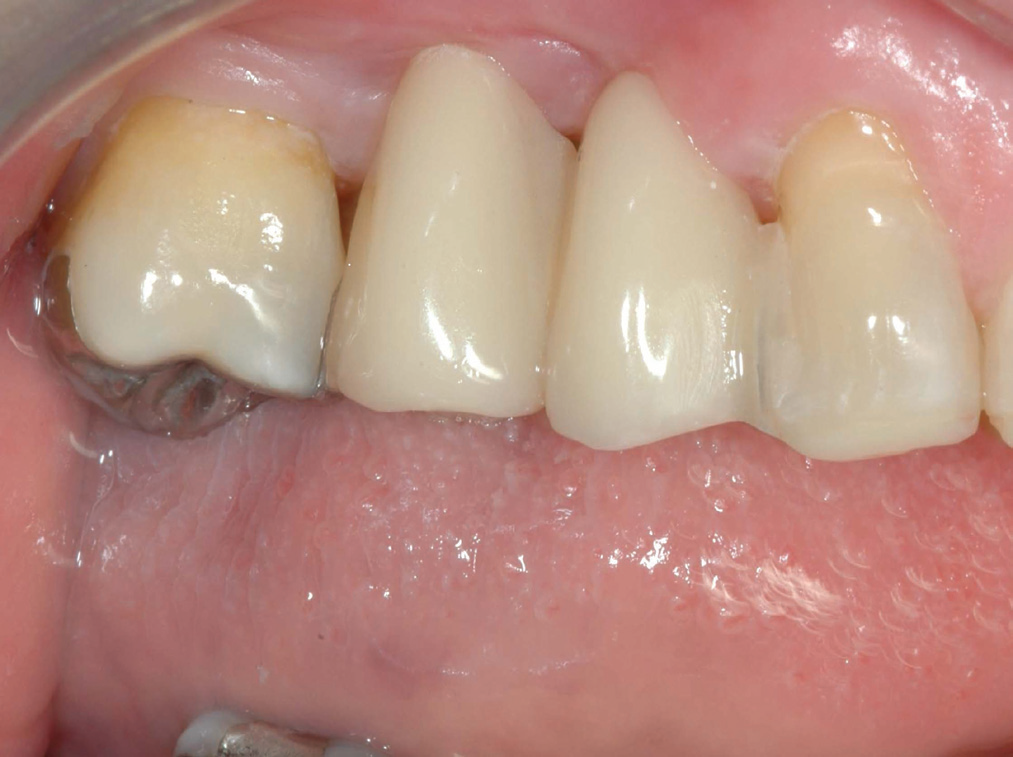
Fig 6: Completed restoration showing similar aesthetic and functional characteristics as two implants
on the lingual surface of the canine as an aid to retention and complete the lingual profile of the canine. (Fig 5) The completed bridge Fig 6 demonstrates a functional an aesthetic prosthesis similar to that of two implants.
CONCLUSION
One of the challenges of dentistry is that each patient presents with a unique set of clinical circumstances with multiple treatment options. As a rule of thumb; if a dentist treats that person as they would a member of their family or close friend, it reflects the dentist’s belief that the patient is receiving the best care available to them in those particular clinical circumstances.
DISCLAIMER
“Published in the Australian Dental Association News Bulletin July 2011 Reprinted with permission of the editor and Author.”
Disclaimer from Guident
The views and opinions expressed in articles published in Guident are solely those of the authors and do not necessarily reflect the views of the editors, the editorial board or the publisher, Ivory India. Guident does not endorse any product, technique or treatment described. Clinical content is intended for qualified dental and medical professionals and is not a substitute for individual clinical judgement. Guident, its editors and the publisher accept no liability for any consequence arising from the use of information published in the journal.
How to cite this article
Dr. Geoffrey M Knight. Minim Al Intervention Indirect Bridge. Guident. 2013 Feb;6(4). Available from: https://guident.net/articles/aesthetic-dentistry/minim-al-intervention-indirect-bridge.html